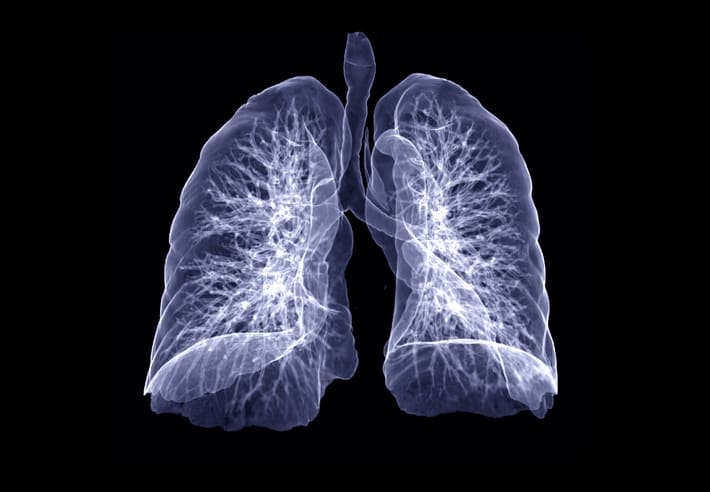
To evaluate serum KL-6 levels in patients with silicosis across different disease stages and explore their association with immune-inflammatory markers for early diagnosis and risk stratification, emphasizing the critical need for timely intervention.
Key Findings:
KL-6 levels were significantly elevated in patients with complicated silicosis compared to those with simple silicosis and dust-exposed workers (p < 0.05).
Inflammatory markers IL-6, IL-8, and IL-10 showed significant correlations with KL-6 levels (r > 0.5, p < 0.01).
The combination of KL-6 and immune/inflammatory markers improved diagnostic accuracy for complicated silicosis (AUC = 0.85).
Interpretation:
Serum KL-6, in conjunction with immune-inflammatory markers, may serve as a reliable biomarker for early detection and risk stratification in silicosis patients.
Limitations:
The study was limited to a specific cohort and may not be generalizable to all populations, particularly in different geographical or occupational contexts.
Potential confounding factors related to comorbidities were not fully explored, which may affect the interpretation of KL-6 levels.
Conclusion:
The findings suggest that serum KL-6, along with immune markers, can enhance the diagnostic process for complicated silicosis, highlighting the need for further research in diverse populations to validate these findings and improve clinical decision-making.
A structured overview of recent FDA recalls, corrections, and alerts involving medications, ventilators, insulin delivery systems, cardiovascular devices, anesthesia products, and other equipment used in clinical practice.