Disease-specific data augmentation enhances deep learning classification of age-related macular degeneration, diabetic retinopathy, and glaucoma - Summary - MDSpire
Conexiant’s news site is now MDSpire News. Learn more
Advertisement
Augmentation of Disease-Specific Data Improves Deep Learning Accuracy in Classifying Age-Related Macular Degeneration, Diabetic Retinopathy, and Glaucoma
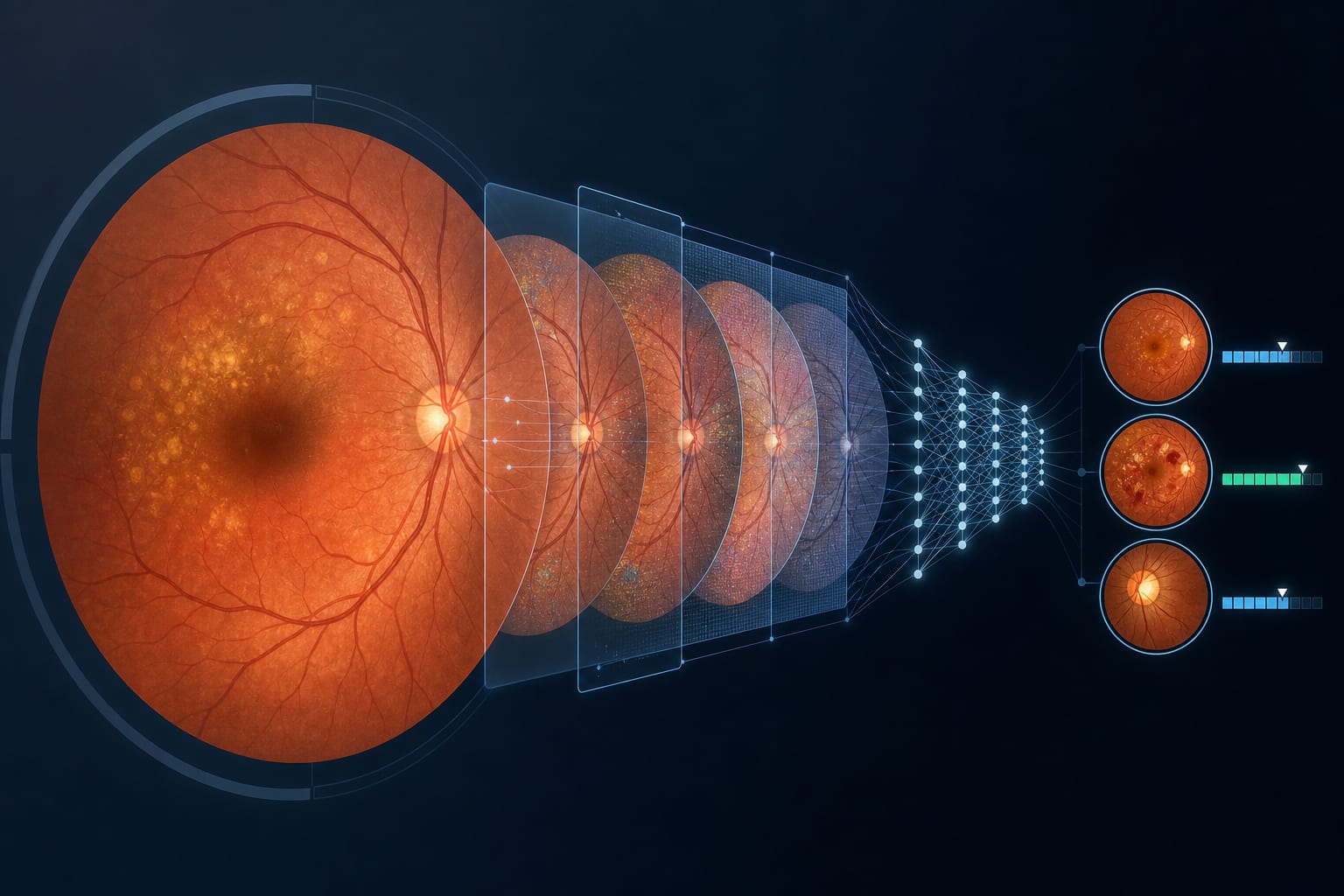
To evaluate the effectiveness of six common data augmentation techniques on the performance of a deep learning model for classifying age-related macular degeneration, diabetic retinopathy, and glaucoma from fundus images.
Approach:
Key Findings:
Data augmentation techniques can improve the accuracy and reliability of deep learning models in classifying retinal diseases.
Disease-specific augmentations are hypothesized to perform better than baseline and generic augmentations due to distinct visual biomarkers of retinal diseases.
The study systematically manipulated the type and volume of data augmentation to observe their effects on model performance metrics.
Interpretation:
The study identifies effective image data augmentations for specific retinal diseases.
Limitations:
The study relies on publicly available datasets, which may have inherent biases related to the quality and diversity of the images.
The effectiveness of augmentation techniques may vary with different models or datasets not included in this study.
Conclusion:
The research seeks to enhance the performance of deep learning models in diagnosing retinal diseases through tailored data augmentation strategies.