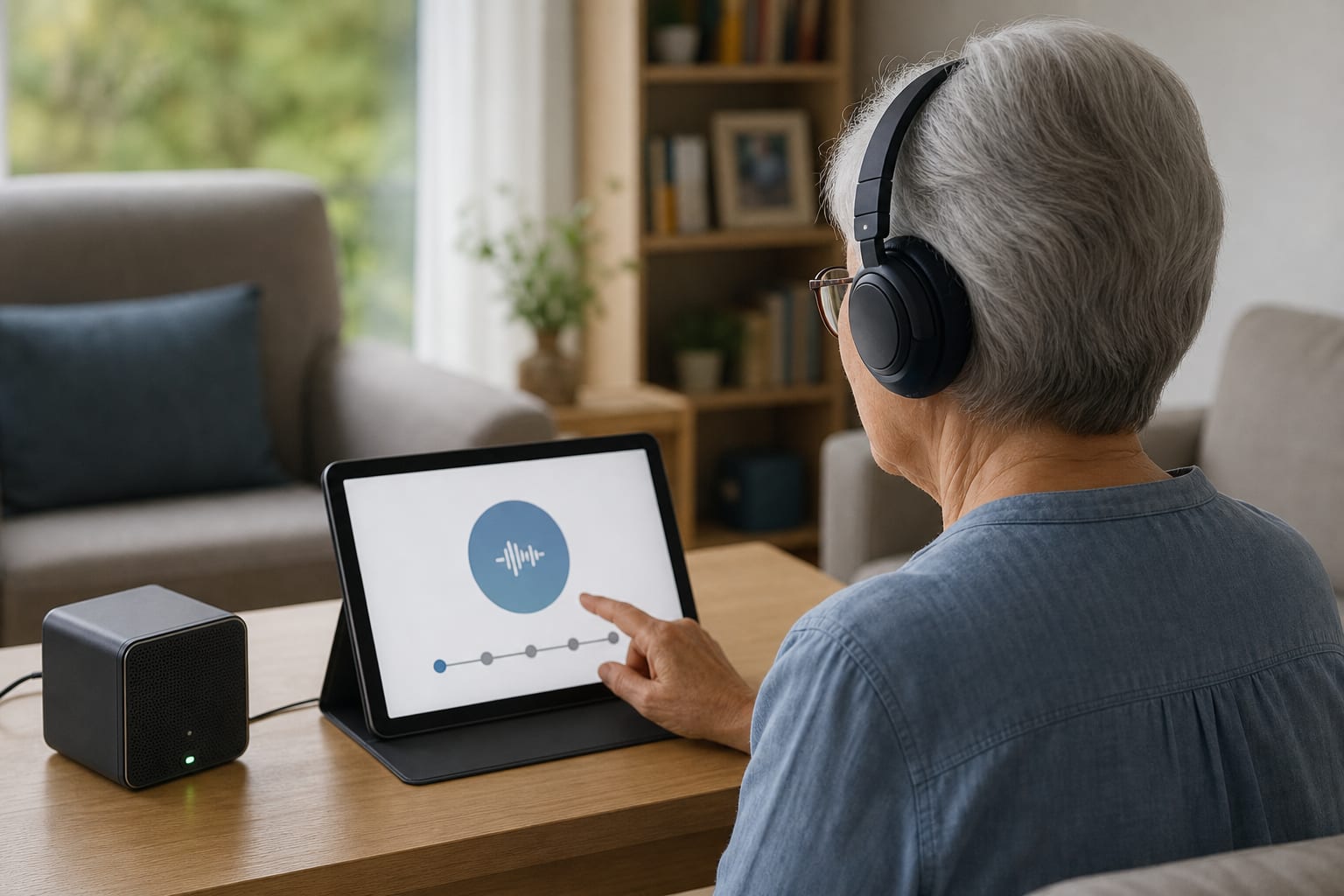
To assess the practicality and consistency of remote evaluations of auditory processing using the Portable Automated Rapid Testing (PART) system for elderly individuals, addressing significant accessibility challenges in auditory assessments.
Key Findings:
PART demonstrated moderate-to-high test-retest reliability, indicating its potential for consistent use.
The platform showed a significant level of acceptability among participants, suggesting it meets user needs.
PART is a potentially effective tool for accessible auditory evaluation, which could improve early detection of hearing issues.
Interpretation:
PART represents a promising instrument for evaluating auditory capabilities in elderly populations, highlighting the need for further research on the relationship between central auditory mechanisms, cognitive well-being, and the potential for early intervention.
Limitations:
The study's sample size was limited to 60 participants, which may affect the generalizability of the findings.
Further investigations are needed to explore the relationship between auditory processing and cognitive decline, particularly in larger and more diverse populations.
Conclusion:
PART illustrates the potential of digital tools for scalable and accessible auditory assessments, particularly in aging populations, emphasizing the need for further research to validate its effectiveness.