Development and validation of a predictive model for chronic or persistent immune thrombocytopenia in children incorporating anti-glycoprotein IIb antibody: a retrospective cohort study utilizing LASSO regression and bootstrap stability analysis - Summary - MDSpire
Advertisement
Development and validation of a predictive model for chronic or persistent immune thrombocytopenia in children incorporating anti-glycoprotein IIb antibody: a retrospective cohort study utilizing LASSO regression and bootstrap stability analysis
To develop and validate a predictive model for chronic/persistent immune thrombocytopenia (c/pITP) in pediatric patients by integrating clinical factors and anti-platelet glycoprotein antibodies, emphasizing the need for improved prognostic tools.
Key Findings:
Fourteen highly stable predictors were identified, with the top three being platelet count, recent infection or vaccination history, and anti-GPIIb antibody status.
The final 4-variable model demonstrated good discrimination in the test set (AUC = 0.743).
Calibration was satisfactory (Hosmer–Lemeshow P = 0.859).
At a low-risk threshold (predicted probability ≤ 15%), the negative predictive value reached 94.7%.
Interpretation:
Limitations:
The study's retrospective design may introduce biases.
ICD-10 coding may include non-ITP etiologies, affecting the specificity of the diagnosis.
Conclusion:
The predictive model incorporating anti-GPIIb antibody provides a framework for identifying pediatric patients at low risk for chronic ITP based on the study's findings.
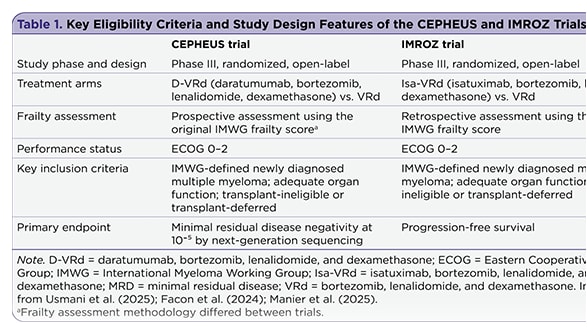
The management of newly diagnosed transplant-ineligible multiple myeloma remains challenging, in part due to the complexity of treatment decisions for frail patients. Recent subgroup analyses provide insight into whether quadruplet therapy may offer advantages over triplet therapy in this population.