To identify factors independently associated with cardiac rupture (CR) after acute myocardial infarction (AMI), compare clinical characteristics and outcomes of CR subtypes, and examine temporal distribution and in-hospital mortality correlates, particularly in a central Chinese population.
Approach:
Key Findings:
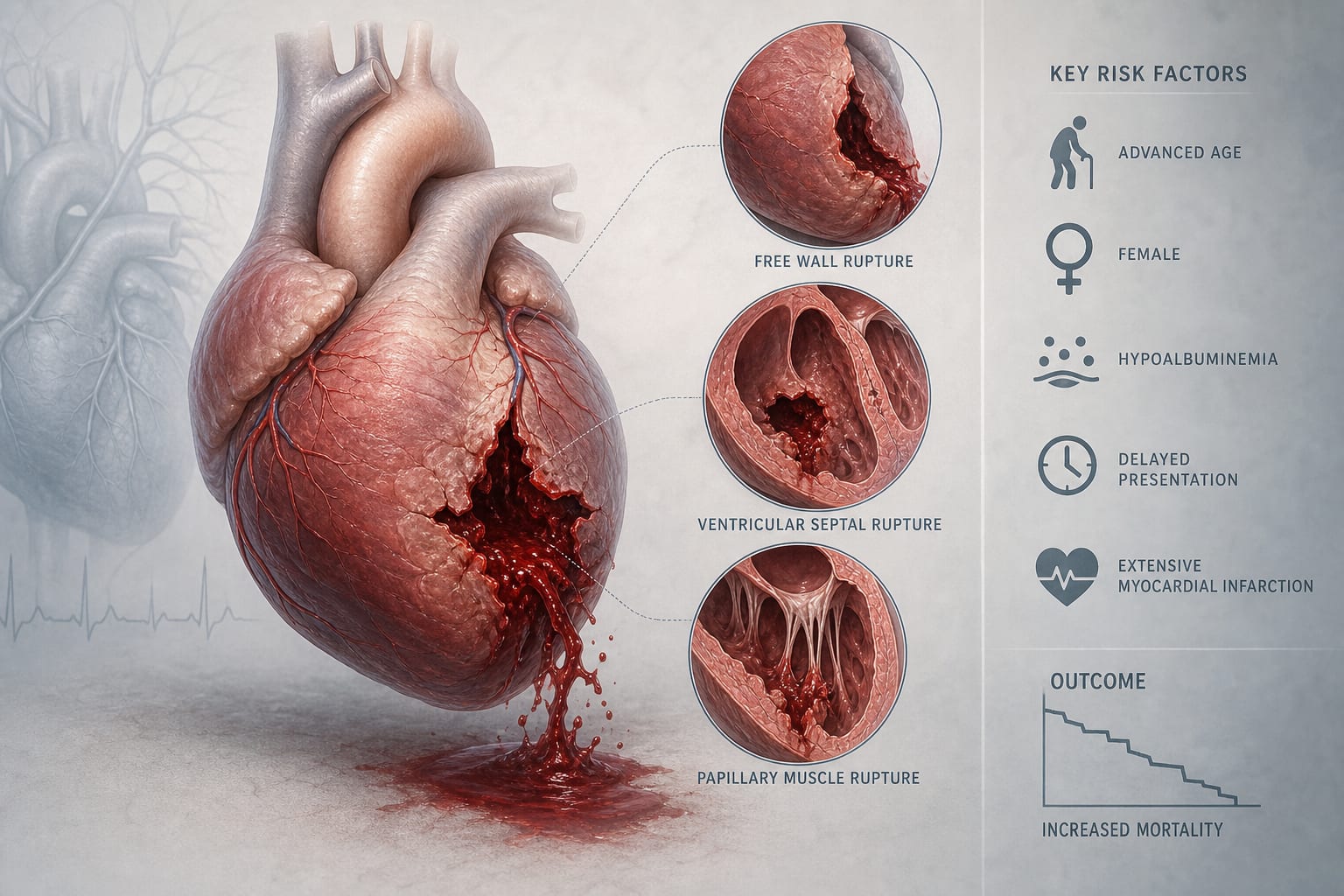
Patients with CR were older (69.6 vs. 59.5 years, P < 0.001) and more frequently female (40.8% vs. 12.2%, P < 0.001).
Absence of emergency PCI (OR = 8.23), Killip class III–IV (OR = 6.82), female sex (OR = 3.41), and lower serum albumin (OR = 0.84 per g/L) were independently associated with CR.
FWR had higher mortality than VSR (97.4% vs. 57.1%, P < 0.001).
Early rupture (≤3 days) was linked to higher admission troponin, while late rupture (>3 days) was associated with lower albumin and delayed presentation.
Surgical repair was associated with lower in-hospital mortality (OR = 0.06, P = 0.002).
Interpretation:
The study highlights specific risk factors and outcomes associated with cardiac rupture following AMI, emphasizing the need for early identification and intervention to improve patient outcomes.
Limitations:
Single-center study may limit generalizability.
Retrospective design may introduce selection bias, potentially affecting the results.
Conclusion:
Identified risk factors for CR after AMI include absence of emergency PCI, high Killip class, female sex, and hypoalbuminemia. Surgical repair is linked to lower mortality.