Swimming ameliorates intervertebral disc degeneration accompanied by Rpl23a downregulation and changes in its immune-inflammatory pathway - Summary - MDSpire
Advertisement
Swimming ameliorates intervertebral disc degeneration accompanied by Rpl23a downregulation and changes in its immune-inflammatory pathway
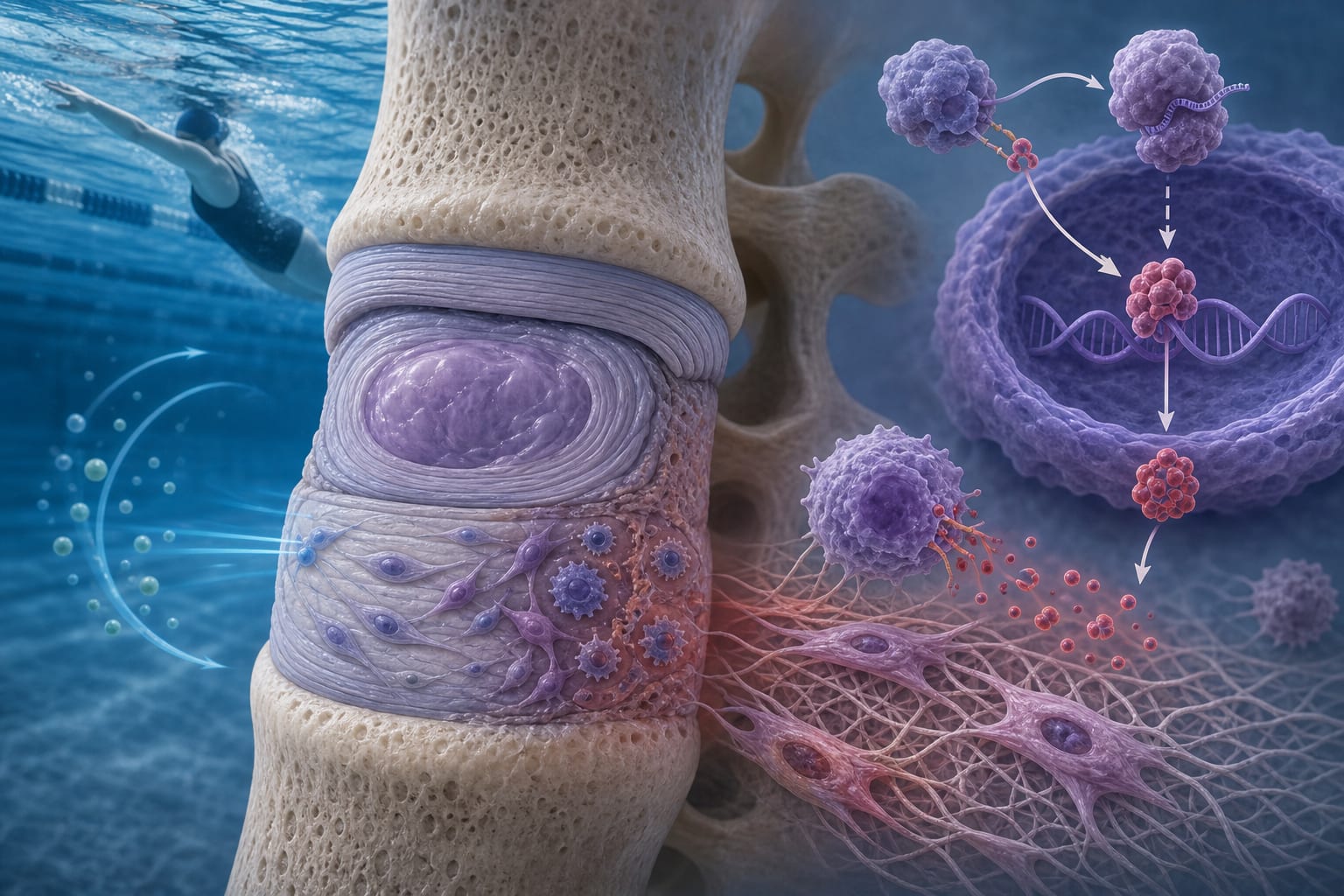
To investigate the role of Rpl23a in regulating immune interactions in intervertebral disc degeneration (IVDD) and evaluate the impact of exercise intervention on this signaling axis.
Key Findings:
Rpl23a was significantly upregulated in degenerated intervertebral discs, primarily in fibroblasts.
Crosstalk between Rpl23a-positive fibroblasts, macrophages, and T lymphocytes contributed to a pro-inflammatory microenvironment.
Rpl23a overexpression led to increased secretion of TNF-α and IL-1β, activated NF-κB signaling, and induced cell apoptosis and matrix catabolism.
Swimming reduced Rpl23a expression, decreased immune cell infiltration, and inhibited NF-κB activation in the rat model.
Interpretation:
Rpl23a is associated with NF-κB signaling activation and the formation of a pathological immune microenvironment in IVDD.
Limitations:
The study primarily focused on a rat model, which may not fully replicate human IVDD.
Further research is needed to explore the long-term effects of swimming on IVDD and Rpl23a.
Conclusion:
Rpl23a may mediate the protective effects of exercise on intervertebral discs.
Chronic tendinopathy is one of the most common reasons patients remain symptomatic after months of physical therapy, activity modification, NSAIDs, or corticosteroid injections.