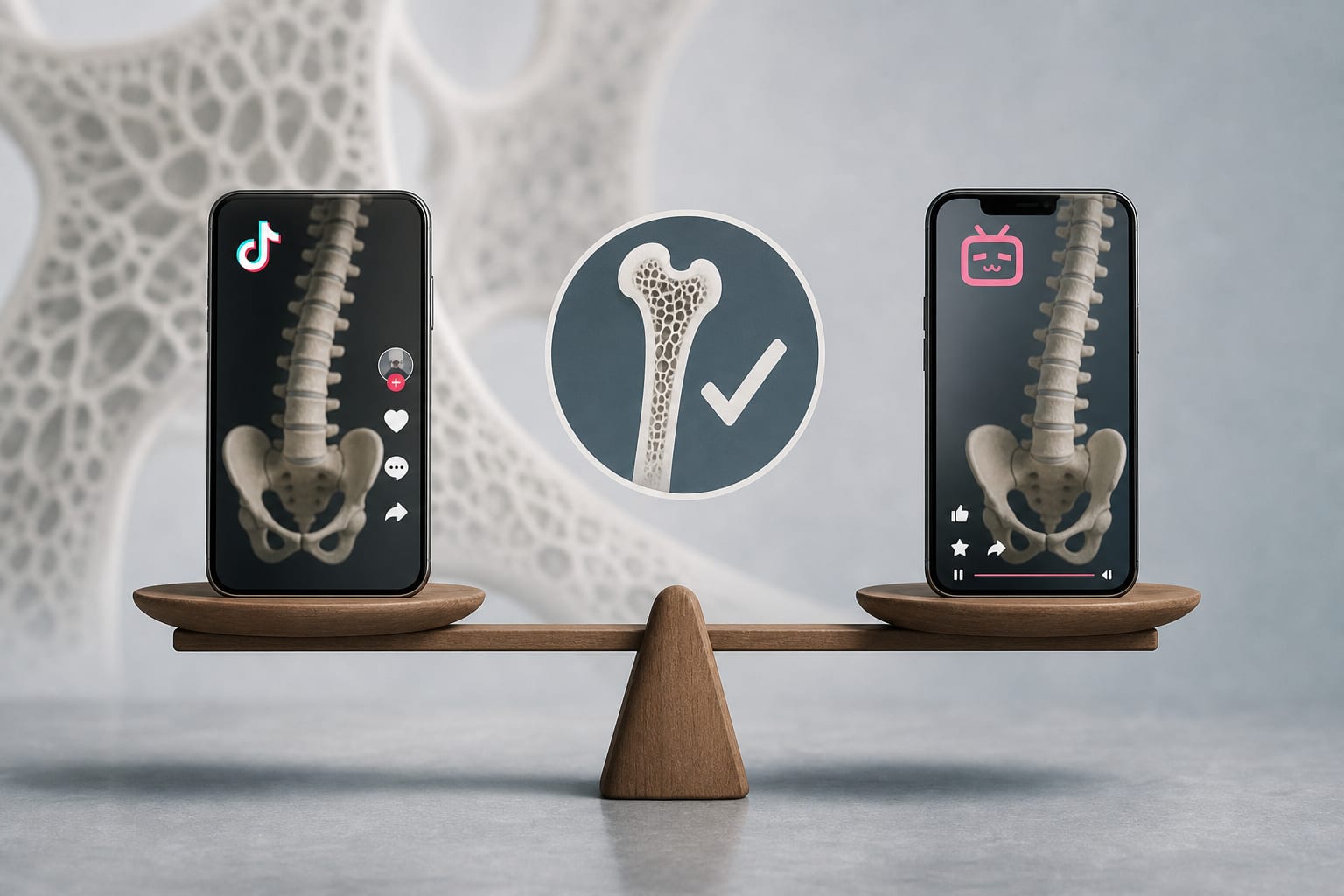
To systematically evaluate and compare the content characteristics, information quality (using specific metrics), and source composition of osteoporosis-related videos on TikTok and Bilibili.
Key Findings:
Significant differences in information quality between TikTok and Bilibili, with implications for public health education.
Professional uploaders provided higher quality content compared to nonprofessionals.
User engagement metrics varied significantly across platforms.
Interpretation:
The study highlights the variability in the quality of osteoporosis-related information on popular short-video platforms, emphasizing the need for improved health communication strategies to enhance public health outcomes.
Limitations:
The analysis was limited to the top 100 videos, which may not represent all available content.
Potential biases in video selection due to algorithm-driven recommendations.
The impact of video duration on information quality was not assessed.
Conclusion:
The findings underscore the importance of evaluating health information quality on social media platforms to enhance public understanding and management of osteoporosis.
Acidic gum beat sugar-free at cranking out nitric oxide from beetroot juice — exactly backward from what test-tube studies predicted. Also this week: a sleep gene that ignores amyloid, and jackfruit sap moonlighting as a bone-building drug delivery system.