To highlight the complexities in managing metachronous bilateral breast cancer with discordant molecular subtypes.
Approach:
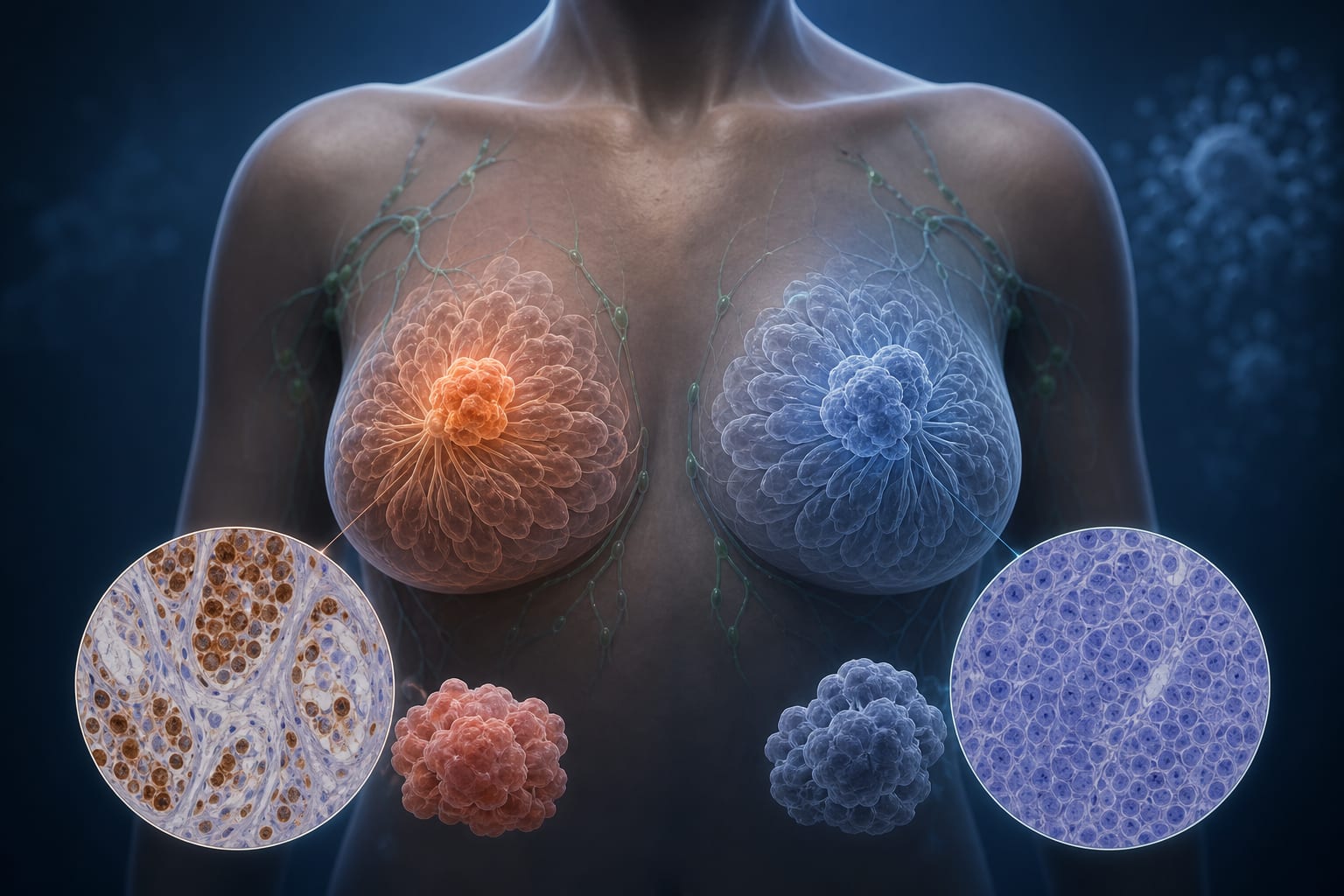
Case Presentation: A 37-year-old woman with left-sided breast cancer (ER-negative, PR-positive) developed a right-sided triple-negative breast cancer. Neoadjuvant chemotherapy was initiated.
Therapeutic Strategy: Prioritization of treatment was guided by the more aggressive triple-negative tumor while addressing the hormone-responsive lesion.
Key Findings:
Bilateral breast cancer is uncommon, accounting for 2%–5% of cases.
The patient had left-sided breast cancer that was ER-negative and PR-positive, and subsequently developed right-sided triple-negative breast cancer.
Neoadjuvant chemotherapy was initiated to allow for tumor downstaging and assessment of chemosensitivity.
Interpretation:
Individualized, biology-driven treatment strategies are critical for managing metachronous bilateral breast cancer with differing receptor statuses.
Limitations:
The case study is based on a single patient, which limits the generalizability of the findings.
Management strategies may differ based on the constraints of the healthcare system.
Conclusion:
Effective management of metachronous bilateral breast cancer requires a multidisciplinary approach and individualized treatment plans.