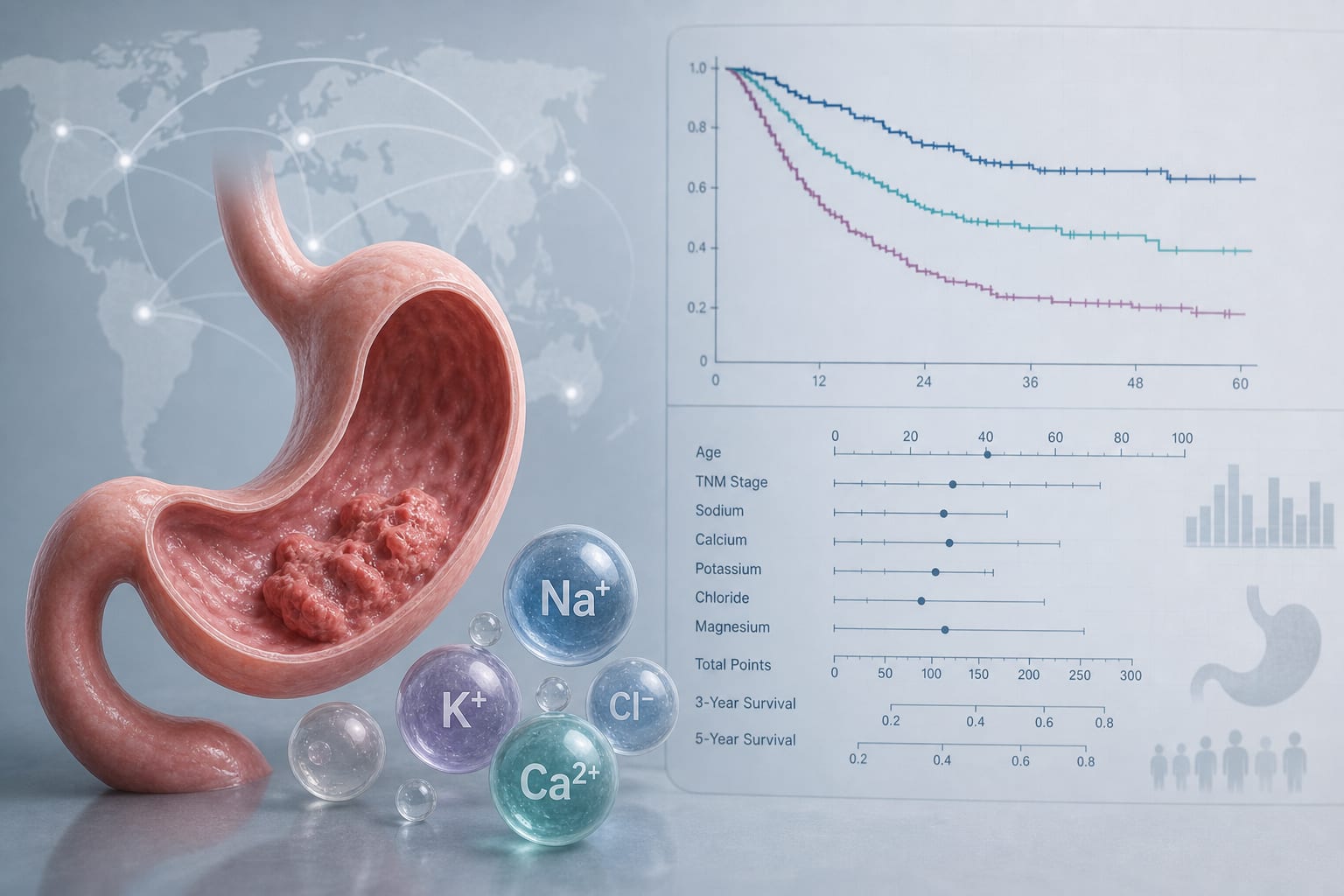
To develop and externally validate an electrolyte-based metabolic biomarker score for prognostic assessment in gastric cancer.
Approach:
Key Findings:
Sodium and calcium were identified as independent prognostic factors for overall survival.
Higher levels of sodium and calcium correlated with better survival outcomes.
The Electrolyte Score alone had limited discriminatory ability but effectively stratified patients into distinct prognostic groups.
A high Electrolyte Score was associated with worse overall survival in both cohorts.
Integration of the Electrolyte Score with age, TNM stage, and histological differentiation improved individualized prognostic prediction.
Interpretation:
A preoperative electrolyte-based score derived from sodium and calcium provides independent prognostic information in gastric cancer, enhancing risk stratification when combined with clinicopathological variables.
Limitations:
The predictive value of the Electrolyte Score alone is limited.
The study is retrospective and may be subject to selection bias.
Exclusion of patients with severe comorbidities may limit generalizability.
Conclusion:
The study presents an electrolyte-based score as a practical tool for complementing conventional prognostic assessment in gastric cancer.