Treatment characteristics and safety profiles of Belbuca®, buprenorphine patch, and oral schedule II opioids among chronic low back pain patients without a positive history of opioid-use disorder: a retrospective US commercial claims analysis - Summary - MDSpire
Advertisement
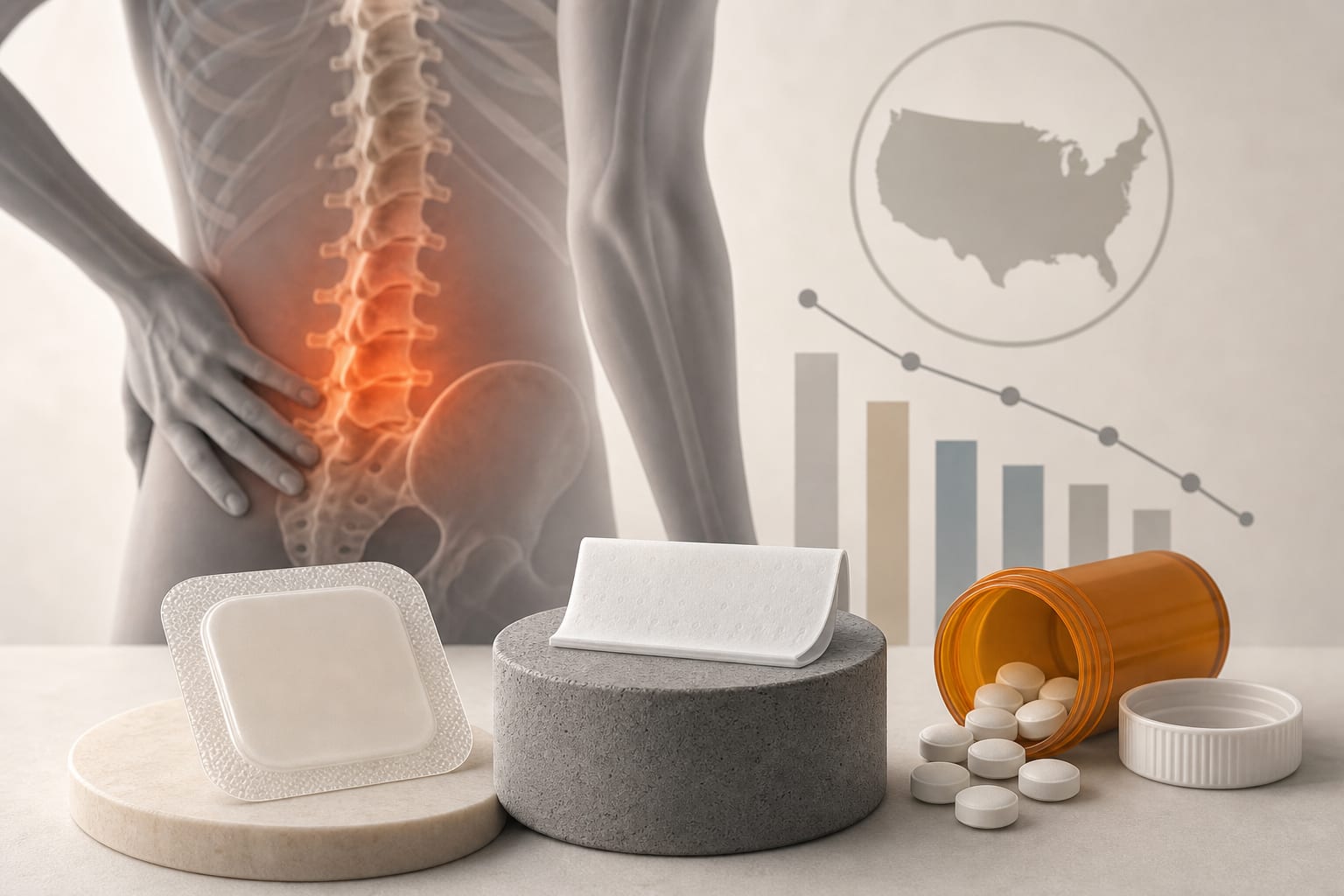
Treatment characteristics and safety profiles of Belbuca®, buprenorphine patch, and oral schedule II opioids among chronic low back pain patients without a positive history of opioid-use disorder: a retrospective US commercial claims analysis
To evaluate and compare the safety characteristics of Belbuca®, buprenorphine patch, and oral schedule II opioids in patients with chronic low back pain (cLBP) without a recent positive history of opioid use disorder (OUD).
Approach:
Study Design: Retrospective study using the Merative MarketScan® database from January 2019 to December 2023.
Patient Selection: Patients required two low back pain diagnoses, no OUD in the preindex period, and continuous healthcare coverage.
Outcome Measures: Primary outcomes were serious treatment-emergent adverse event (TEAE) rates reported as incidence rate ratios (IRR) or absolute incidence rate difference (IRD) per 1,000 person-years.
Statistical Analysis: Propensity-score matching was employed to balance differences in patient characteristics.
Key Findings:
No serious TEAEs were associated with higher occurrence in the Belbuca® cohort compared to oral CII opioids.
Belbuca® treatment showed significantly lower rates of serious opioid abuse/dependence (IRD −33.76 per 1,000 person-years, p = 0.032), osteoarthritis (IRD −78.77 per 1,000 person-years, p = 0.001), urinary discomfort (IRD −146.28 per 1,000 person-years, p < 0.001), seizures (IRR 0.11, p = 0.019), dehydration (IRR 0.13, p = 0.003), abdominal pain (IRR 0.25, p < 0.001), and nausea/vomiting (IRR 0.30, p = 0.001).
Belbuca® had higher rates of serious coronary artery disease (IRD 39.01 per 1,000 person-years, p = 0.035), cholecystitis (IRD 39.01 per 1,000 person-years, p = 0.035), and headache (IRD 39.01 per 1,000 person-years, p = 0.035) compared to buprenorphine patch.
Buprenorphine patch cohort had higher incidence rates of serious QT prolongation (IRD −52.78 per 1,000 person-years, p = 0.009), opioid abuse/dependence (IRD −184.75 per 1,000 person-years, p < 0.001), confusion (IRR 0.10, p = 0.007), hypertension (IRR 0.22, p = 0.043), and cellulitis (IRR 0.41, p = 0.011).
Interpretation:
Belbuca® may have a favorable safety profile relative to oral CII opioids and buprenorphine patch treatments in cLBP patients without a positive history of OUD.
Limitations:
Retrospective design may introduce bias, limiting the ability to establish causality.
Data sourced from a commercial claims database may not be generalizable to all populations.
Conclusion:
The study findings indicate that Belbuca® may have a favorable safety profile relative to oral CII opioids and buprenorphine patch treatments in cLBP patients without a positive history of OUD.
Water-related activities were the most commonly reported setting for recent sunburn, while more than one-half of respondents reported sunscreen use at the time of their most recent sunburn.
These 10 factors were identified in national surveys and peer-reviewed studies examining physician burnout, workload, administrative burden, staffing challenges, and practice conditions.