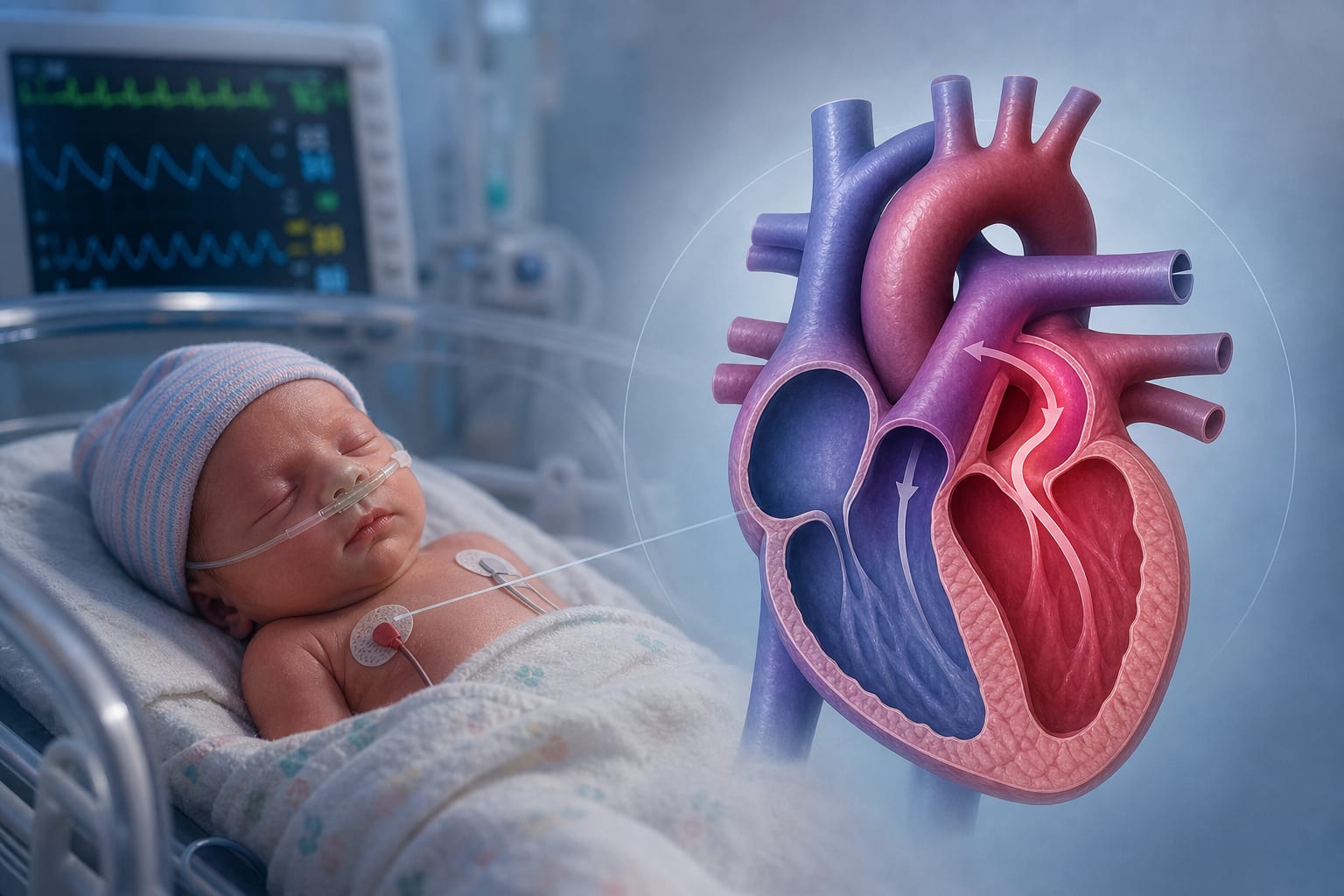
To propose a physiology-based framework defining emergency clinical criteria and time-sensitive intervention windows for critical congenital heart disease (CCHD) to support rapid and effective decision-making in urgent clinical scenarios.
Approach:
Key Findings:
Delays in recognition and intervention for CCHD can lead to preventable end-organ injury or death, emphasizing the need for rapid response.
Universal newborn screening for CCHD using pulse oximetry has significantly reduced infant mortality, highlighting its critical role in early detection.
Emergency presentations in neonates with critical CHD are characterized by rapid clinical deterioration due to systemic hypoperfusion and respiratory failure, necessitating immediate action.
Interpretation:
A physiology-based framework for emergency care in CCHD emphasizes rapid stabilization and timely interventions, which are crucial for improving patient outcomes.
Limitations:
Certain critical lesions may not respond to standard stabilization strategies, necessitating rapid transfer to tertiary centers for advanced care.
Recognition of physiologic deterioration alone is insufficient without understanding the underlying anatomy to guide intervention, which is vital for effective treatment.
Conclusion:
A shift towards a physiology-based approach in emergency care for CCHD may improve outcomes by facilitating timely interventions, ultimately saving lives.