Prognosis and recovery trajectories in prolonged disorders of consciousness: protocol for the PDOCC 5-year prospective cohort study - Summary - MDSpire
Advertisement
Prognosis and recovery trajectories in prolonged disorders of consciousness: protocol for the PDOCC 5-year prospective cohort study
To systematically characterize the 5-year natural history of prolonged disorders of consciousness (pDoC) and identify predictors of outcomes.
Approach:
Study Design: Single-center, prospective cohort study involving 1,000 patients with pDoC (VS or MCS ≥ 28 days post-brain injury) at Guangdong Sanjiu Brain Hospital.
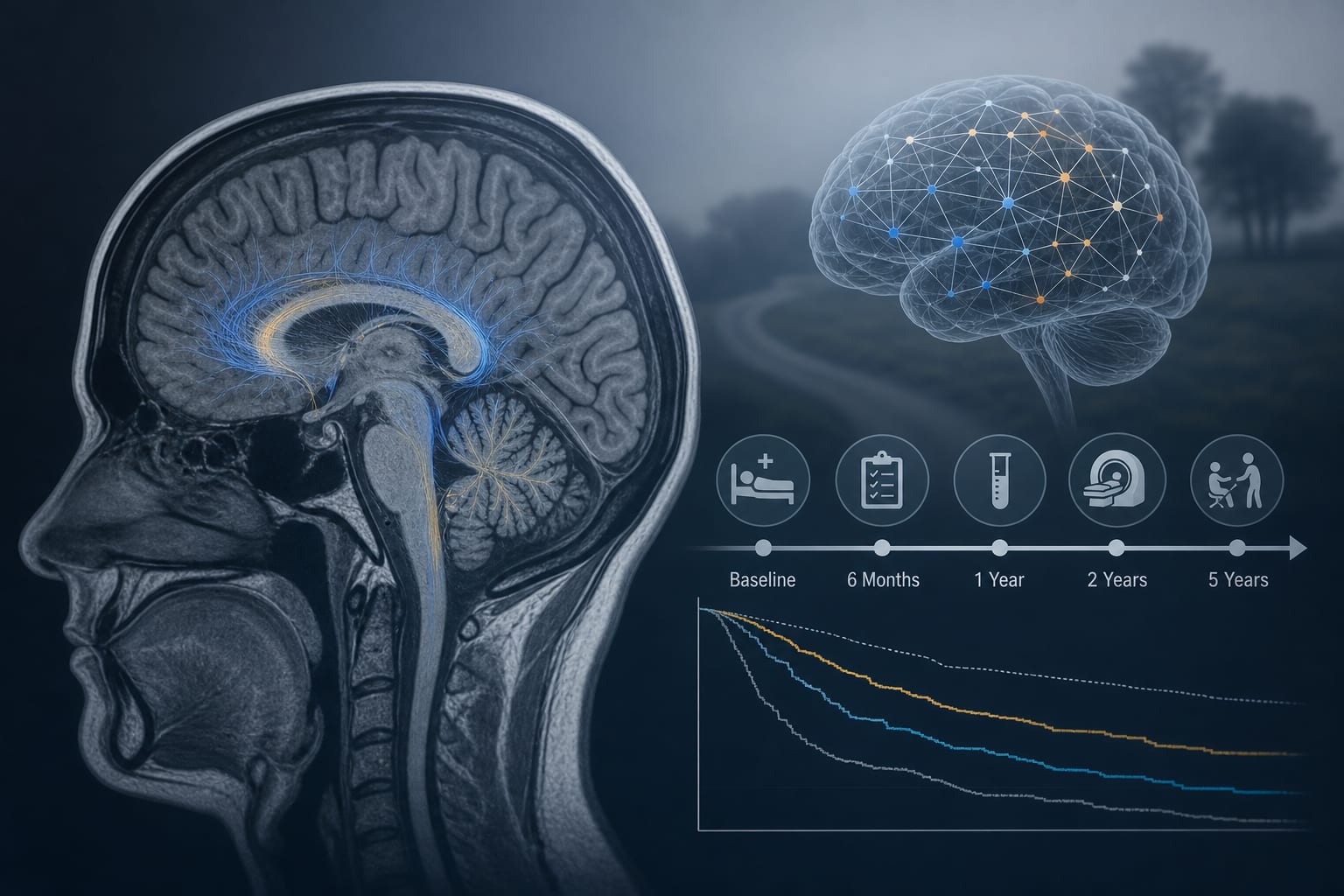
Data Collection: Standardized clinical assessments, neuroimaging, and biomarkers collected at multiple time points over 5 years.
Primary Outcomes: Consciousness recovery, all-cause mortality, and major cardiovascular events.
Secondary Outcomes: Functional status changes, dynamic biomarker changes, health-related quality of life, and rehospitalization rate.
Statistical Analysis: Time-to-event analyses using Fine-Gray competing-risk models and development of prognostic prediction models.
Key Findings:
The study aims to provide long-term data on pDoC outcomes, which are currently scarce.
It will incorporate competing-risk analysis to improve prognostic accuracy.
The study seeks to validate a multimodal prognostic prediction model.
Interpretation:
Limitations:
Single-center design may limit generalizability.
Potential challenges in the implementation of advanced neuroimaging techniques.