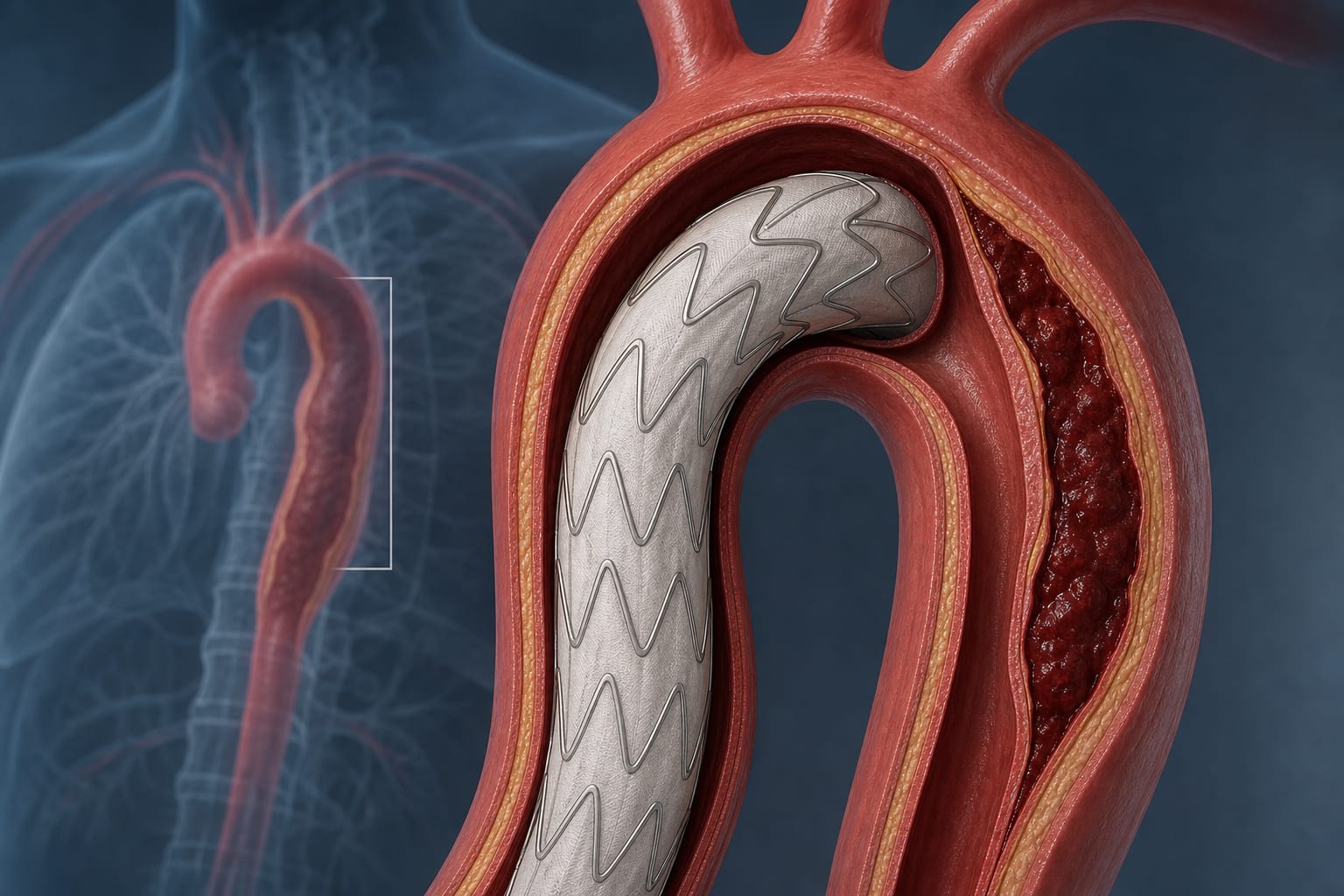
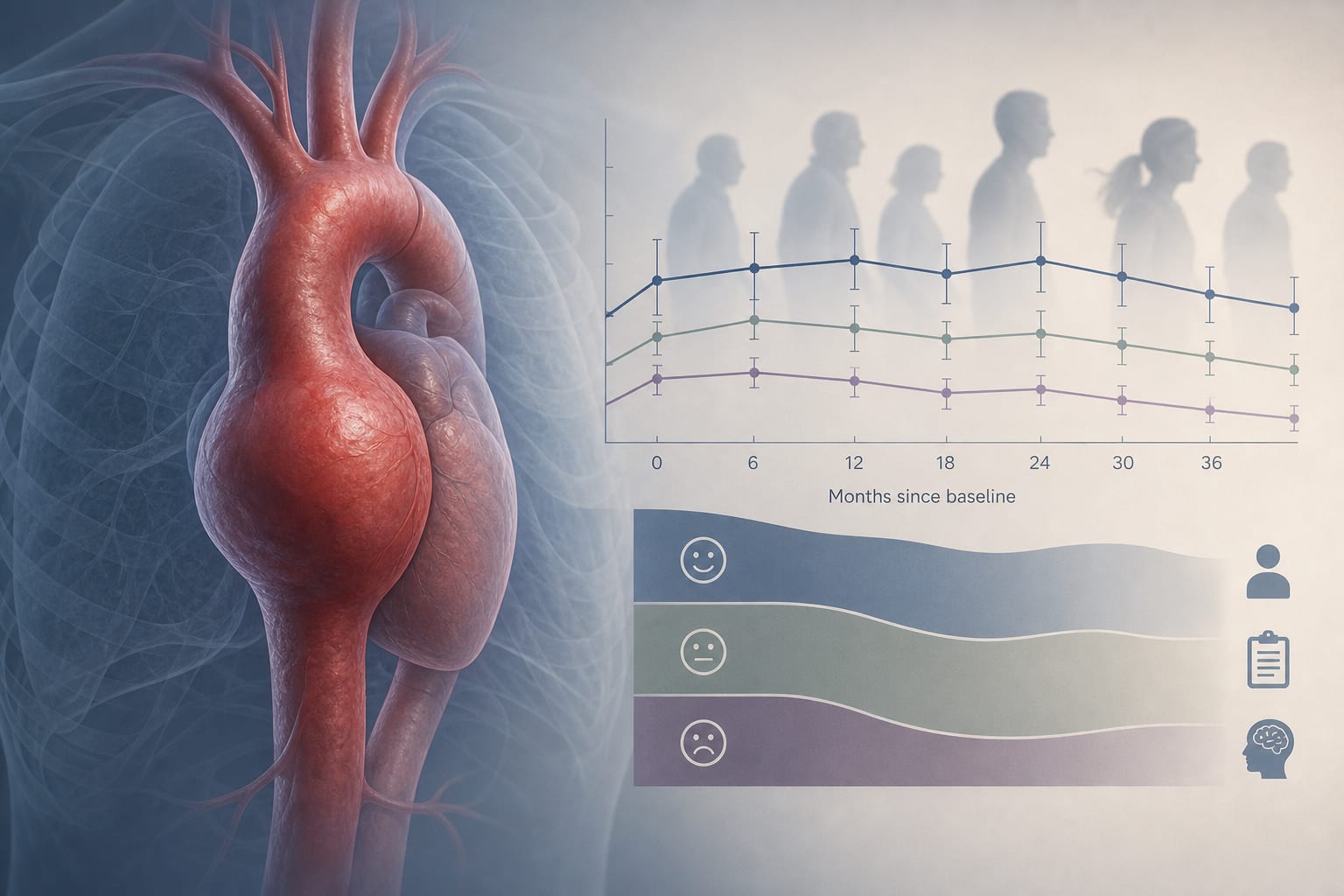
To characterize the natural history of type B intramural hematoma (IMH) in patients without focal intimal disruption (FID) and evaluate outcomes of thoracic endovascular aortic repair (TEVAR).
Approach:
Patient Selection: A retrospective review of 40 patients with acute uncomplicated type B IMH was conducted, excluding those with FID. Patients were treated with optimal medical therapy (OMT) and monitored for complications.
Statistical Analysis: Descriptive statistics summarized baseline characteristics. Survival and freedom from reintervention were estimated using Kaplan-Meier curves.
Key Findings:
Mean follow-up was 6.0 ± 5.1 years.
14 patients underwent early TEVAR; 26 were discharged with OMT, of which 16 required late TEVAR.
Patients treated with early TEVAR were younger than those in late TEVAR and OMT groups.
Interpretation:
TEVAR may improve outcomes in selected patients with type B IMH, but risks of complications remain significant.
Limitations:
Retrospective design may introduce selection bias.
Small sample size limits generalizability.
Conclusion:
Further investigation is needed to refine patient selection for TEVAR in type B IMH.