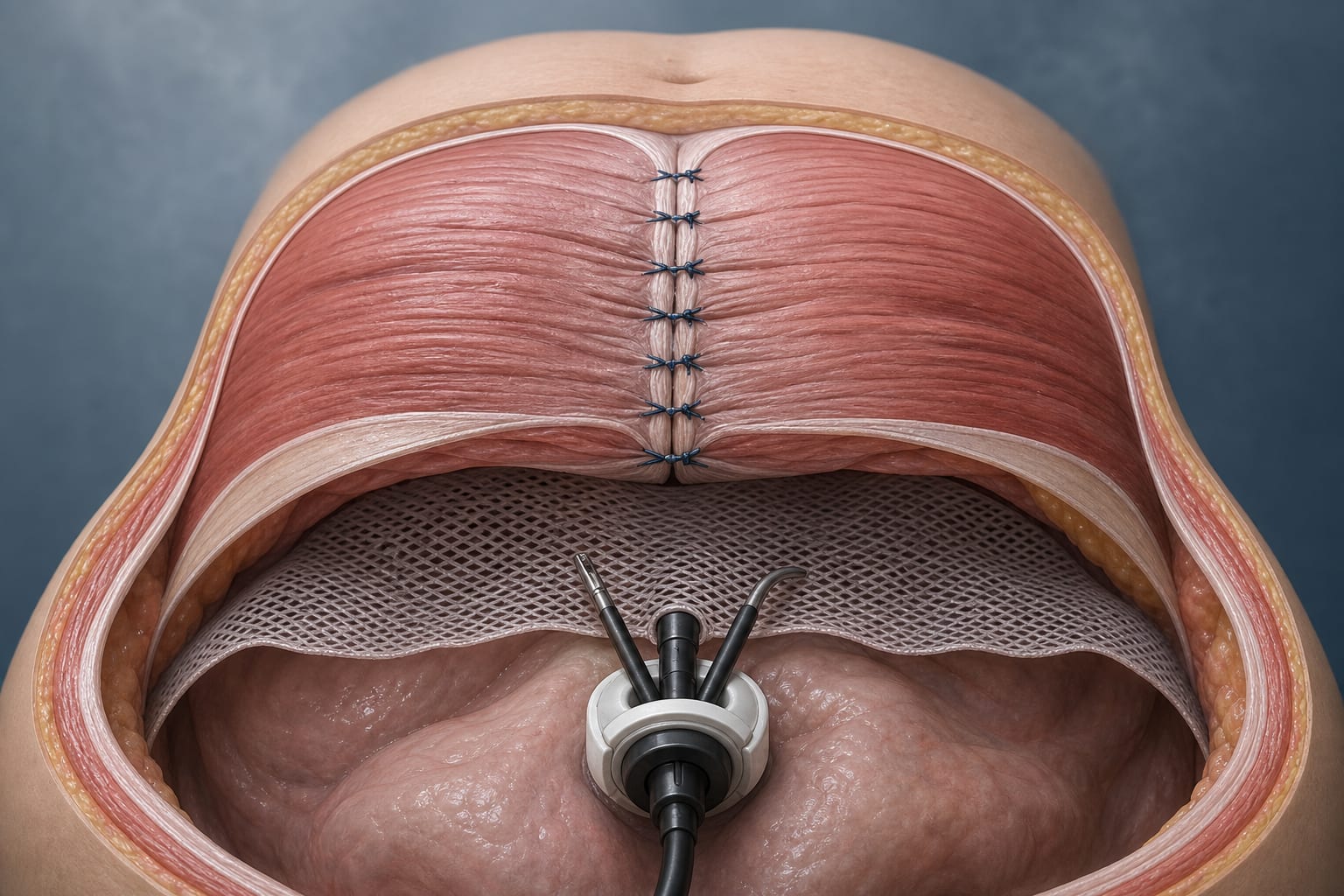
To investigate the relationship between preoperative CT-based morphological parameters of the hernial sac and postoperative outcomes, particularly focusing on early recurrence and other relevant outcomes in patients undergoing hiatal hernia repair.
Key Findings:
Preoperative CT parameters, particularly hernial sac area, were associated with early recurrence rates, highlighting the importance of these measurements in clinical decision-making.
Maximal diameter alone was less predictive compared to area measurements, suggesting a need for comprehensive morphological assessment.
Statistical analysis indicated significant differences in recurrence based on morphological characteristics, underscoring the relevance of these findings.
Interpretation:
Quantitative assessment of the hernial sac using preoperative CT can aid in predicting early recurrence and optimizing surgical strategies for hiatal hernia repair.
Limitations:
Retrospective design may introduce selection bias, potentially affecting the reliability of the findings.
Limited sample size may affect generalizability of findings, necessitating further studies with larger cohorts.
Exclusion of certain cases may limit the applicability of results, particularly in diverse patient populations.
Conclusion:
Preoperative CT-based evaluation of hernial sac morphology is a valuable tool for predicting early recurrence after hiatal hernia repair, potentially guiding surgical decision-making and informing future research directions.
Surgery and histopathology identified retained silk ligature with chronic inflammation at the site of a rare fistula presenting 3 years following vasectomy.