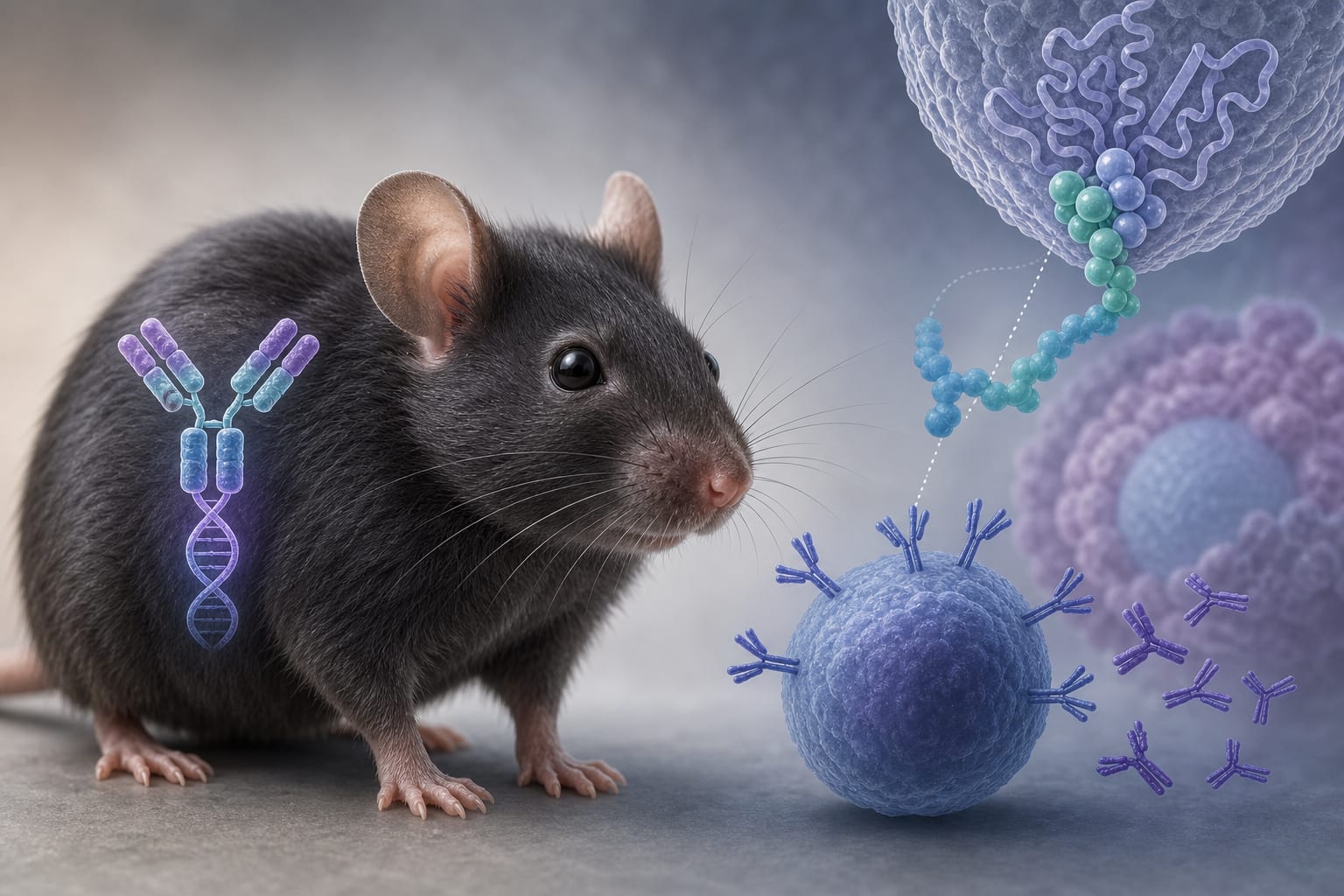
To investigate the role of the TLR7 pathway and its downstream signaling in the pathogenesis of systemic sclerosis (SSc) using a bleomycin-induced mouse model.
Approach:
Model and Treatment: Utilized a bleomycin (BLM)-induced mouse model of SSc with wild-type (WT), Tlr7-deficient (Tlr7−/−), and Irf7-deficient (Irf7−/−) mice receiving daily BLM for 4 weeks.
Evaluation Methods: Disease features were assessed using histopathology, ELISA, flow cytometry, western blotting, RT-qPCR, and Olink proteomics.
Key Findings:
BLM-treated Tlr7−/− and Irf7−/− mice showed less body weight loss and reduced pulmonary interstitial inflammation.
Fewer inflammatory monocytes in the spleen and lower pulmonary type I interferon-related gene expression were observed.
Lower serum anti-topoisomerase I autoantibody (anti-Scl-70) levels were found in Tlr7−/− and Irf7−/− mice.
Pharmacologic CCR2 antagonism reduced BLM-induced body weight loss, lung injury, and dermal collagen deposition.
Interpretation:
Limitations:
The bleomycin model does not fully replicate the complexity of human systemic sclerosis.
The study primarily focuses on murine models, which may not completely reflect human disease mechanisms.
by Jefferson Fernandes Evangelista, Ana Karina Nisperuza Vidal, Donghua Xu, Mohammad Islamuddin, Yilin Chen, Chenxiao Wang, Raul Freitas, Shumei Liu, Elizabeth Engler-Chiurazzi, Robert V. Blair, Prasun K. Datta, Xuebin Qin