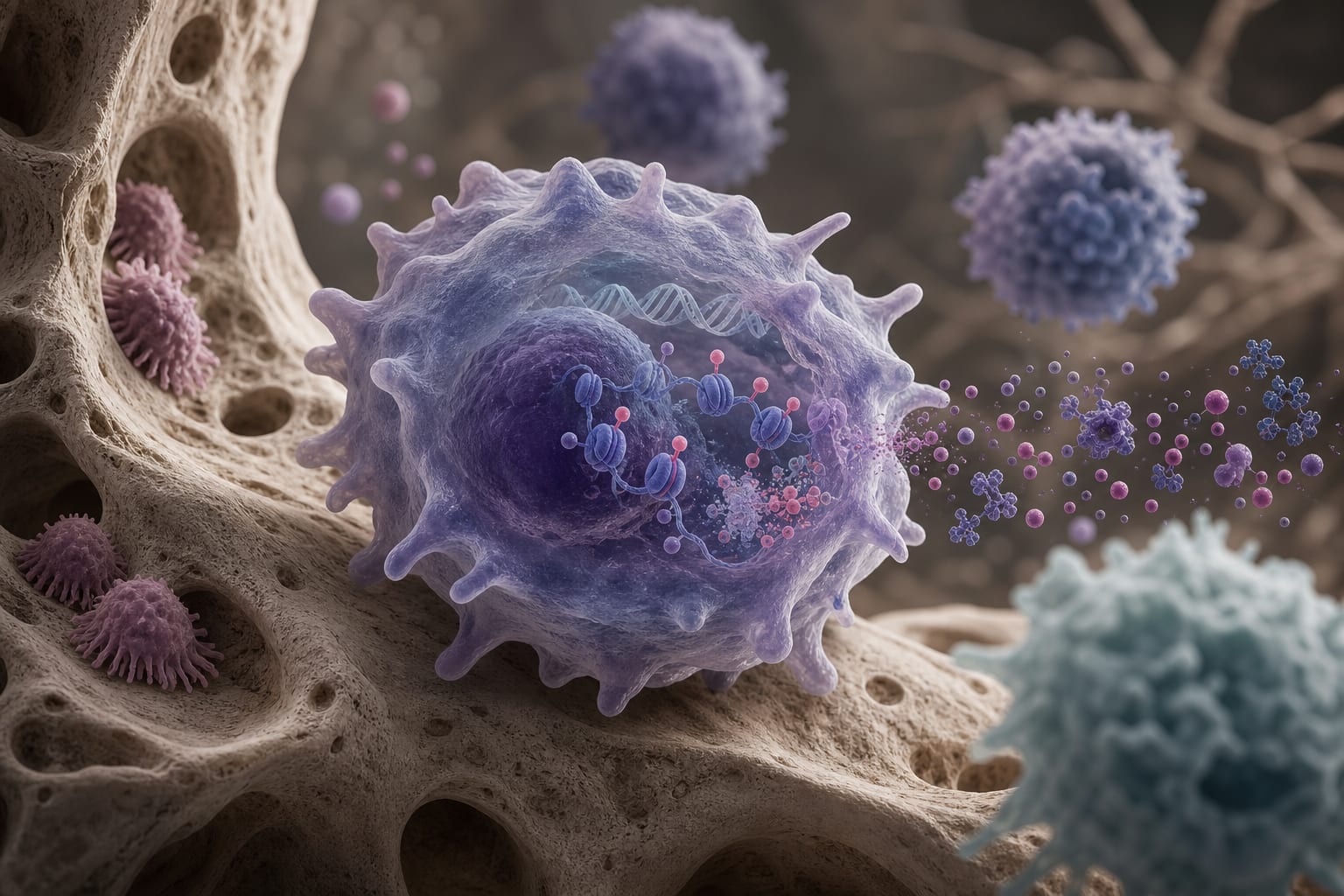
To characterize the representation of trained-immunity-associated concepts, which refer to the mechanisms by which innate immune cells undergo long-term changes, in the osteoimmunology literature and their connections within inflammatory bone disease research.
Key Findings:
Publication output increased from 2013 to 2025, peaking in 2025 with a total of 83 records in the core corpus and 301 in the extended corpus.
Periodontitis was the most prominent disease context identified.
Key themes included myeloid-cell reprogramming, epigenetic and metabolic remodeling, and macrophage-related pathways.
Interpretation:
Research on trained immunity in inflammatory bone disease is growing, with significant connections to myeloid reprogramming and inflammatory processes, indicating a need for further exploration.
Limitations:
The literature remains fragmented across various inflammatory bone conditions, which may hinder comprehensive understanding.
The study does not infer causality but rather characterizes literature-level patterns.
Conclusion:
The findings provide a structured overview of an emerging field, highlighting the relevance of trained immunity across multiple inflammatory bone diseases.
High-revision-rate surgeons saw a late revision signal after adopting robotic-assisted total knee arthroplasty, despite no overall reduction in revision rates or failure modes.