Lung nodule detection and potential impact on guideline-based management: a retrospective post-market evaluation of three commercial software systems - Summary - MDSpire
To compare the number of detected lung nodules across different commercially available AI software applications and assess the number of actionable nodules according to the British Thoracic Society definition.
Approach:
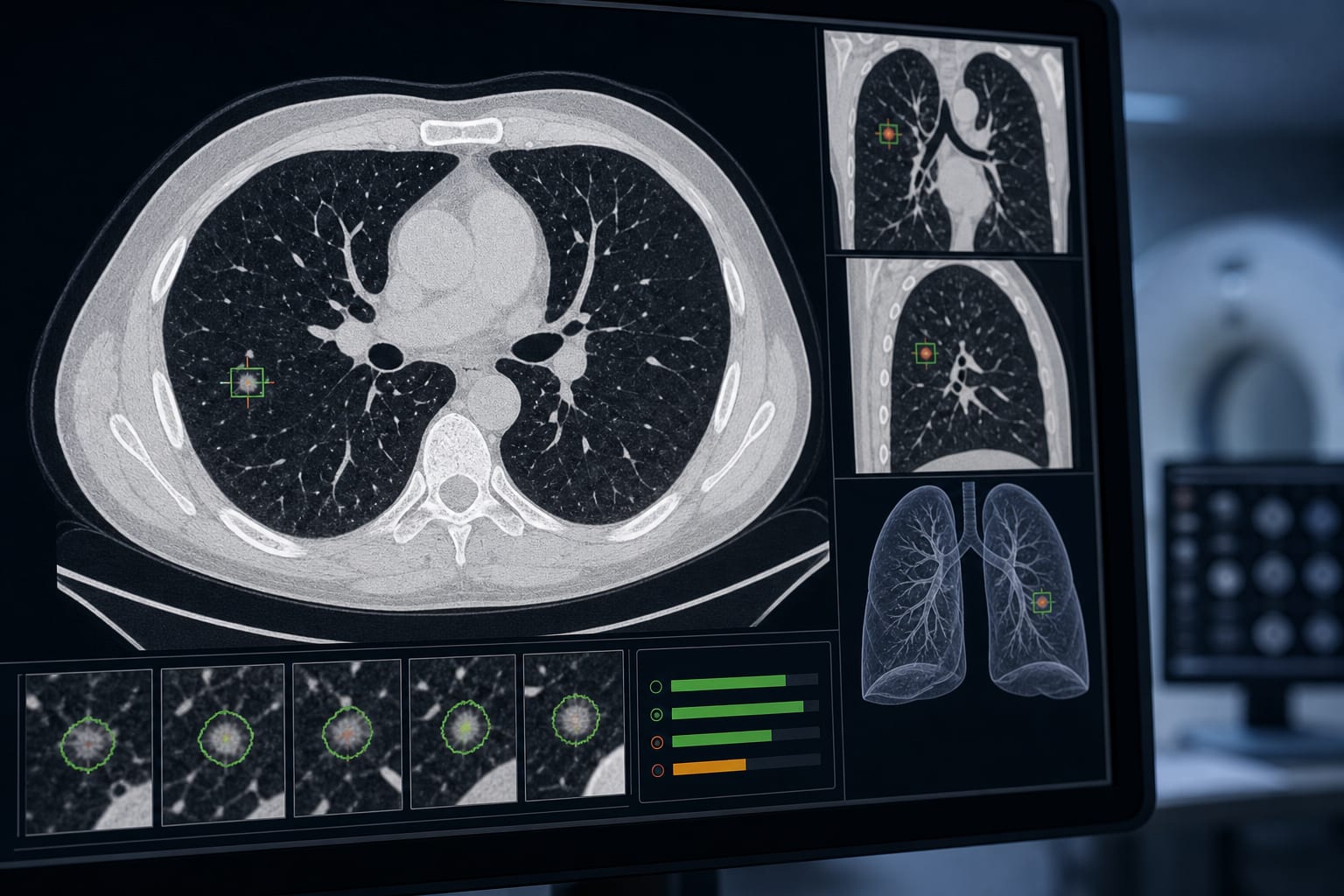
Study Design: A retrospective study was conducted using thoracic CT scans from a tertiary hospital, evaluating three CE-certified software tools for lung nodule detection.
Software Tools: The study evaluated AI-Rad Companion, contextflow ADVANCE Chest CT, and Veolity LungCAD for their ability to detect and segment lung nodules.
Nodule Evaluation: Detected nodules were reviewed by experienced radiologists to classify them as actionable or benign based on established definitions.
Key Findings:
The study found variability in the number of detected lung nodules across the three software tools.
Differences in the classification of actionable nodules could lead to varying downstream management recommendations.
The quality of segmentation varied, with some tools allowing for manual correction while others did not.
Interpretation:
Limitations:
The study did not compare human versus AI sensitivity.
Blinding regarding software vendors was not feasible.
Only nodules between 5 mm and 3 cm were included, potentially limiting the generalizability of results.
Conclusion:
The evaluation highlights the importance of software choice in lung nodule detection and management, emphasizing the need for further studies to validate these findings.
by Anna Jöbstl, Anna K. Luger, Bernhard Nilica, Florian Kocher, Thomas Sonnweber, Ivan Tancevski, Florian Augustin, Laurenz Nagl, Daniel Leitner, Gerlig Widmann