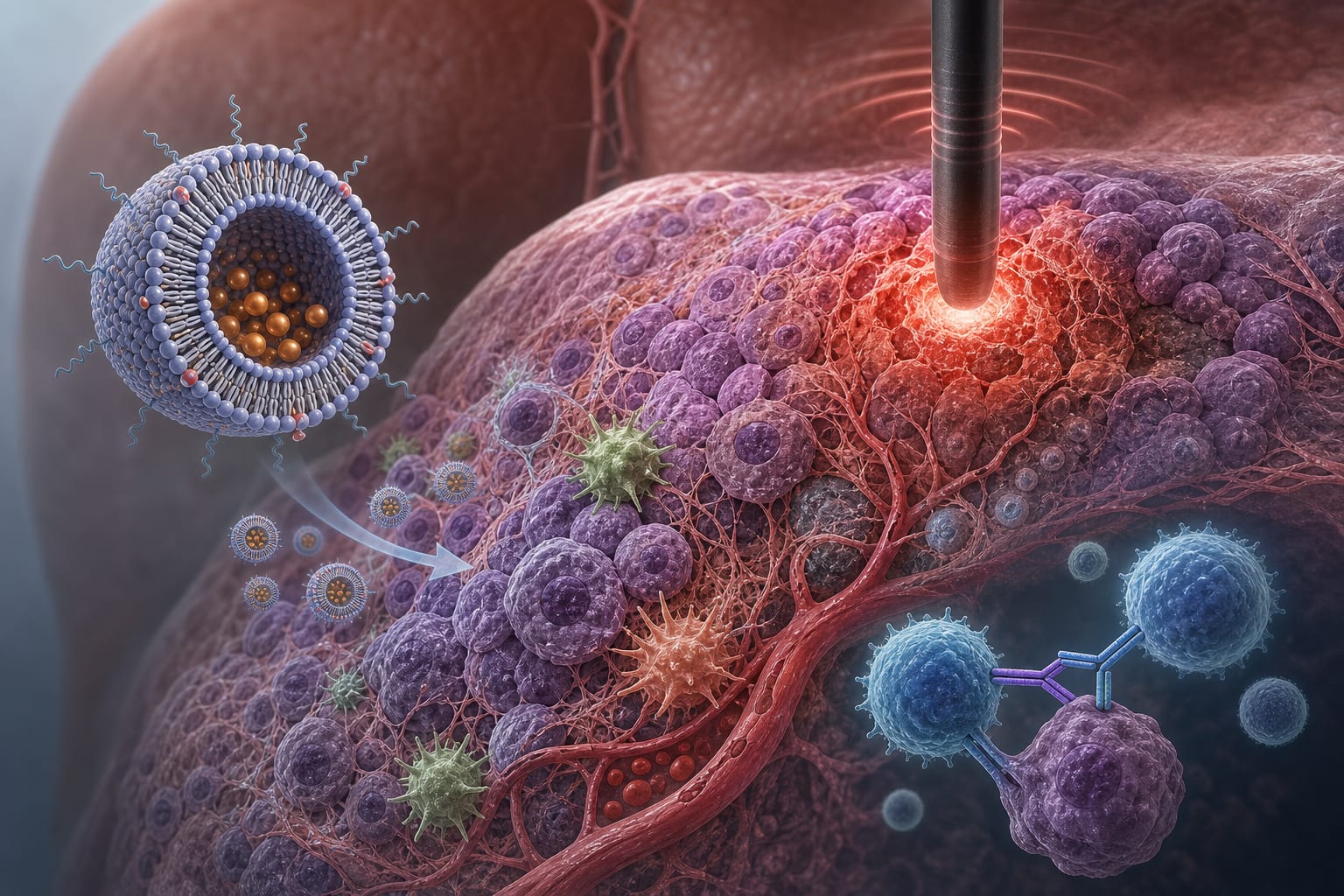
To investigate the hypothesis that preoperative administration of liposome arsenic trioxide (LATO) can downregulate HIF-1α in residual tumors after incomplete radiofrequency ablation (iRFA), thereby modulating the tumor microenvironment and enhancing the efficacy of PD-L1 blockade.
Approach:
Study Design: Murine Hepa1–6 hepatocellular carcinoma model subjected to iRFA, with cohorts based on preoperative LATO administration and postoperative anti-PD-L1 antibody therapy.
Measurements: Proliferation and immune cell infiltration of residual tumors were assessed.
Key Findings:
Residual tumors after iRFA showed significant up-regulation of PCNA, CD31, and HIF-1α compared to controls (p < 0.0001).
Preoperative LATO administration significantly decreased PCNA, CD31, and HIF-1α expression in residual tumors.
LATO promoted immune cell infiltration (CD4+, CD8+) and prolonged survival in mice.
Postoperative anti-PD-L1 antibody further reduced tumor proliferation.
Interpretation:
Pre-treatment with LATO may modulate the tumor microenvironment, which could improve ablation efficacy and enhance the antitumor effect of RFA combined with anti-PD-L1 therapy.
Conclusion:
LATO administration prior to RFA may enhance the immune response and efficacy of subsequent therapies.