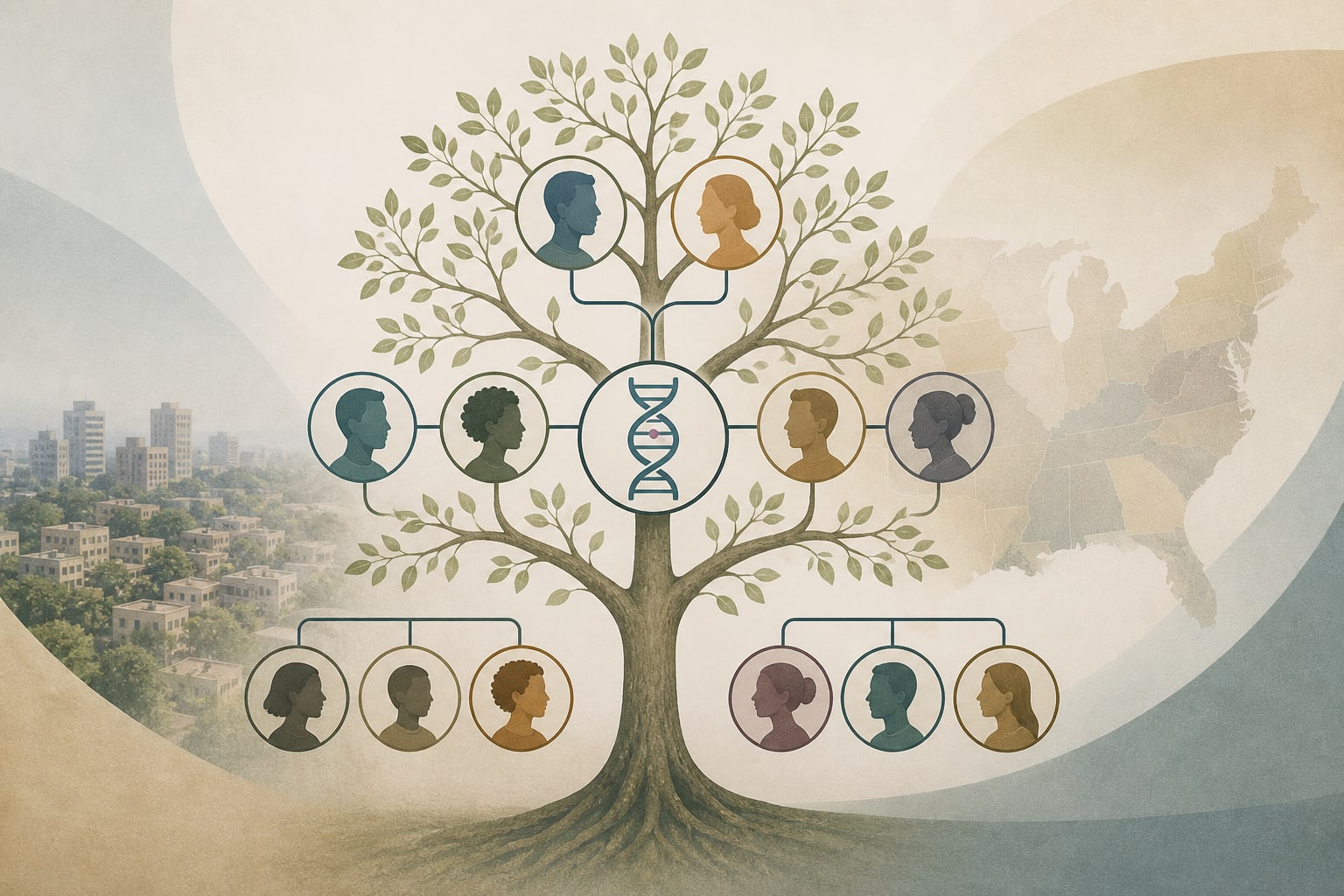
Approaches to Implementing Cascade Genetic Testing: Attention to Detail Matters
-
By
-
Kari L. Ring
-
August 27, 2026
Objective:
To evaluate strategies for improving cascade genetic testing among at-risk relatives of patients with known germline pathogenic variants.
Approach:
- Population-based genetic testing: Investigated the implementation of universal genetic testing and cascade testing among at-risk relatives.
- Quality improvement initiatives: Examined the Assisted Cascade Testing via Outreach and Navigation initiative and the GIFT trial for their impact on testing rates.
- IGNITE-TX feasibility study: Assessed engagement with a digital education platform and patient navigation for cascade genetic testing among a diverse cohort.
Key Findings:
- 12.5% of patients with cancer harbored a germline pathogenic variant in moderate- or high-penetrance cancer genes.
- Cascade testing rates remain low, particularly among underserved populations.
- In the Assisted Cascade Testing initiative, 77% of at-risk relatives completed testing after navigation.
- The GIFT trial showed that family dynamics significantly influenced testing decisions, accounting for 40% of variation.
- The IGNITE-TX study demonstrated feasibility with diverse participants, but completion rates varied widely across intervention groups.
Interpretation:
The findings indicate that while there are effective strategies to enhance cascade genetic testing, significant barriers still exist, particularly in reaching underserved populations. The influence of family dynamics on testing decisions highlights the need for tailored approaches that consider the unique circumstances of each family. The successful navigation support in the Assisted Cascade Testing initiative suggests that personalized outreach can significantly improve testing rates among at-risk relatives.
Limitations:
- High dropout rates and low enrollment of eligible patients limit generalizability.
- The combined use of digital platforms and patient navigation complicates the assessment of individual intervention effects.
Conclusion:
Improving cascade genetic testing requires a multifaceted approach that addresses both systemic barriers and individual family dynamics. Continued efforts to refine outreach strategies and enhance patient navigation services are essential to increase testing rates and ensure that at-risk relatives receive the necessary genetic information for informed health decisions.
Sources:
- CDC Office of Public Health Genomics
- Assisted Cascade Testing via Outreach and Navigation
- GIFT trial
- IGNITE-TX study
Based on findings from:
Implementation Strategies in Cascade Genetic Testing—The Devil Is in the Details
Kari L. Ring. Jama Network Open, 2026.
https://jamanetwork.com/journals/jamanetworkopen/fullarticle/2853362
This content is an AI-generated, fully rewritten summary based on a published scholarly article. It does not reproduce the original text and is not a substitute for the original publication. Readers are encouraged to consult the source for full context, data, and methodology.