Analysis of risk factors and prediction of prognosis in patients with primary liver cancer undergoing transarterial chemoembolization - Summary - MDSpire
Advertisement
Analysis of risk factors and prediction of prognosis in patients with primary liver cancer undergoing transarterial chemoembolization
To evaluate prognostic determinants and develop a prediction model for overall survival in primary liver cancer patients treated with TACE, highlighting its clinical significance.
Key Findings:
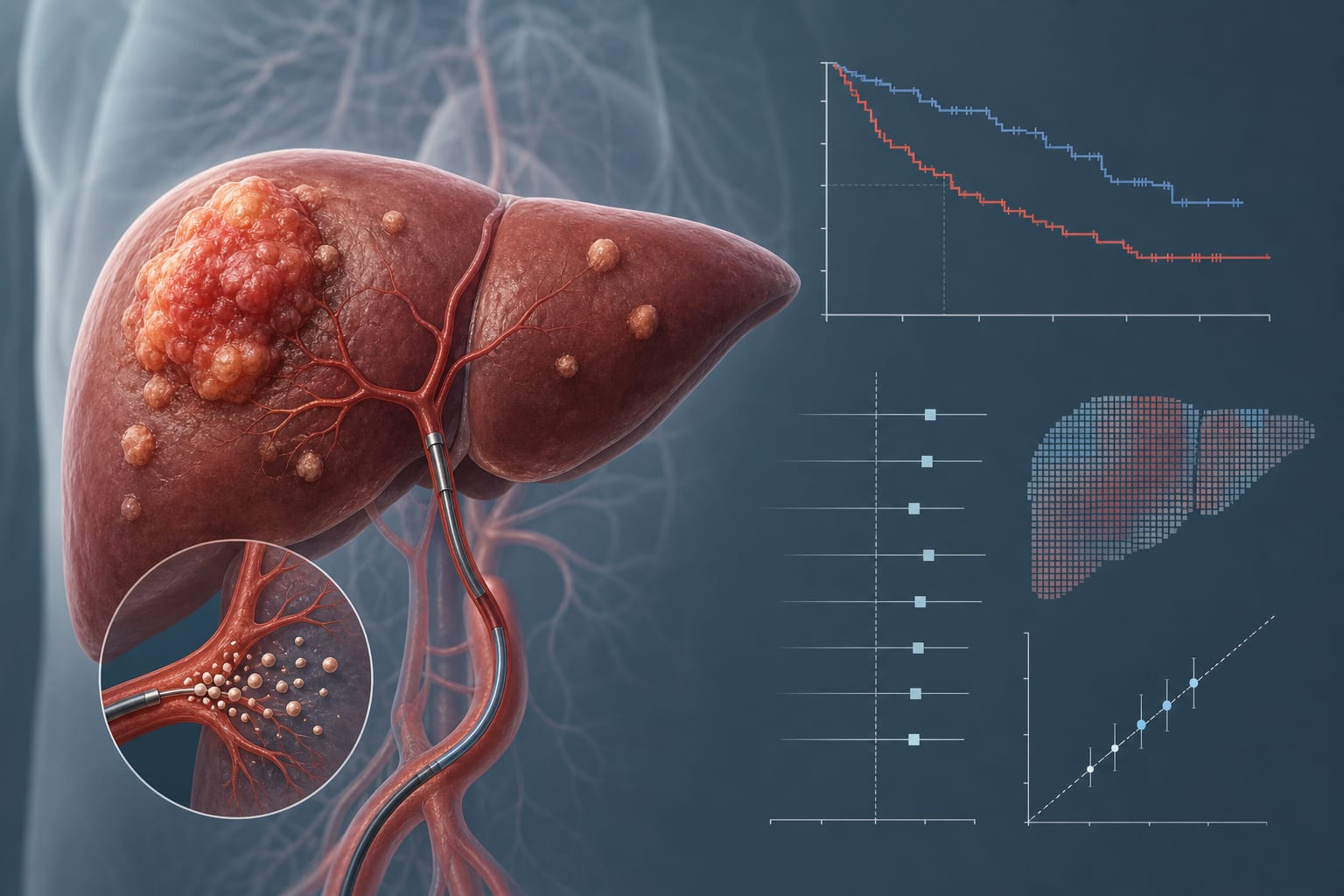
Among 185 patients, median OS was 28.0 months, and median PFS was 10.9 months. These findings suggest significant variability in patient outcomes post-TACE.
Independent predictors of worse OS included maximum tumor diameter, portal vein tumor thrombosis, extrahepatic metastasis, Child–Pugh class B, INR, and alpha-fetoprotein, indicating critical factors for risk assessment.
The model showed good discrimination with a C-index of 0.812 for training and 0.791 for validation, suggesting its potential utility in clinical settings.
Interpretation:
A Cox-based model integrating tumor burden, disease extent, hepatic reserve, coagulation status, and tumor biology provides individualized OS risk stratification after TACE, which can guide treatment decisions.
Limitations:
The study is retrospective and may be subject to selection bias.
Findings may not be generalizable to all populations due to the specific cohort studied.
Potential confounding factors related to treatment history and patient selection were not fully addressed.
Conclusion:
The study presents a prognostic model that can aid in individualized risk assessment for patients undergoing TACE for primary liver cancer.
The Lank Center for Genitourinary Oncology at Dana-Farber Cancer Institute presents a succinct summary of all the prostate cancer clinical updates you need to know from AACR 2026.