Non-invasive vagus nerve magnetic stimulation combined with rehabilitation training for vocal cord paralysis and dysphagia following brain injury: a prospective case series study - Summary - MDSpire
Advertisement
Non-invasive vagus nerve magnetic stimulation combined with rehabilitation training for vocal cord paralysis and dysphagia following brain injury: a prospective case series study
To evaluate the effects of non-invasive vagus nerve magnetic stimulation (nVNMS) combined with rehabilitation on vocal cord paralysis and dysphagia in patients with brain injury.
Approach:
Study Design: A prospective case series study conducted at Guangdong Sanjiu Brain Hospital from June 2024 to May 2025, enrolling 38 inpatients.
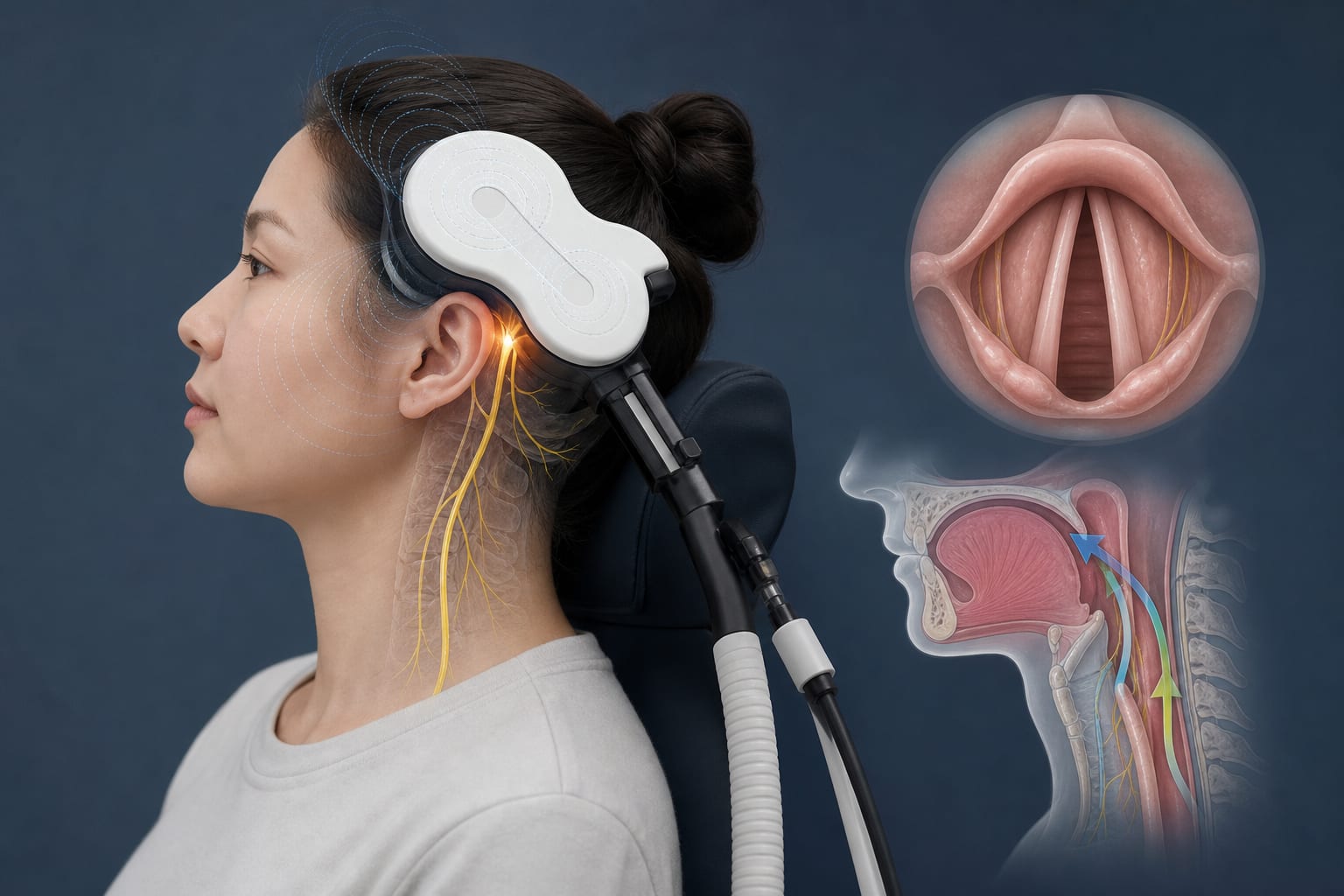
Intervention: Patients underwent a 21-day protocol including left mastoid nVNMS, low-frequency pulse electrical stimulation for swallowing, and manual swallowing training.
Outcome Measures: Outcomes were assessed using the Standardized Swallowing Assessment (SSA), Food Intake Level Scale (FILS), Penetration-Aspiration Scale (PAS), and laryngoscopy.
Key Findings:
SSA scores decreased from 36.92 ± 4.71 to 32.63 ± 7.10 (p < 0.001).
FILS scores increased from 2 (2–2) to 3 (2–3) (p < 0.001).
PAS scores decreased from 6 (4–6) to 4 (4–4) (p < 0.001).
Incidence of vocal cord paralysis decreased from 100% to 63.2% (p < 0.001).
Tracheostomy cannula retention rate decreased from 55.3% to 26.3% (p = 0.001), with 11 patients achieving decannulation.
Nasogastric tube retention rate decreased from 100% to 68.4% (p < 0.001), with 12 patients recovering oral feeding ability.
No serious adverse events occurred during treatment.
Interpretation:
Limitations:
The study lacks a control group, making it difficult to attribute improvements specifically to nVNMS.
The sample size is relatively small and may not represent the broader population.
Conclusion:
Further multicenter randomized controlled trials are required to validate the findings and assess the specific effects of nVNMS.