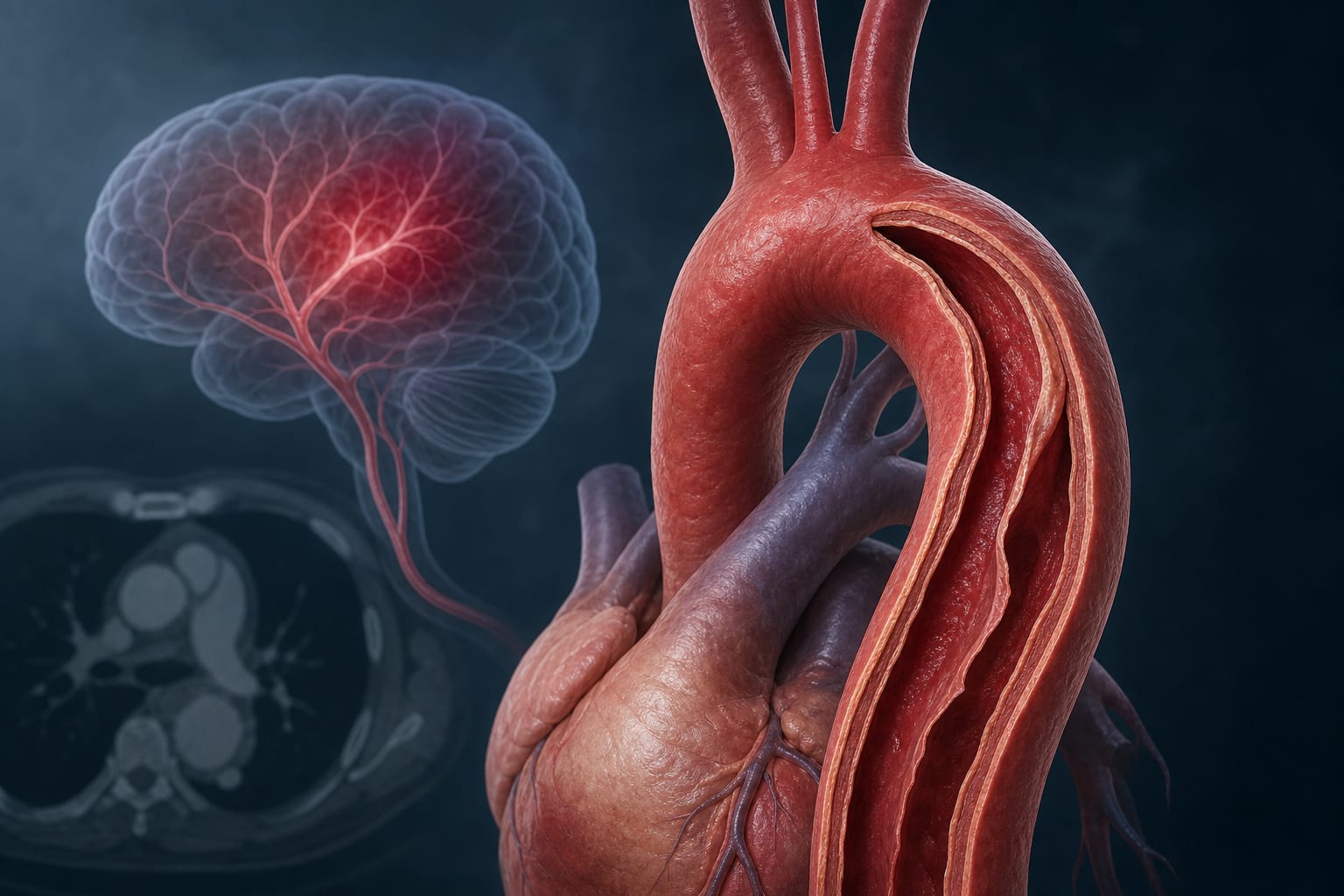
To describe the clinical characteristics and outcomes of patients with type A aortic dissection (TAAD) who initially presented with neurological symptoms and were first admitted to the neurology department due to these symptoms.
Approach:
Key Findings:
Mean age of patients was 62.4 ± 12.2 years; 34.8% were women.
Common symptoms included altered consciousness (65.2%) and limb weakness (56.5%); only 21.7% reported chest or back pain.
Median D-dimer level was 22.73 mg/L (IQR, 9.13–61.17).
39.1% received intravenous thrombolysis before diagnosis; 17.4% underwent surgical repair.
65.2% died during hospitalization; long-term survival rate was 17.4%.
Interpretation:
Acute TAAD may mimic acute stroke, leading to misdiagnosis and inappropriate thrombolytic therapy. Atypical features such as altered consciousness and limb weakness should raise suspicion for TAAD.
Limitations:
Single-center study may limit generalizability.
Retrospective design may introduce selection bias.
Small sample size may affect the reliability of findings.
Conclusion:
Atypical neurological symptoms in patients without chest pain should prompt consideration of TAAD.