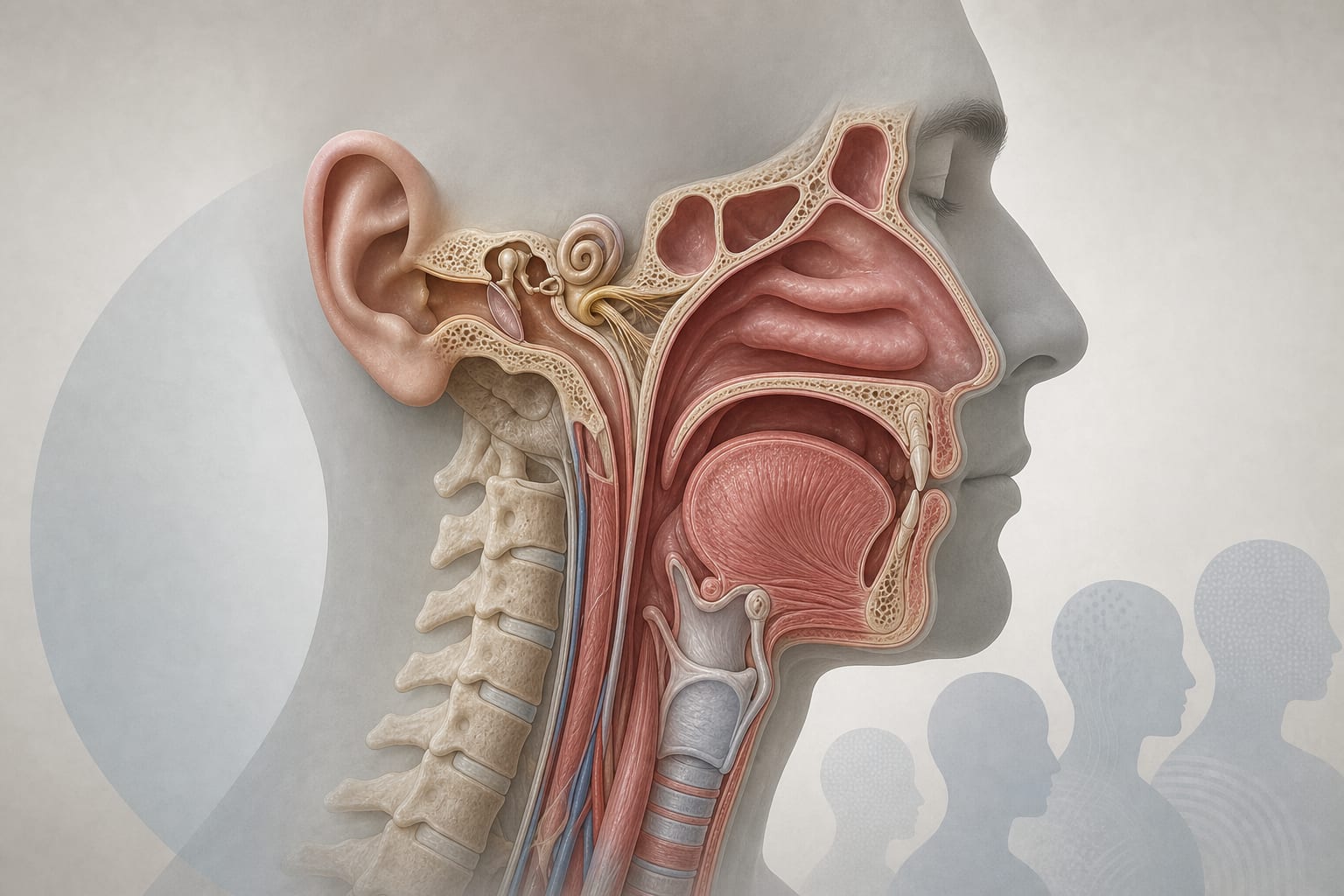
Assess whether ambient pressure tympanometry (APT) can detect radiologic or surgeon-diagnosed causes of subjective pulsatile tinnitus.
Approach:
Design and participants: Single-center retrospective review of 107 adults with subjective pulsatile tinnitus who underwent APT from December 2021 to May 2025.
Assessment: Two blinded audiologists classified APT waveforms. Sensitivity, specificity, positive predictive value, and negative predictive value were assessed against radiologic findings and surgeon-defined diagnoses.
Key Findings:
For detecting any radiologic correlate, APT had 51% sensitivity, 57% specificity, 41% positive predictive value, and 66% negative predictive value.
Against surgeon diagnoses, APT had 43% sensitivity, 55% specificity, 43% positive predictive value, and 55% negative predictive value.
Results were similar among patients whose primary complaint was pulsatile tinnitus.
Some surgeon diagnoses had no identified radiologic correlate, including middle ear myoclonus and Eustachian tube dysfunction.
Interpretation:
The authors concluded that APT had limited screening performance and wrote that clinicians should pursue imaging regardless of a negative APT tracing.
Limitations:
Retrospective, single-center design.
APT recordings lasted 20 seconds; multiple audiologists and waveform-classification criteria may have contributed to false negatives or variation.
Objective pulsatile tinnitus was not systematically recorded, and imaging protocols, quality, and interpretations varied.
Conclusion:
APT did not reliably identify radiologic correlates or surgeon-diagnosed sources of subjective pulsatile tinnitus.