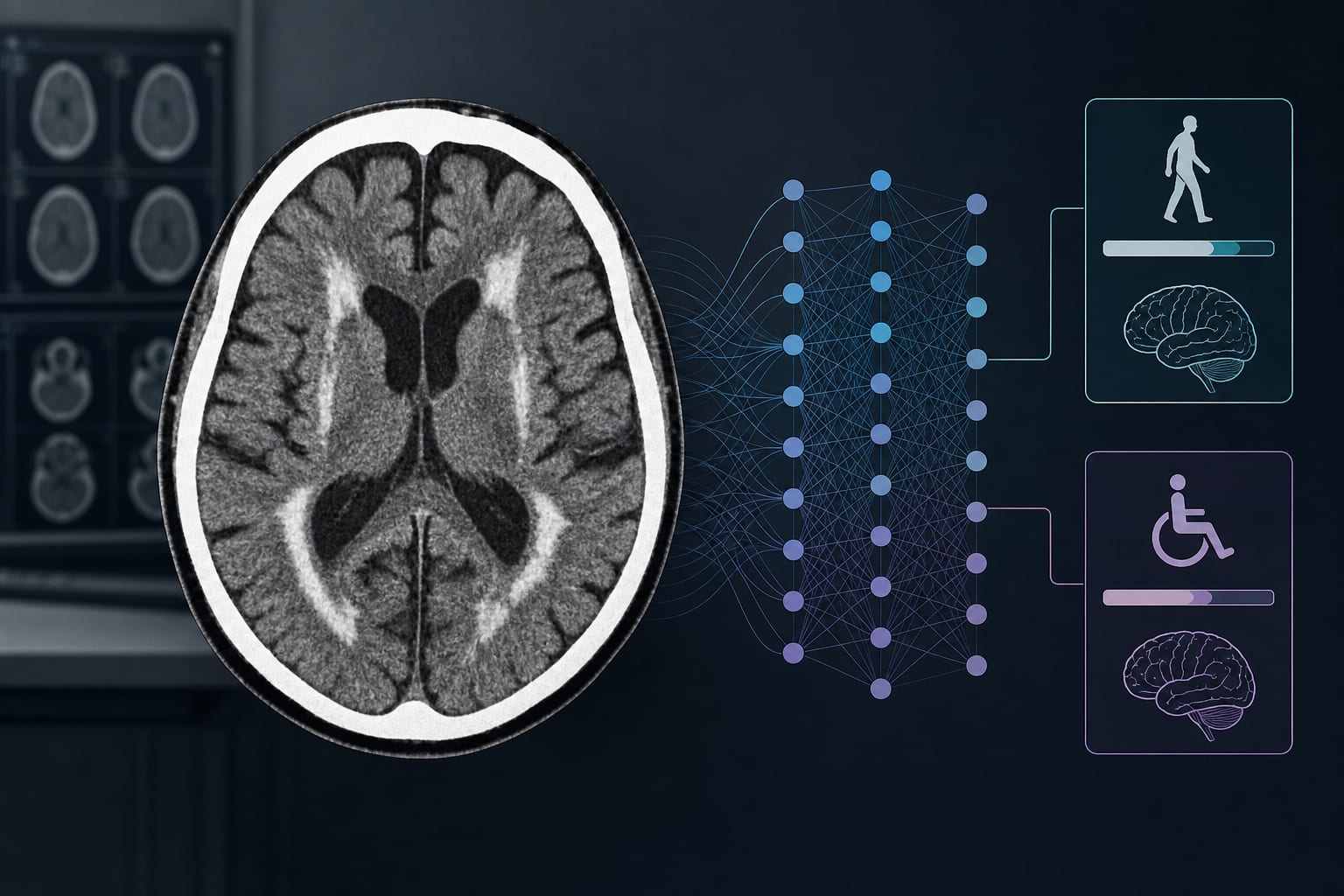
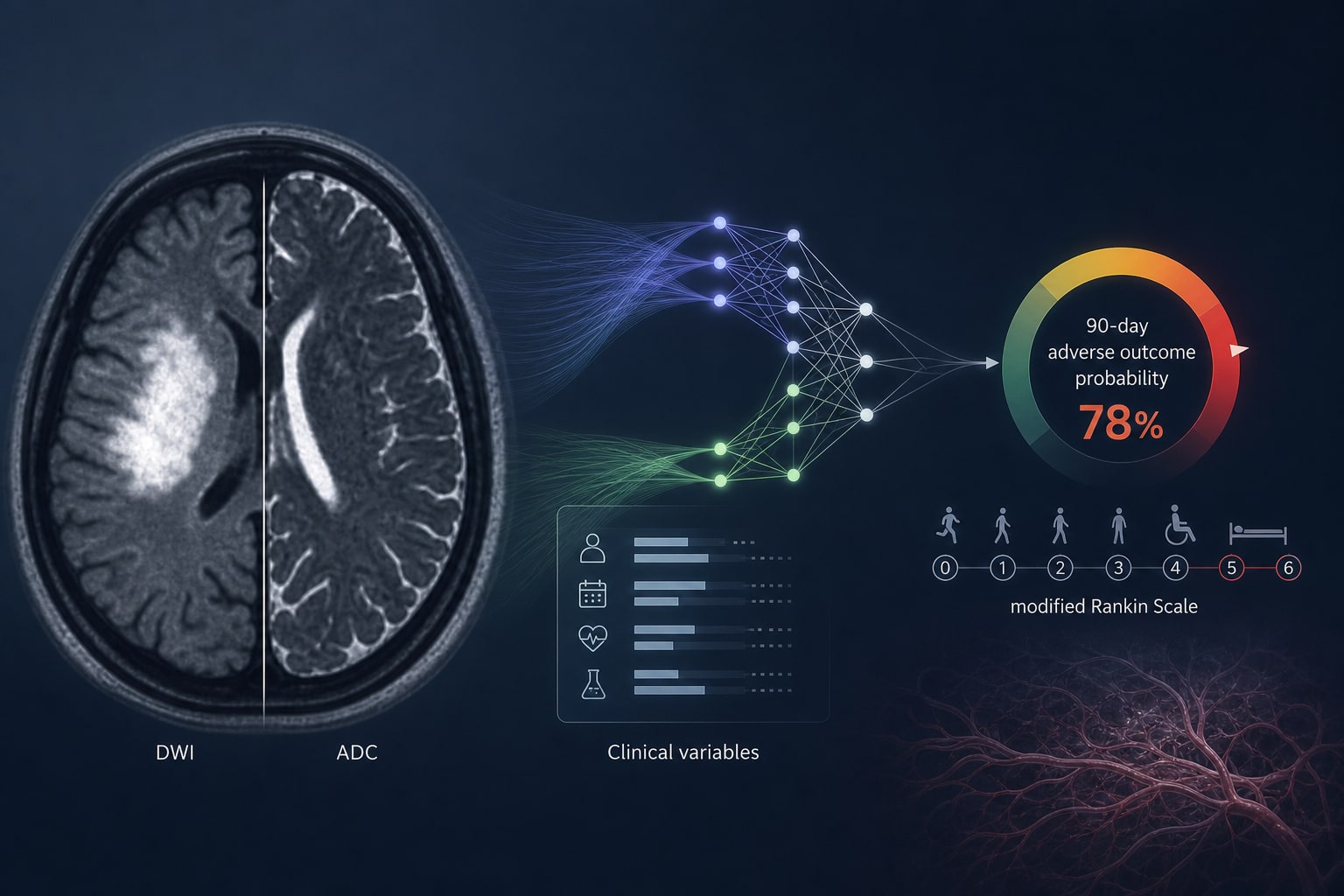
To assess the impact of the modified Small Vessel Disease (mSVD) score and Brain Frailty Score (BFS) on 90-day outcomes in individuals with acute ischemic stroke due to large vessel occlusion undergoing mechanical thrombectomy.
Approach:
Key Findings:
Advanced age, elevated NIHSS, systolic blood pressure, glycemia, and increased severity of leukoaraiosis and atrophy were linked to adverse outcomes.
Severe mSVD (score = 3) was an independent predictor of unfavorable outcomes (OR = 3.267; CI: 1.731–6.168; p = 0.009).
mSVD outperformed BFS and individual CT indicators in predicting outcomes (AUC = 0.904 vs. 0.889/0.898; DeLong p < 0.05).
Increased mSVD scores correlated with decreased likelihood of favorable outcomes post-thrombectomy.
Interpretation:
The mSVD score is identified as a significant predictor of post-thrombectomy outcomes, surpassing BFS and standalone imaging indicators.
Limitations:
The study was conducted in a single middle-income nation, which may limit generalizability.
The analysis was based on a specific cohort with anterior circulation LVO, potentially excluding other stroke types.
Conclusion:
Incorporating mSVD into initial CT assessments may enhance understanding of risk factors for patients undergoing mechanical thrombectomy.