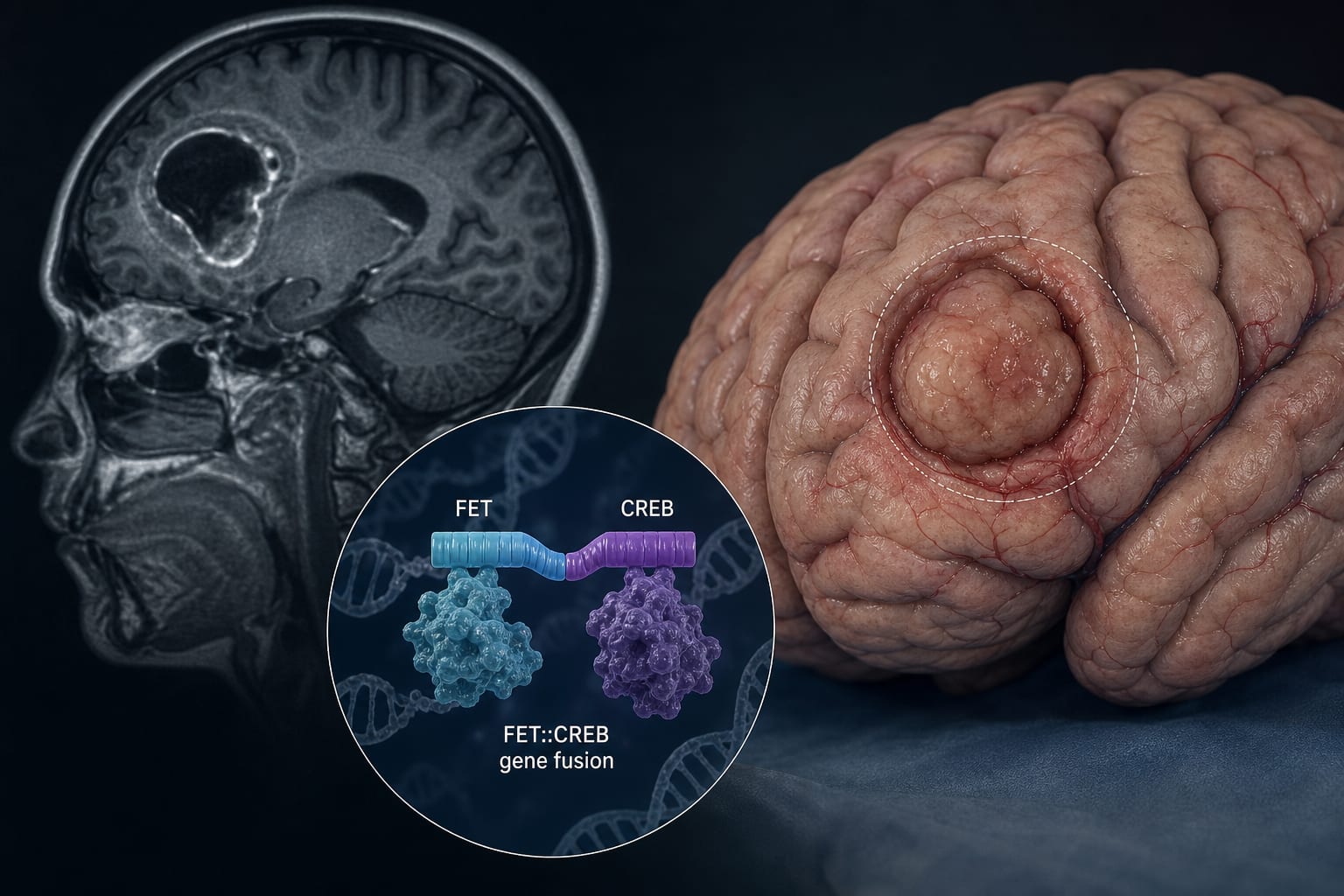
To enhance awareness and understanding of intracranial mesenchymal tumors with FET::CREB fusion by illustrating the associated diagnostic challenges and their significance in clinical practice.
Key Findings:
The tumor was characterized by immunopositivity for Desmin, MUC4, CD99, and ALK, indicating its mesenchymal nature.
Next-generation sequencing confirmed the diagnosis of an intracranial mesenchymal tumor with FET::CREB fusion, specifically identifying the EWSR1::ATF1 gene fusion.
The patient experienced tumor recurrence approximately 24 months after initial surgery, underscoring the tumor's aggressive nature.
Interpretation:
The case highlights the diagnostic challenges and potential for recurrence in FET::CREB fusion-positive intracranial mesenchymal tumors, emphasizing the critical role of molecular profiling in accurate diagnosis and management.
Limitations:
The patient could not receive adjuvant radiotherapy and chemotherapy due to financial constraints, which may affect long-term outcomes.
No postoperative imaging was available following the second resection, limiting the ability to assess treatment efficacy.
Conclusion:
Gross total resection remains the primary treatment for this rare tumor, but further investigation is needed to understand its long-term biological behavior and optimal management strategies, particularly the role of molecular profiling.