Simulated tears of antero-posterior rotator cuff force-couple and reduced glenoid concavity decrease anterior glenohumeral stability: a robot-assisted biomechanical analysis of a load and shift sequence - Summary - MDSpire
Advertisement
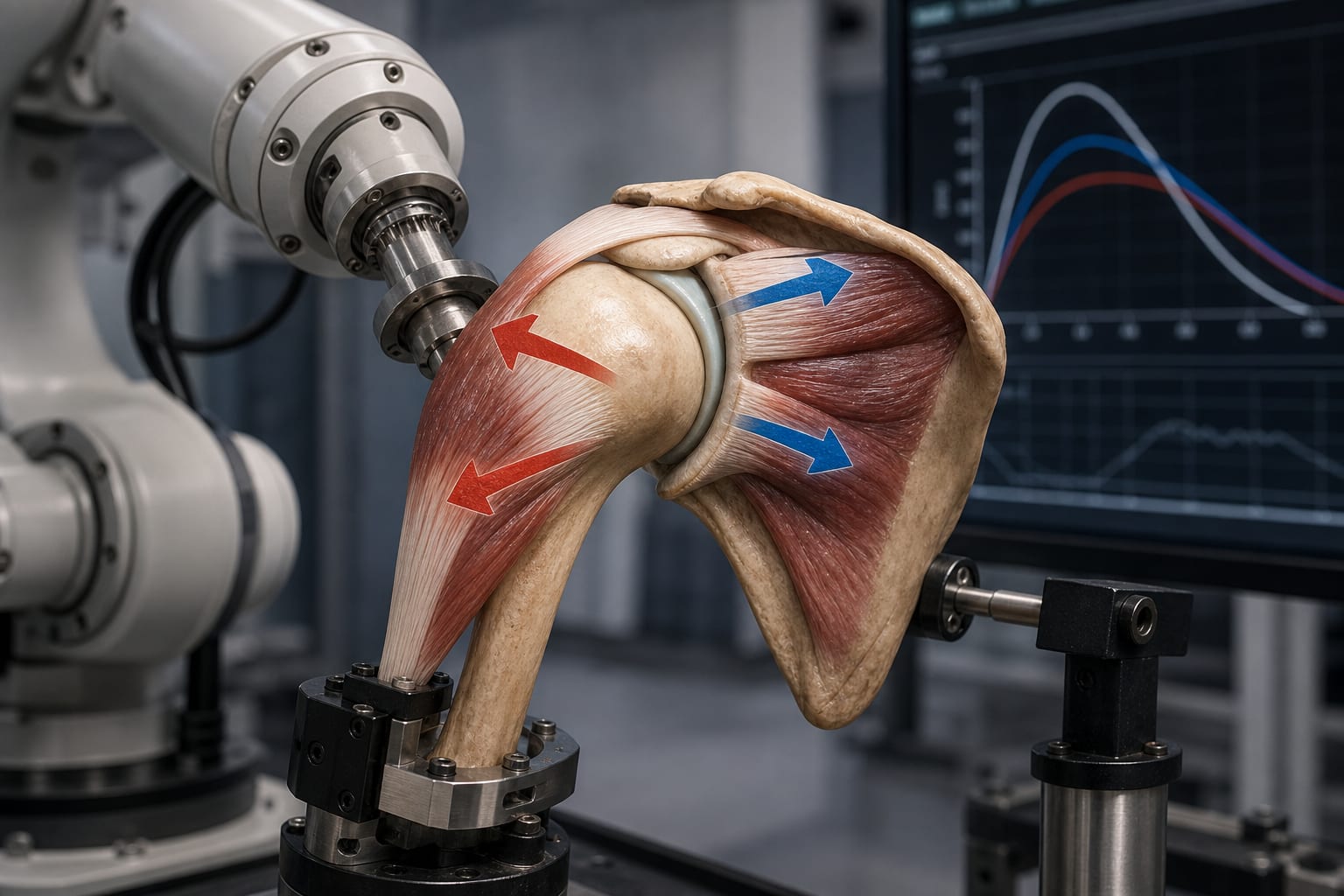
Simulated tears of antero-posterior rotator cuff force-couple and reduced glenoid concavity decrease anterior glenohumeral stability: a robot-assisted biomechanical analysis of a load and shift sequence
Specific configurations of rotator cuff tears are critical for surgical intervention to prevent re-dislocation.
Interpretation:
The findings suggest that both the rotator cuff's integrity and the glenoid's anatomical features play crucial roles in maintaining glenohumeral stability.
Limitations:
The study was conducted on a limited number of specimens (eight), which may affect the generalizability of the results.
The use of cadaveric shoulders may not fully replicate in vivo conditions.
Conclusion:
The study highlights the importance of assessing rotator cuff tears and glenoid concavity in the context of anterior glenohumeral stability.