Longitudinal trajectories of hematological indices and serum metalloproteinases-2 and 9 over 1 year after moderate and severe COVID-19 - Summary - MDSpire
Advertisement
Longitudinal trajectories of hematological indices and serum metalloproteinases-2 and 9 over 1 year after moderate and severe COVID-19
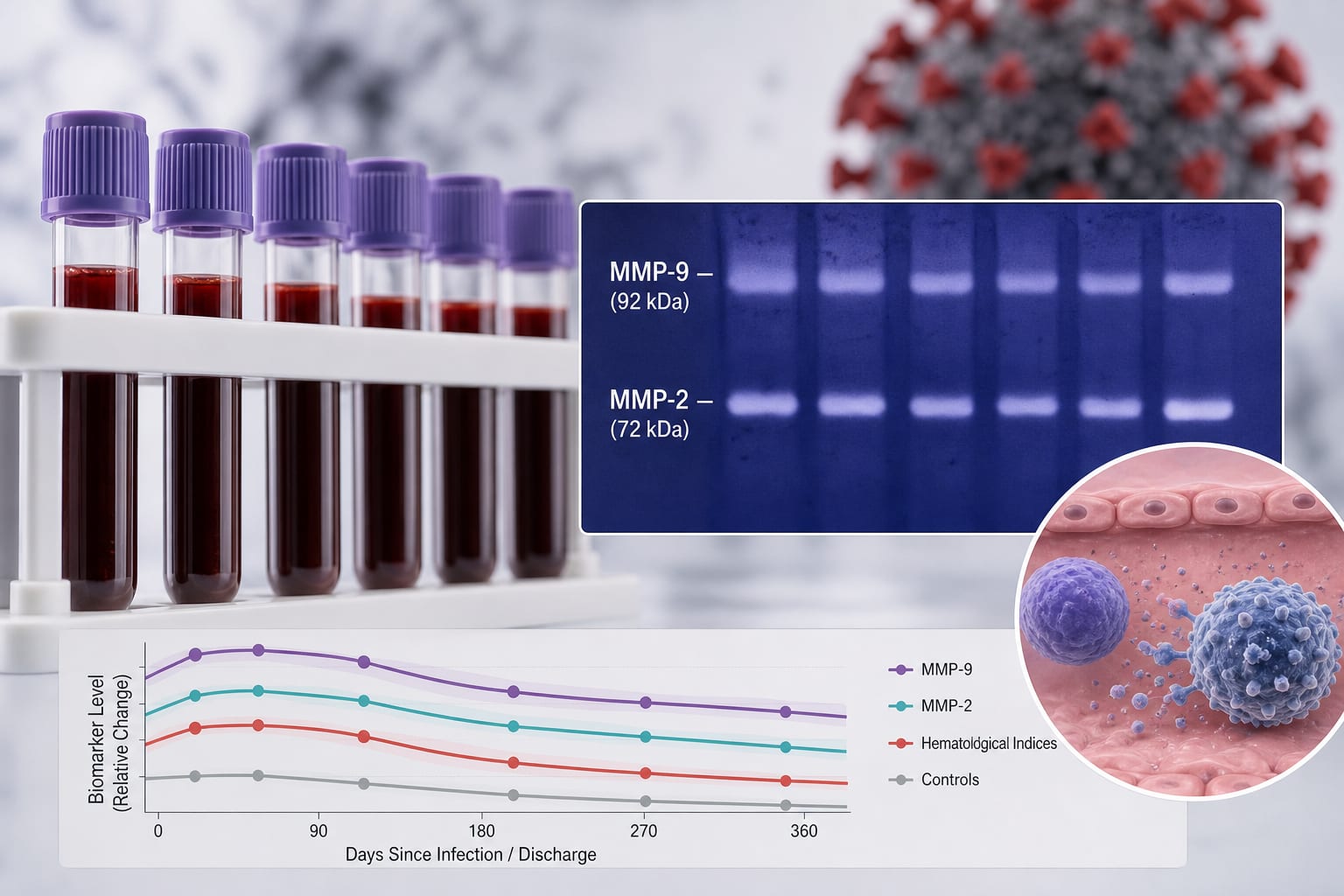
To investigate blood biomarker profiles over a one-year follow-up in a cohort of moderate and severe COVID-19 patients, focusing on markers of renal function, muscle injury, cardiovascular risk, immune derangement, chronic inflammation, and matrix remodeling, to better understand long COVID.
Approach:
Key Findings:
Participants with severe COVID-19 showed persistent immune dysregulation and systemic inflammation at approximately 1 year.
Higher concentrations of inflammatory mediators and cytokines were observed in severe cases compared to moderate cases and controls.
Sustained elevations in MMP-2 and MMP-9 were noted in severe cases.
Alterations in complete blood count-derived indices, including specific ratios like CRP to lymphocyte ratio, were observed over time in severe cases.
Interpretation:
The study delineates a persistent inflammatory and matrix-remodeling signature up to 1 year after severe COVID-19, based on longitudinal biomarker profiles rather than symptom-defined long COVID-19 outcomes, highlighting the need for targeted clinical interventions.
Limitations:
Prospective prognostic validation and clinical endpoint data are still required, limiting the ability to draw definitive conclusions about long-term outcomes.
Limited information regarding markers in subjects affected by moderate and severe acute COVID-19 1 year after infection may affect the generalizability of the findings.
Conclusion:
The findings suggest that a biomarker panel may help inform future studies of post-acute risk stratification and targeted interventions, potentially improving management strategies for long COVID.
by Rebecca Salomão, Gabriel Pasquarelli-do-Nascimento, Mayara Ananias, Victoria Assis, Leandro Gomes de Jesus Ferreira, Isabella da Silva Almeida, Leandra Silva, Katiane Tostes, Bruna Pereira Sorroche, Lidia Maria Rebolho Batista Arantes, Kelly Grace Magalhães, Liliana Torcoroma García, Rochelle Rocha Costa, João Luiz Quagliotti Durigan, Rita de Cássia Marqueti