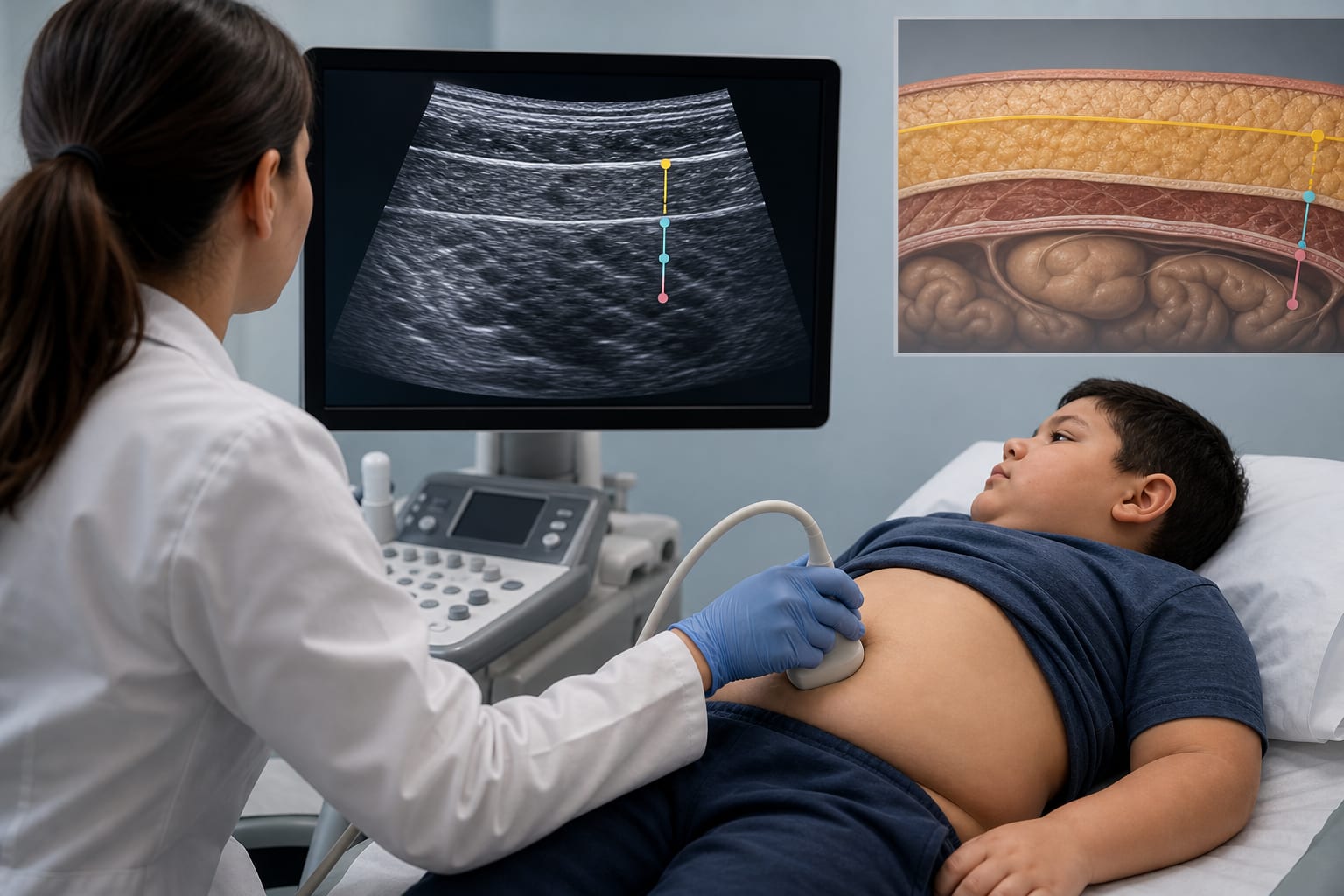
To evaluate the clinical and metabolic correlates of distinct abdominal fat layers in a pediatric cohort with overweight or obesity, emphasizing the importance of this evaluation.
Key Findings:
84 pediatric patients (62% female; mean age 14.0 ± 2.6 years; mean BMI SDS 2.8 ± 1.1) were evaluated.
71.3% classified as obese (class I–III) and 28.7% as overweight with abdominal obesity.
Omental fat was consistently associated with anthropometric obesity indices, insulin resistance, LDL cholesterol, and hepatic steatosis.
Significant sexual dimorphism in omental fat thickness (40.5 mm males vs. 27.3 mm females; p < 0.001), highlighting the relevance of sex differences in metabolic risk.
ROC analysis showed AUCs of 0.64 (males; cut-off 34.6 mm) and 0.57 (females; cut-off 19.6 mm) for predicting metabolic syndrome.
Interpretation:
Omental fat is the visceral compartment most consistently associated with metabolic risk markers in pediatric obesity.
Limitations:
Retrospective design may limit causal inferences, potentially affecting the interpretation of associations.
Sample size may restrict generalizability of findings.
Conclusion:
Omental fat serves as a significant indicator of metabolic risk in pediatric obesity.
FOXC1 duplications were the second most common monogenic finding among genetically solved juvenile open-angle glaucoma cases in one registry, supporting the use of copy-number variant analysis in early-onset glaucoma testing.