Identification of predictors of the ovarian response to clomiphene citrate in infertile women with polycystic ovary syndrome: A post-hoc analysis of a randomized controlled trial - Summary - MDSpire
Conexiant’s news site is now MDSpire News. Learn more
Advertisement
Predictors of Ovarian Response to Clomiphene Citrate in Infertile Women with Polycystic Ovary Syndrome: Insights from a Post-Hoc Analysis of a Randomized Controlled Trial
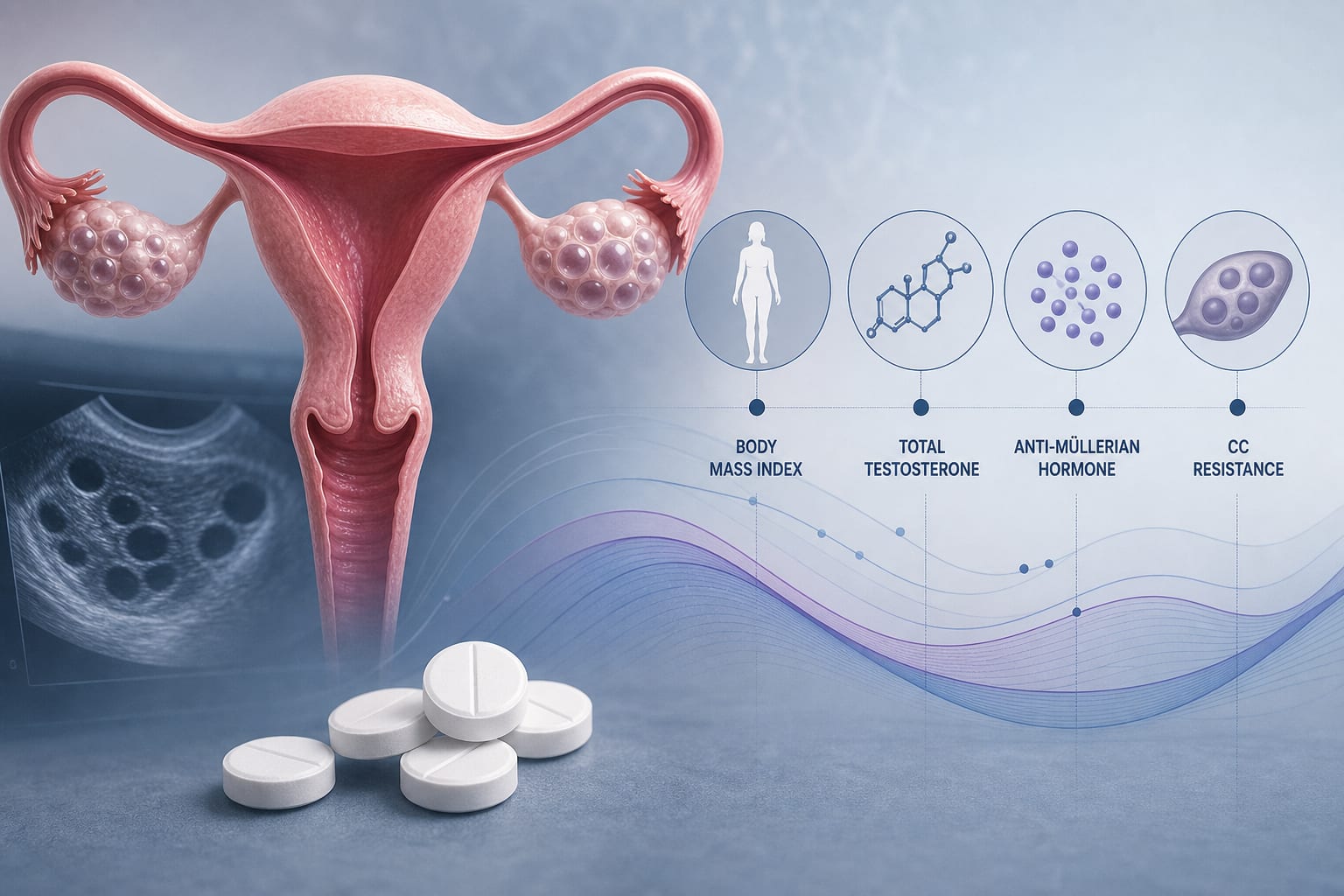
To identify reliable baseline predictors of clomiphene citrate (CC) resistance in infertile women with polycystic ovary syndrome (PCOS).
Approach:
Study Design: Post-hoc analysis of the PCOSAct trial, a multicenter randomized controlled trial in China.
Participants: 471 participants randomized to the active CC arm who completed follow-up.
Statistical Analysis: Multivariable logistic and LASSO regression analyses, ROC curve plotting, and RCS logistic regression model.
Key Findings:
CC resistance was identified in 32 (6.8%) participants.
BMI, Total Testosterone (TT), and Anti-Müllerian Hormone (AMH) were predictors of ovarian response to CC.
The 'T+BMI' dual-factor model had an AUC of 0.801, comparable to the three-factor model with AMH (AUC = 0.818).
TT was the strongest individual predictor (OR = 2.73), while BMI was the most significant modifiable risk factor (OR = 2.49).
Interpretation:
A simplified 'T + BMI' assessment provides comparable prognostic utility without AMH testing.
Limitations:
The study is based on a specific population (Chinese women with PCOS), which may limit generalizability.
The analysis is post-hoc, which may introduce biases.
Conclusion:
For patients at high risk of CC resistance, upfront use of aromatase inhibitors or low-dose gonadotropins is recommended to avoid ineffective treatment cycles.