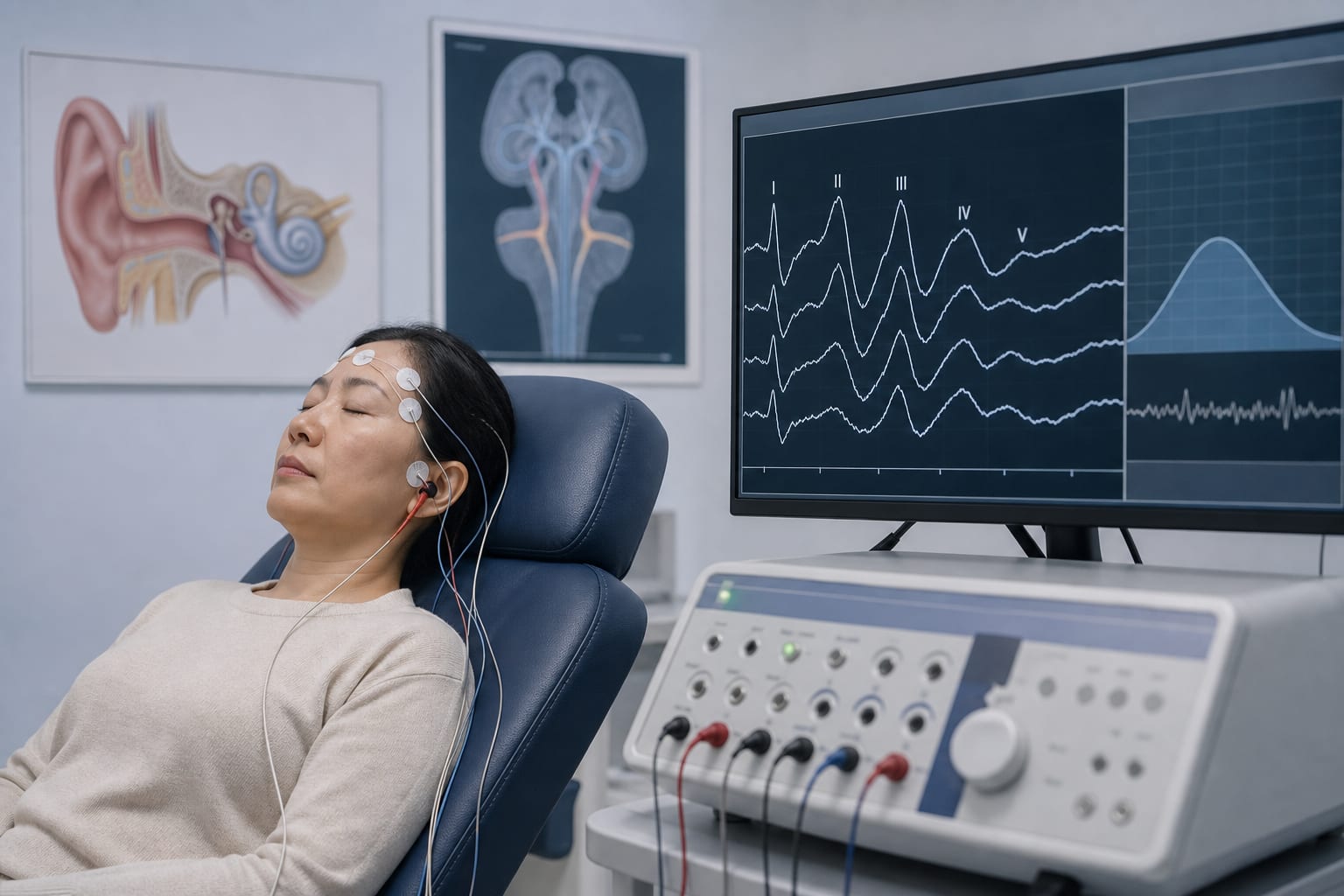
To compare ABR parameters in patients with chronic tinnitus and healthy controls and examine whether clinical changes after acupuncture intervention coincide with alterations in auditory neurophysiological measures.
Approach:
Study Design: A prospective, two-part hybrid design including a matched case–control observational component and a longitudinal, self-controlled intervention component.
Participants: 36 patients with bilateral chronic tinnitus and 36 healthy controls matched for age and sex.
Intervention: Participants with tinnitus will receive 10 acupuncture treatments over 4 weeks.
Measurements: ABR testing will be performed at baseline and post-treatment; clinical outcomes will be measured using THI, TEQ, and Tinnitus-Related Visual Analog Scale.
Key Findings:
Baseline disparities in ABR parameters are expected between participants with chronic tinnitus and healthy controls.
Acupuncture-related symptom improvement may coincide with alterations in auditory neurophysiological measures.
Interpretation:
The study aims to provide preliminary evidence on the feasibility of using ABR as an objective outcome measure in tinnitus intervention studies.
Limitations:
The study is exploratory and may not provide definitive conclusions.
The sample size is relatively small, which may affect the generalizability of the findings.
Conclusion:
The protocol presents an exploratory clinical study to assess clinical and neurophysiological changes associated with acupuncture for chronic tinnitus.