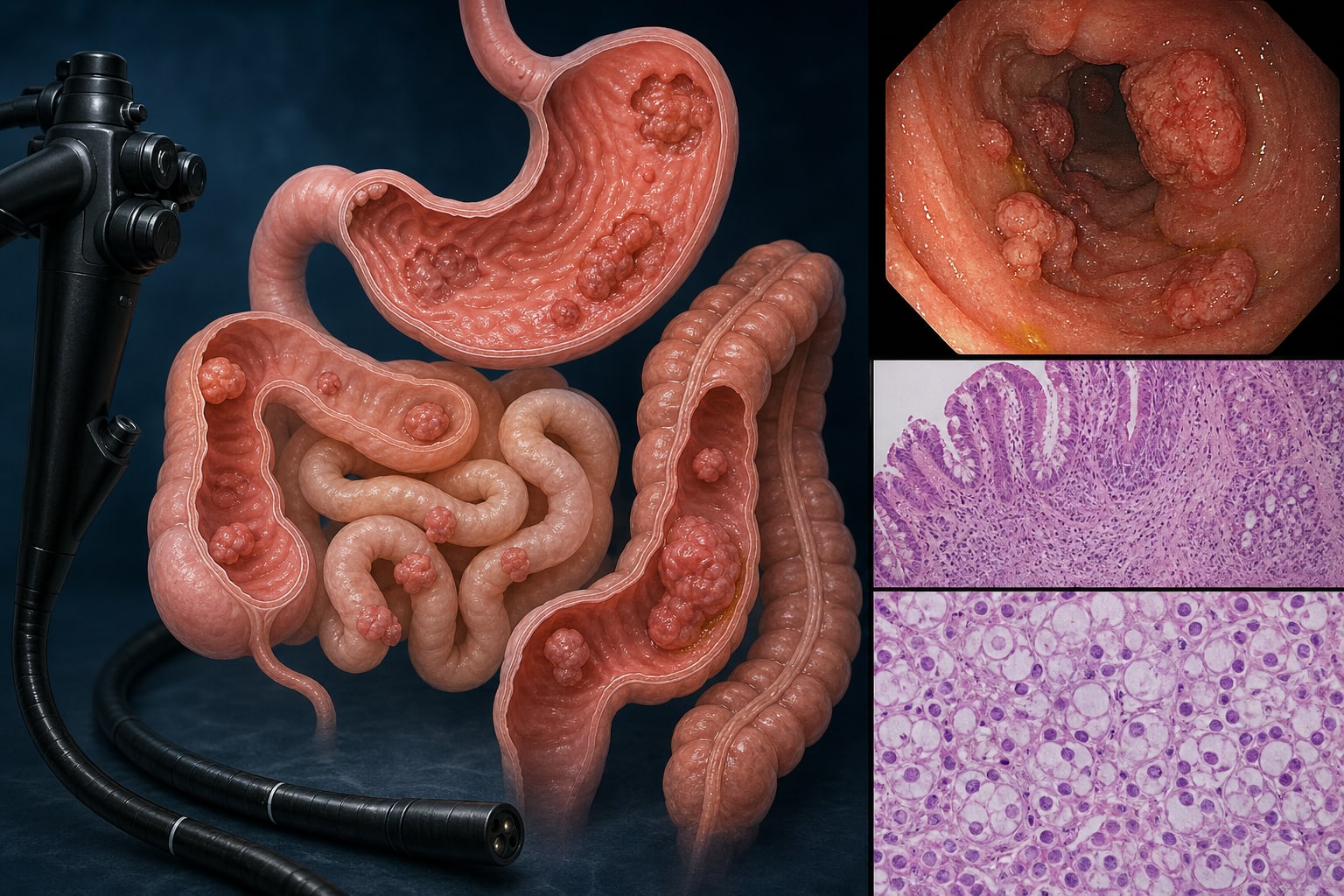
To report a rare case of gastric adenocarcinoma with signet ring cell features and multiple intestinal polypoid metastases, emphasizing its unusual metastatic patterns.
Approach:
Case Presentation: A 62-year-old man presented with epigastric pain and abdominal distension. Elevated serum CEA levels and endoscopic evaluations revealed multiple ulcerative and polypoid lesions in the stomach and intestines.
Diagnostic Methods: Histopathological and immunohistochemical analyses confirmed poorly differentiated adenocarcinoma with signet ring cell characteristics in intestinal lesions.
Key Findings:
The patient exhibited multiple polypoid intestinal metastases from gastric SRCC.
Differentiation between metastatic gastric SRCC and primary colorectal carcinoma can be aided by CK7 and CK20 expression.
The patient experienced severe chemotherapy-induced bone marrow suppression after one cycle of treatment.
The patient had an elevated serum CEA level of 400 ng/ml.
Interpretation:
The case highlights the unusual metastatic patterns of gastric SRCC and the importance of thorough endoscopic and pathological assessments to distinguish it from primary colorectal carcinoma.
Limitations:
The precise mechanism of the distinctive metastatic pattern remains uncertain, although peritoneal seeding has been proposed as a potential route.
The patient declined comprehensive genetic testing due to financial concerns.
Conclusion:
This case underscores the rarity of intestinal metastases from gastric SRCC and the need for careful diagnostic evaluation to prevent misdiagnosis.