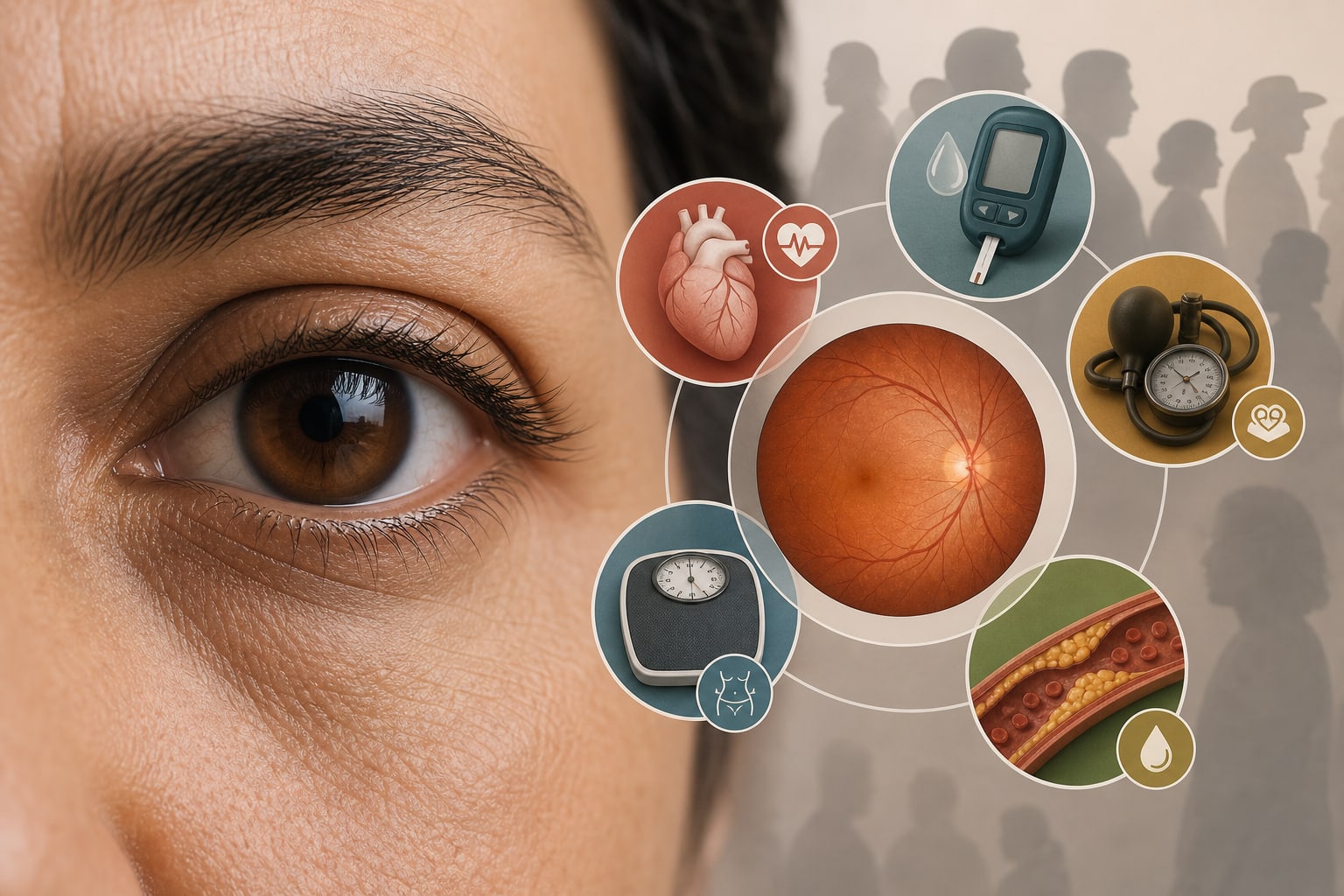
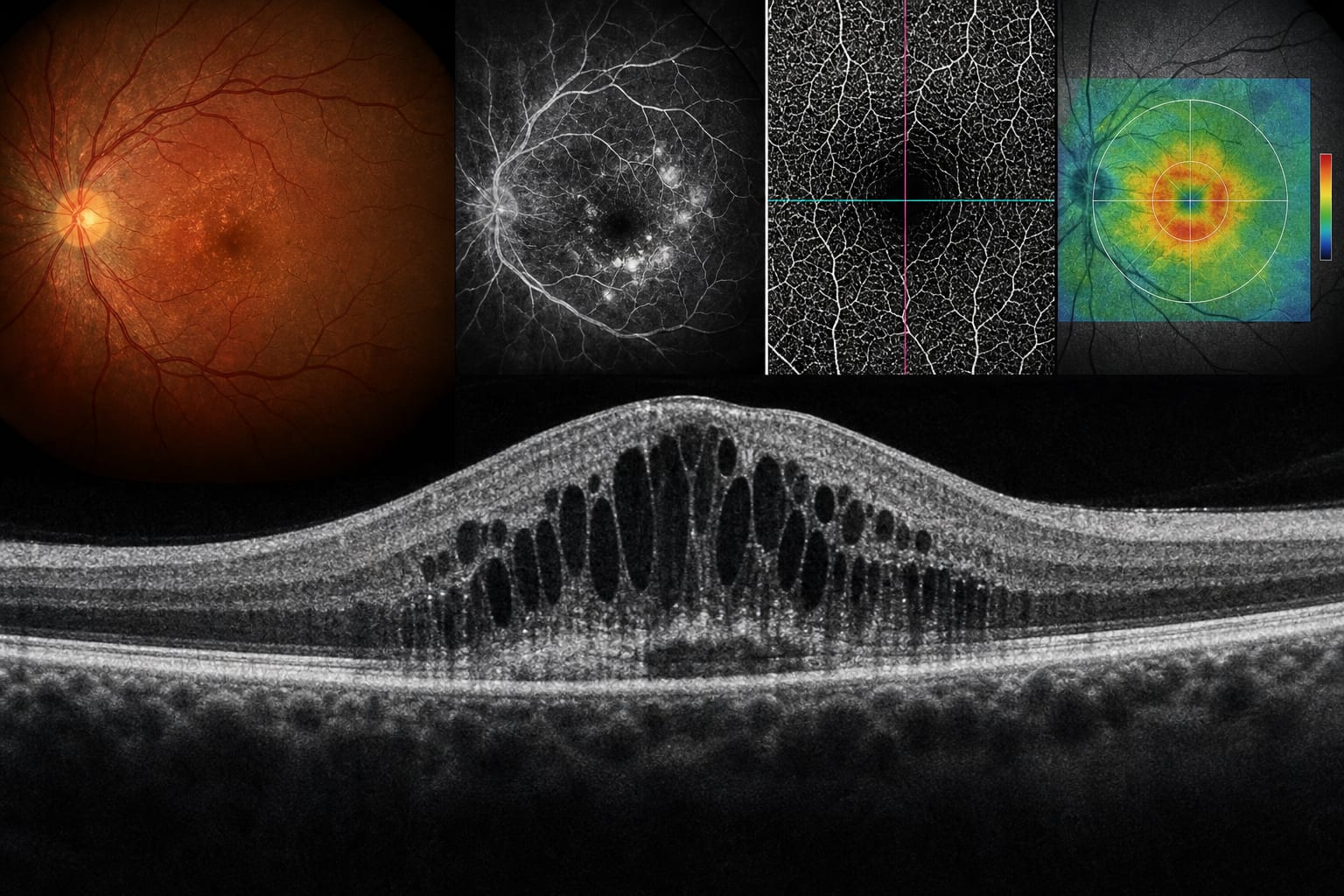
To explore the role of retinal biomarkers in guiding treatment decisions for diabetic macular edema (DME), emphasizing the importance of personalized treatment strategies.
Key Findings:
Improvement in DRIL is associated with better visual outcomes.
Disorganization of outer retinal layers correlates with poorer response to anti-VEGF therapy.
Presence of cystoid macular edema predicts greater CST reduction after anti-VEGF treatment.
Absence of HRF is linked to improved visual outcomes post anti-VEGF therapy.
Interpretation:
Imaging biomarkers can enhance the understanding of treatment responses in DME, allowing for more personalized management strategies.
Limitations:
Direct comparisons between treatment modalities are limited, impacting the ability to choose the most effective treatment.
Structural improvements do not always correlate with visual function enhancements, complicating treatment assessments.
Conclusion:
Retinal biomarkers derived from advanced imaging techniques can significantly inform treatment selection and improve outcomes for patients with DME, underscoring the potential for personalized management strategies.
Age-related macular degeneration (AMD) is among the most common retinal diagnoses. Although the clinical features of the disease are well known, ICD-10 coding can be confusing if details such as stage, activity, and laterality are not clearly documented. Incomplete documentation may prompt questions about the medical necessity of diagnostic tests or intravitreal injections. This Q&A addresses common sources of confusion and offers practical guidance to support clear, accurate documentation.