Conexiant’s news site is now MDSpire News. Learn more
Advertisement
Minimally Invasive TT Maze Surgery Advances AFib Treatment
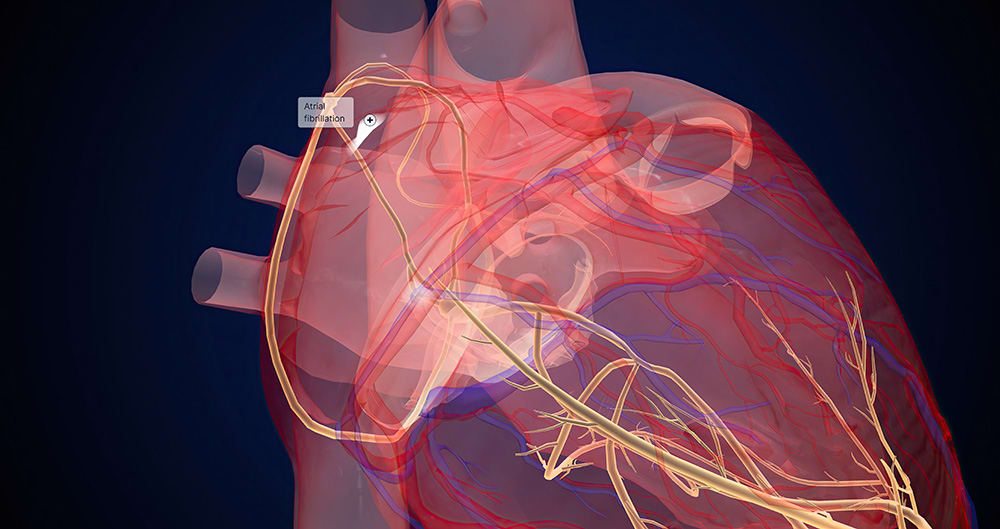
Keck Medicine of USC cardiothoracic surgeon Jonathan Praeger, MD, explains how a less-invasive approach to epicardial ablation helps resolve longstanding persistent AFib.
To explain the benefits of the totally thoracoscopic (TT) maze surgery for treating longstanding persistent atrial fibrillation (AFib).
Approach:
Surgical Technique: The TT maze procedure involves making small incisions between the ribs to access the heart, allowing for epicardial ablation without the need for open-heart surgery.
Hybrid Approach: Combines epicardial ablation with endocardial ablation to improve outcomes for patients with longstanding persistent AFib.
Key Findings:
Endocardial ablation is less effective for longstanding persistent AFib compared to paroxysmal AFib.
The TT maze method provides a less invasive option with shorter recovery times.
Patients experience minimal pain and can often go home after two nights in the hospital.
Interpretation:
The TT maze surgery offers a promising alternative for patients suffering from longstanding persistent AFib, potentially improving their quality of life.
Limitations:
The procedure is technically challenging and not widely performed.
Not suitable for all patients, particularly those with paroxysmal AFib.
Conclusion:
TT maze surgery represents a significant advancement in the treatment of longstanding persistent AFib, providing a minimally invasive option that can lead to improved patient outcomes.