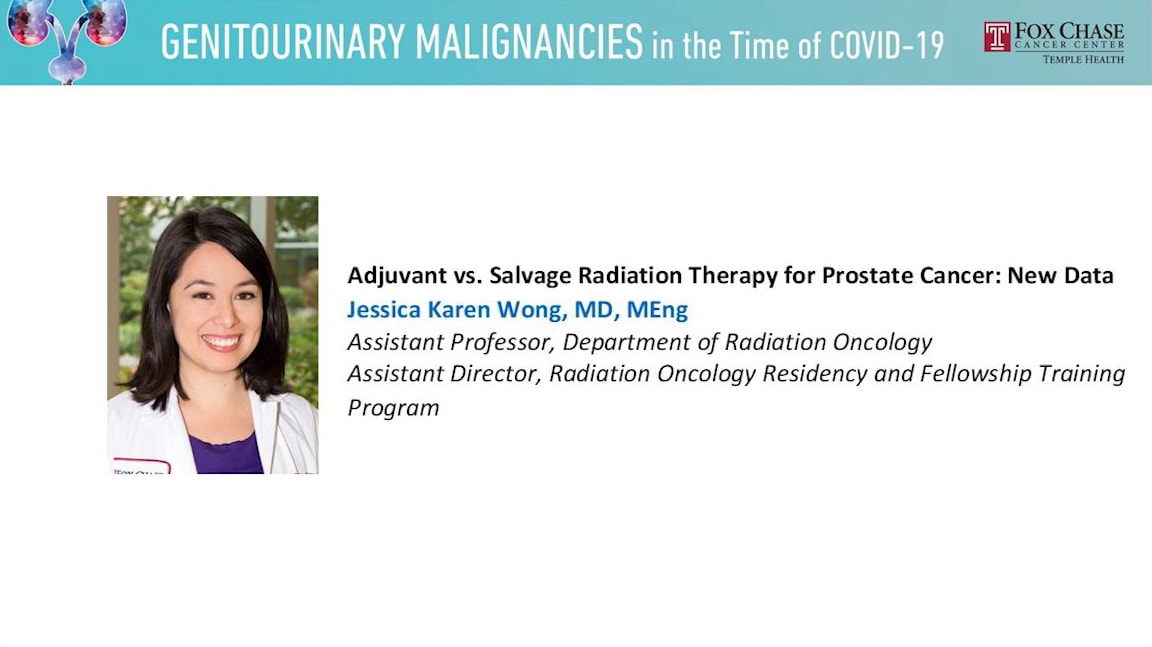
To discuss new data comparing adjuvant and salvage radiation therapy for prostate cancer post-prostatectomy, highlighting its clinical significance.
Key Findings:
Adjuvant radiation significantly reduces the risk of PSA recurrence by over 50%, with specific trial data supporting this.
Recent trials show similar biochemical progression-free survival between adjuvant and early salvage groups, with detailed statistics.
Only about 10% of high-risk patients receive adjuvant radiation in practice, highlighting a gap in treatment.
Interpretation:
The findings suggest that early salvage radiation may be a viable alternative to adjuvant radiation, potentially sparing patients from unnecessary treatment without compromising outcomes. Discuss potential impacts on clinical practice.
Limitations:
Older trials included patients with detectable PSA levels, affecting the applicability of results and limiting generalizability.
Newer trials had limited representation of high-risk patients, such as those with T4 disease or high Gleason scores, which may skew results.
Conclusion:
Further research is needed to clarify the best approach for high-risk prostate cancer patients, especially with evolving PSA testing practices. Suggest specific areas for future research.