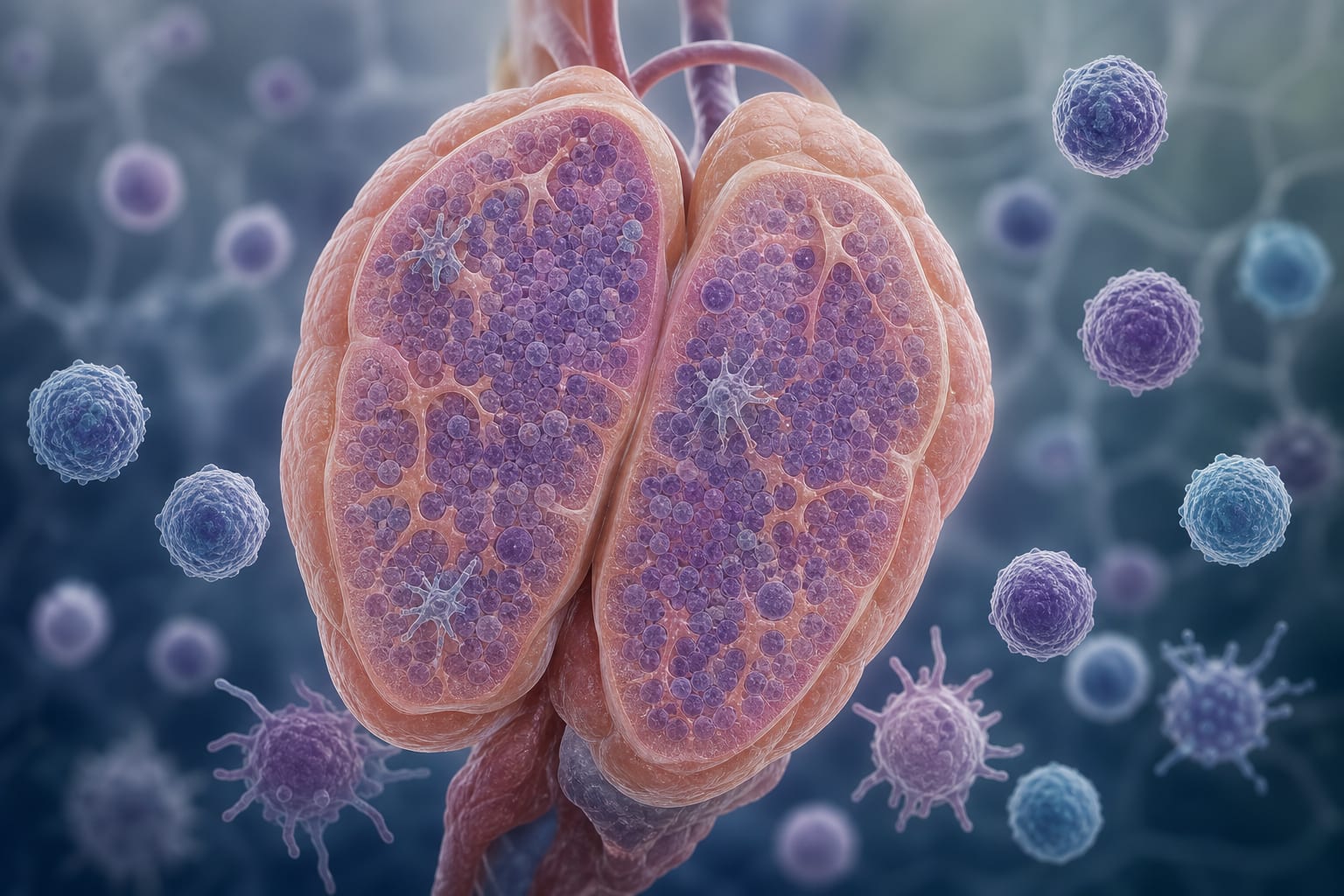
Editorial: Thymus research and development: a new look at the past, current knowledge, and future perspectives
-
By
-
Valentin P. Shichkin
-
Miho Shinzawa
-
Dominik Filipp
-
Mariastefania Antica
-
Domenico V. Delfino
-
July 10, 2026
-
Objective:
To provide an overview of the evolution of thymus research, highlighting recent advancements and future directions in the field.
Approach:
- Historical Context: Discusses the historical significance of thymus research, particularly the foundational work by Jacques Miller in 1961.
- Current Techniques: Explores recent technological advancements in thymus research, including single-cell multi-omics and gene-editing approaches.
- Research Contributions: Summarizes original research articles and reviews that address various aspects of thymic biology.
Key Findings:
- The thymus is crucial for producing a diverse and self-tolerant T-cell repertoire.
- Keratinocyte growth factor (KGF) modulates thymocyte development through Notch signaling.
- Chromatin organization plays a significant role in T-cell receptor diversity.
- Thymically committed regulatory CD4 T cells (tTregs) are essential for immune homeostasis.
- Thymic epithelial cells (TECs) are vital for maintaining the thymic microenvironment.
Interpretation:
The thymus is integral to immune function, and recent studies have advanced the understanding of its role in T-cell development and immune tolerance.
Limitations:
- The article does not provide specific clinical implications of the findings.
- Future research directions are suggested but not detailed.
Conclusion:
Thymus research is evolving with new methodologies that enhance understanding of its biology and potential therapeutic applications.