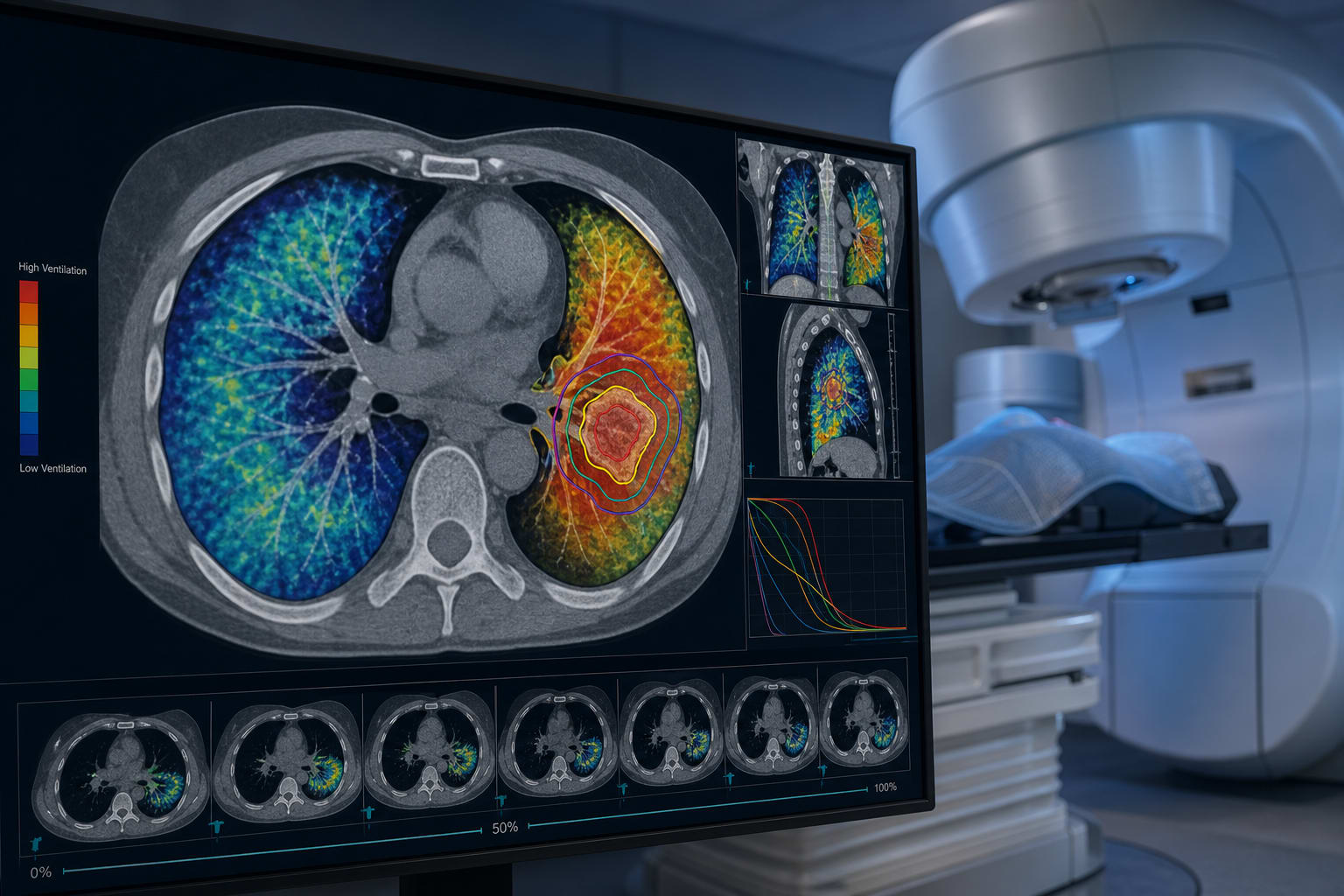
To integrate four-dimensional computed tomography (4DCT) ventilation imaging into functional planning using different radiotherapy (RT) techniques and compare the dosimetric differences across these techniques, highlighting the significance of these comparisons for clinical practice.
Key Findings:
Functional planning reduced fV5, fV10, fV20, fV30, and functional mean lung dose (fMLD) while maintaining planning target volume (PTV) coverage, with p-values indicating statistical significance.
Functional planning increased radiation dose to most organs at risk (OARs), but these increases were not statistically significant (p > 0.05).
f-IMRT and f-VMAT reduced radiation dose to the FL and OARs compared to f-hybrid IMRT, with f-VMAT showing a lower mean dose to the esophagus (Dmean).
Interpretation:
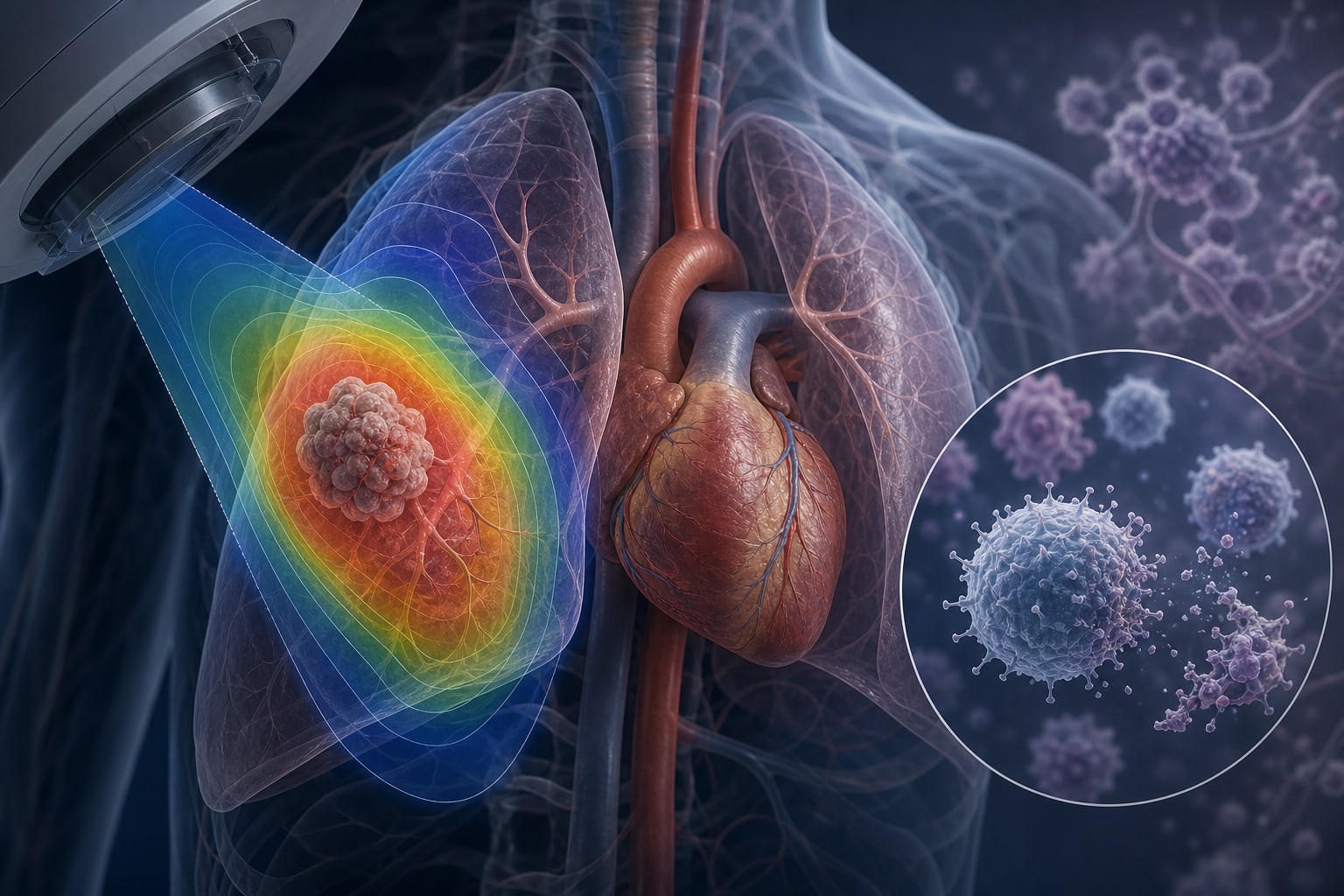
Functional planning using 4DCT ventilation imaging effectively reduces radiation exposure to functional lung tissue while preserving target coverage.
Limitations:
The study is limited to a small sample size of eighteen patients, which may affect the generalizability of the results.
Exclusion criteria may limit generalizability to a broader lung cancer population, particularly those with varying performance statuses.
Conclusion:
Functional planning reduces radiation dose to the FL while preserving target dose coverage, which is crucial for minimizing side effects. Among the RT techniques, f-VMAT may be preferred due to its superior dosimetric outcomes.