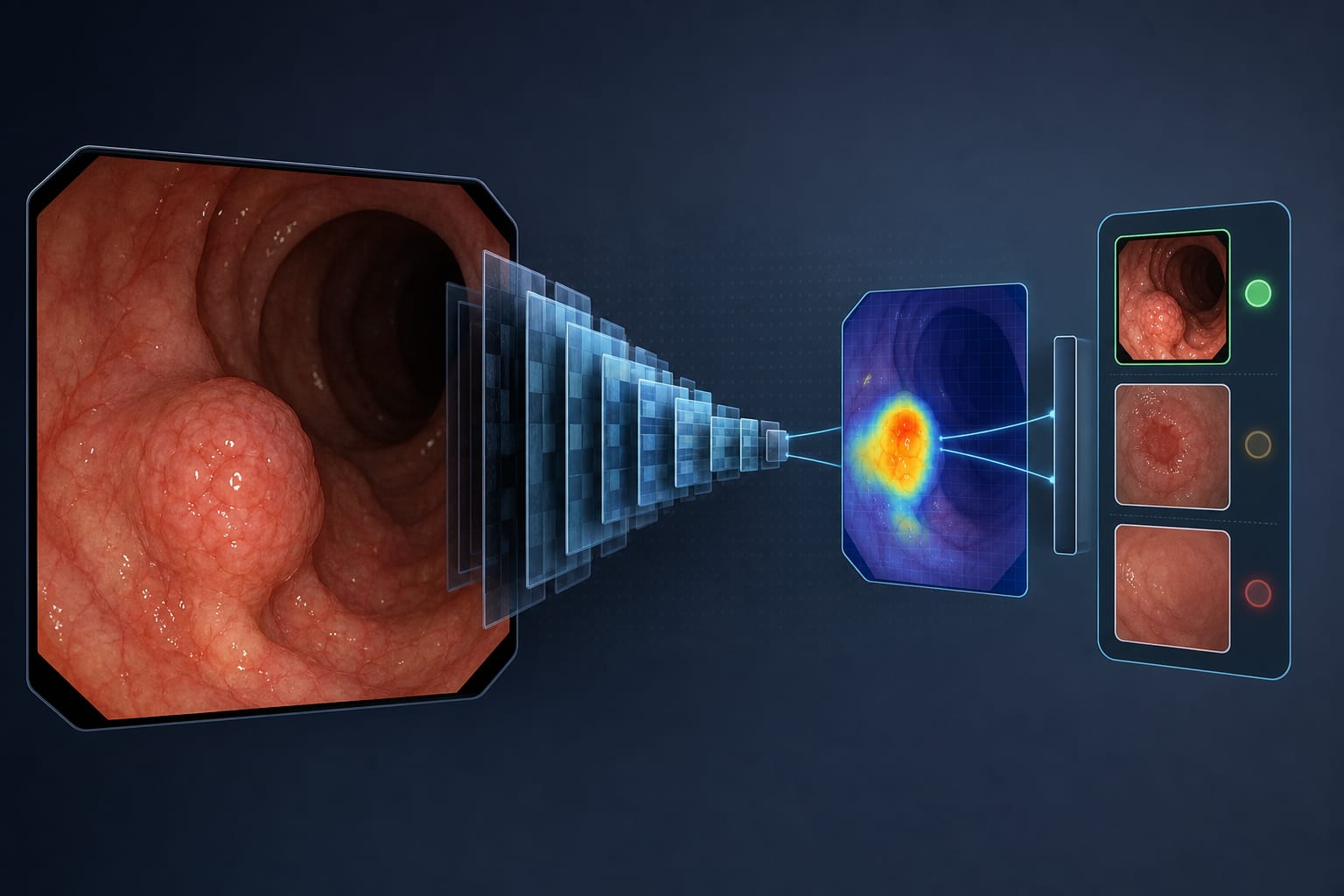
To develop a practical attention-enhanced lightweight model for gastrointestinal precancerous lesion classification, addressing the critical need for improved clinical application in early detection.
Key Findings:
The model achieved an overall accuracy of 99.10% and a weighted F1-score of 99.10%, indicating exceptional performance.
For polyp detection, it reached 100% precision and 98% recall, underscoring its reliability in clinical settings.
The SCA module improved core metrics by 0.07% without increasing computational redundancy, demonstrating efficiency.
The model maintained ultra-lightweight characteristics with only 1.05 M parameters, facilitating real-time deployment.
Interpretation:
The model effectively balances lightweight performance, high classification accuracy, and interpretability, enhancing clinical screening for gastric precancerous lesions.
Limitations:
The study primarily focuses on the Kvasir dataset, which may limit generalizability to other datasets; further validation in diverse clinical settings is necessary.
Real-world clinical validation is essential to confirm the model's effectiveness and reliability in practice.
Conclusion:
The proposed model provides a feasible AI-assisted tool for gastric precancerous lesion screening, addressing key barriers to clinical adoption.