Effects of inspiratory muscle training on inspiratory muscle strength and exercise tolerance in patients with COPD: a meta-analysis and systematic review - Summary - MDSpire
Advertisement
Effects of inspiratory muscle training on inspiratory muscle strength and exercise tolerance in patients with COPD: a meta-analysis and systematic review
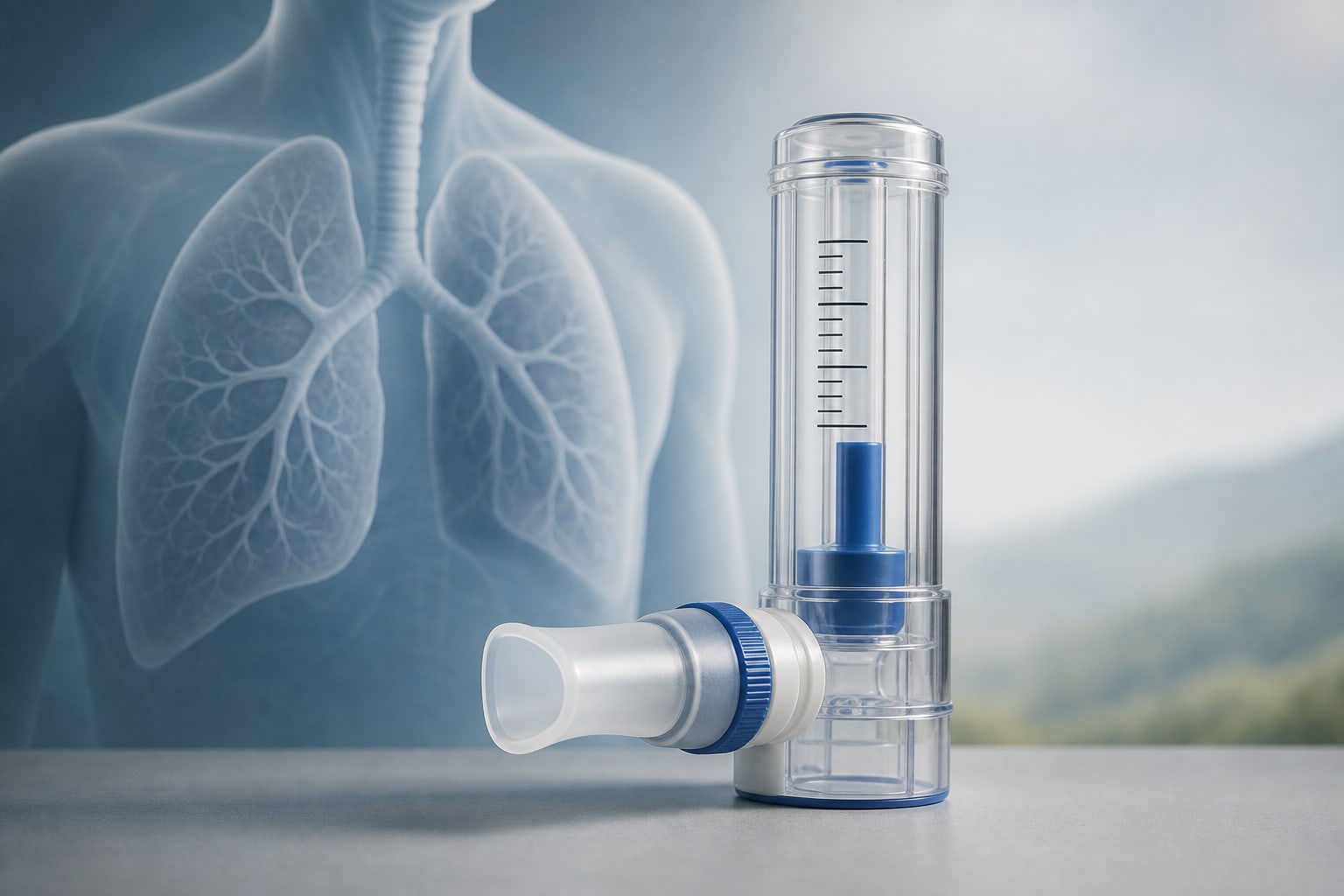
To systematically evaluate the effects of inspiratory muscle training (IMT) on inspiratory muscle strength, exercise tolerance, and dyspnea in patients with COPD, and to explore the moderating role of comparator type on treatment efficacy.
Approach:
Study Design: Systematic review and meta-analysis following PRISMA 2020 guidelines, including randomized controlled trials (RCTs) involving adults with stable COPD.
Data Sources: Search conducted in PubMed, Embase, Cochrane Library, Web of Science, and Scopus from inception to March 1, 2026.
Outcomes: Primary outcomes included PImax, 6MWD, and dyspnea (SMD).
Statistical Analysis: Random-effects model used to pool effect sizes, with subgroup analyses, sensitivity analyses, and meta-regression performed.
Key Findings:
IMT significantly improved PImax (SMD = 1.23, p = 0.034) and 6MWD (SMD = 0.43, p = 0.018).
Improvement in 6MWD was statistically significant only in the sham-controlled subgroup (SMD = 0.51, p = 0.046), while no significant improvement was found in the IMT added to pulmonary rehabilitation subgroup (SMD = -0.05, p = 0.875).
No significant improvement in dyspnea (SMD = 0.33, p = 0.129) or FEV₁ (MD = 0.14 L, p = 0.190).
Meta-regression indicated that comparator type explained approximately 37.8% of the heterogeneity in 6MWD (p = 0.062).
Interpretation:
IMT can enhance inspiratory muscle strength and improve exercise tolerance, with efficacy influenced by the type of comparator used.
Limitations:
Heterogeneity in study populations, training types, and intervention protocols.
Limited additional benefits observed in patients who had undergone comprehensive pulmonary rehabilitation.
Conclusion:
IMT is more suitable for stable COPD patients who cannot tolerate standard pulmonary rehabilitation.
Researchers found larger biological age gaps in more recent birth cohorts and observed associations with higher risk of several cancers diagnosed before age 55.