Time-dependent microbiology of peripancreatic drainage fluid in severe acute pancreatitis: a prospective real-world observational study using metagenomic sequencing and culture - Summary - MDSpire
Advertisement
Time-dependent microbiology of peripancreatic drainage fluid in severe acute pancreatitis: a prospective real-world observational study using metagenomic sequencing and culture
To characterize the microbiological profile of peripancreatic drainage fluid in severe acute pancreatitis (SAP) patients undergoing first-time percutaneous catheter drainage (PCD) and explore its time-dependent relationship with disease course, highlighting its clinical significance.
Key Findings:
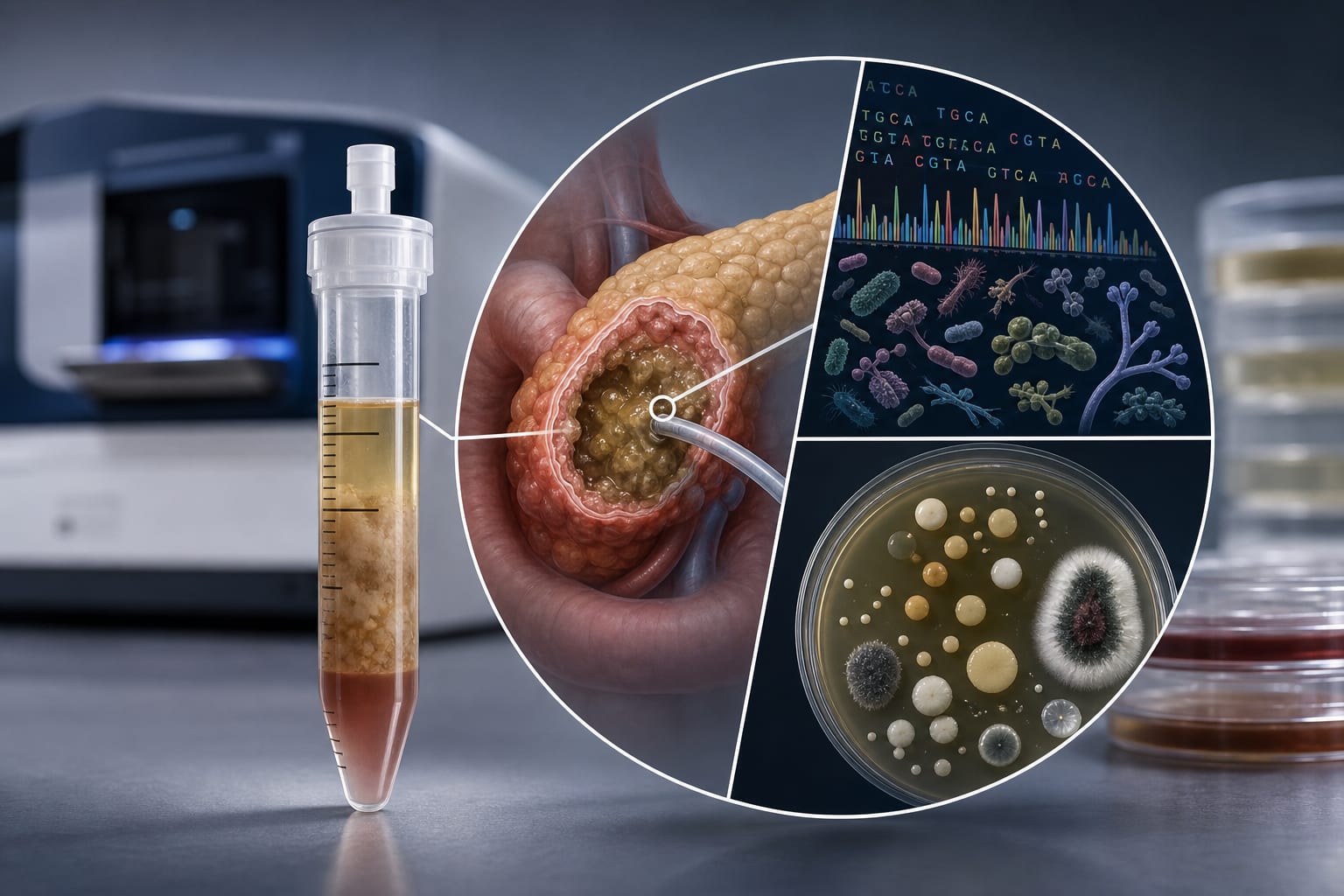
mNGS was positive in 9/20 cases (45.0%) and conventional culture in 6/20 cases (30.0%).
Microbiological positivity was low within 14 days (mNGS: 1/7, 14.3%; culture: 1/7, 14.3%), but increased beyond 14 days (mNGS: 8/13, 61.5%; culture: 5/13, 38.5%).
mNGS identified a broader spectrum of pathogens, particularly polymicrobial, anaerobic, and fungal organisms, suggesting a need for revised clinical approaches.
Enterococcus species and Klebsiella pneumoniae were the most frequently detected pathogens.
Interpretation:
Peripancreatic collections were predominantly culture- and mNGS-negative during the early phase of SAP, indicating that early necrosis is commonly sterile. In later stages, mNGS provides additional microbiological information beyond conventional culture, potentially guiding clinical management.
Limitations:
Single-center study may limit generalizability.
Small sample size may affect statistical power.
Microbiological findings may be influenced by prior antibiotic exposure, which could skew results.
Conclusion:
These findings provide descriptive real-world evidence on the time-dependent microbiology of suspected IPN and may inform future studies on optimized diagnostic and antimicrobial strategies.