A stepwise decannulation pathway for patients with prolonged disorders of consciousness after brain injury: a retrospective feasibility study - Summary - MDSpire
Advertisement
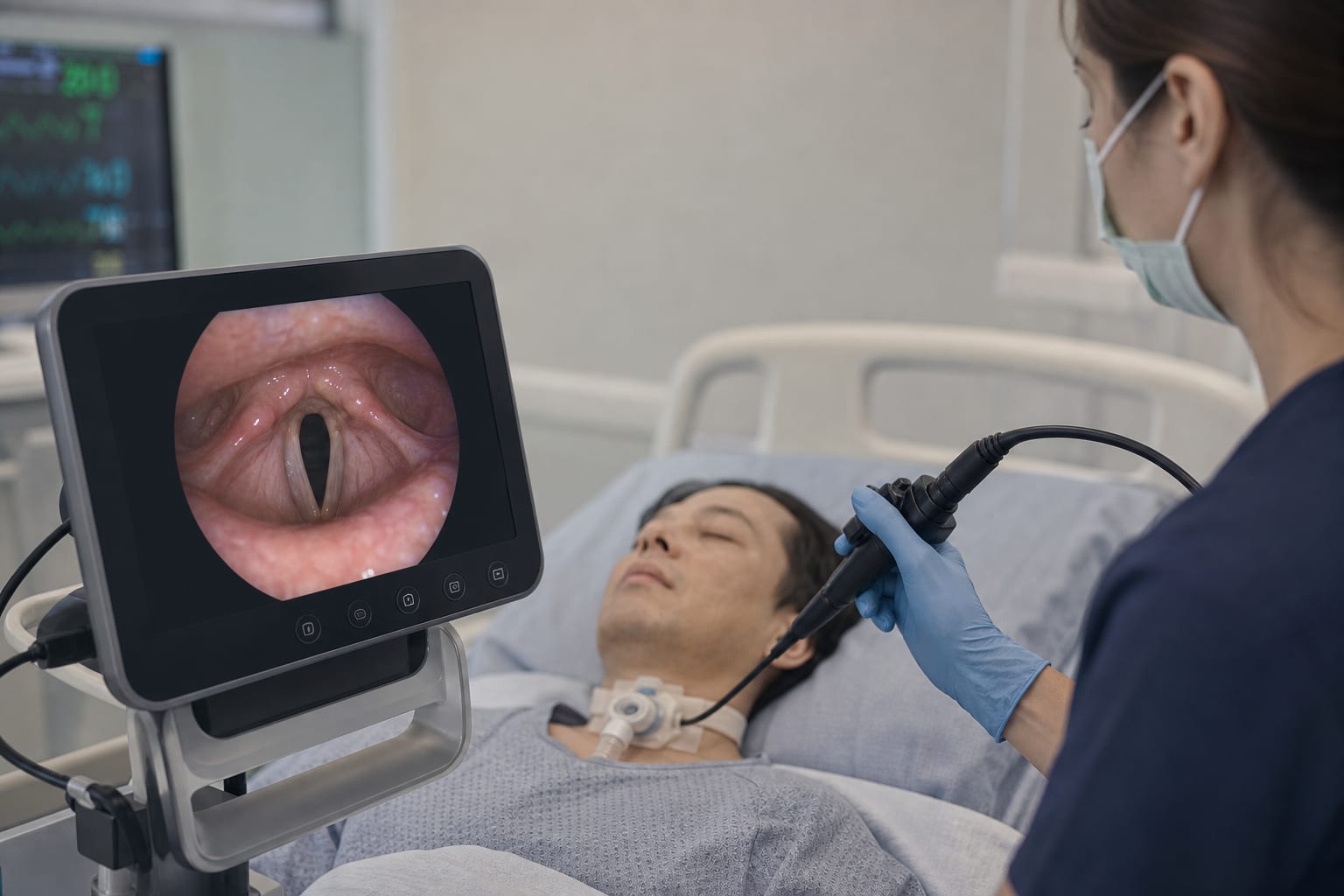
A stepwise decannulation pathway for patients with prolonged disorders of consciousness after brain injury: a retrospective feasibility study
To describe a stepwise decannulation pathway specifically tailored for patients with prolonged disorders of consciousness (pDoC) after brain injury and evaluate its feasibility and safety.
Key Findings:
57.4% of patients (35 out of 61) were successfully decannulated.
No patients required reintubation or transfer to the ICU within 48 hours post-decannulation.
One patient was reintubated approximately one month later due to severe liver failure.
Mean time to decannulation was 19.8 ± 8.2 days.
Airway lesions were found in 88.5% of patients, with 50.8% having MSS ≥ 2.
19.7% of patients had SCSS < 3, indicating inadequate cough strength.
Interpretation:
The stepwise decannulation pathway appears feasible and is associated with favorable short-term safety outcomes, suggesting potential for improved clinical practice in managing pDoC patients after brain injury.
Limitations:
Single-center study limits generalizability; retrospective design may introduce bias; absence of a control group may affect the robustness of conclusions.
Conclusion:
The stepwise decannulation pathway may provide a structured framework for decannulation decision-making in patients with pDoC after brain injury. Further prospective, multicenter studies are needed to validate these findings and assess long-term outcomes.