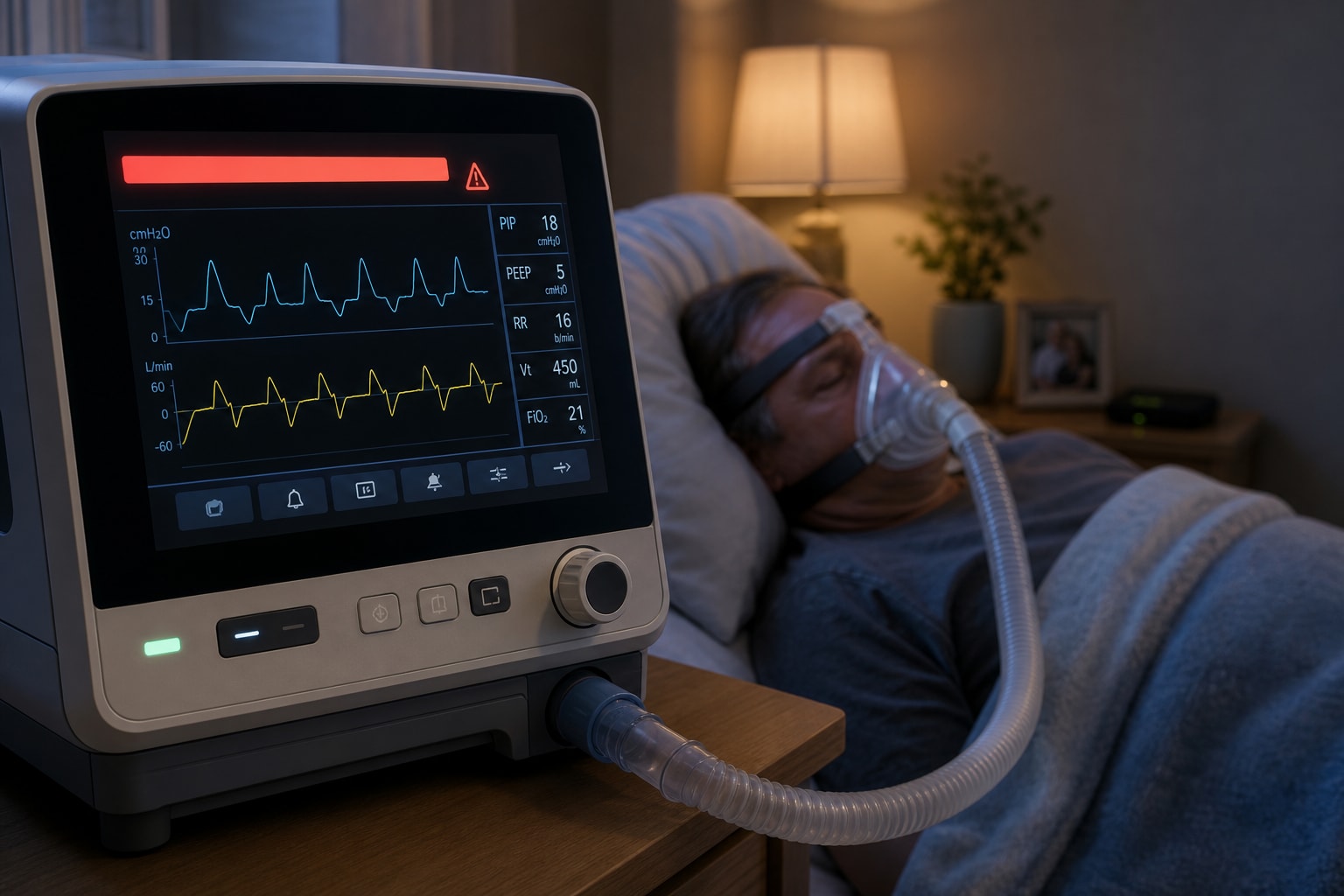
To examine the available literature and provide practical considerations for setting ventilator alarms for patients on home mechanical ventilation, emphasizing patient safety.
Key Findings:
Home ventilators provide alarms that can detect significant ventilatory events and alert caregivers, enhancing patient safety.
There is limited evidence on the effectiveness of ventilator alarms and optimal usage, which may impact patient outcomes.
Alarm settings should be personalized based on patient condition and caregiver availability to ensure effective monitoring.
External monitors, such as pulse oximeters, are recommended for patients on invasive ventilation or NIV to improve safety.
Regular monitoring and reassessment of alarm settings are necessary to adapt to changing patient needs.
Interpretation:
Clinical alarms should be sensitive and specific while avoiding excessive frequency that can lead to alarm fatigue, which may compromise patient safety.
Limitations:
Lack of studies or guidelines for alarm settings specifically for NIV-dependent patients or CPAP/NIV in infants, which poses a risk.
Variability in alarm settings and definitions across different ventilator devices can lead to confusion and potential safety issues.
Conclusion:
Ventilator alarms play a crucial role in ensuring the safety of patients on home mechanical ventilation, requiring careful consideration, regular adjustment, and ongoing education for caregivers.