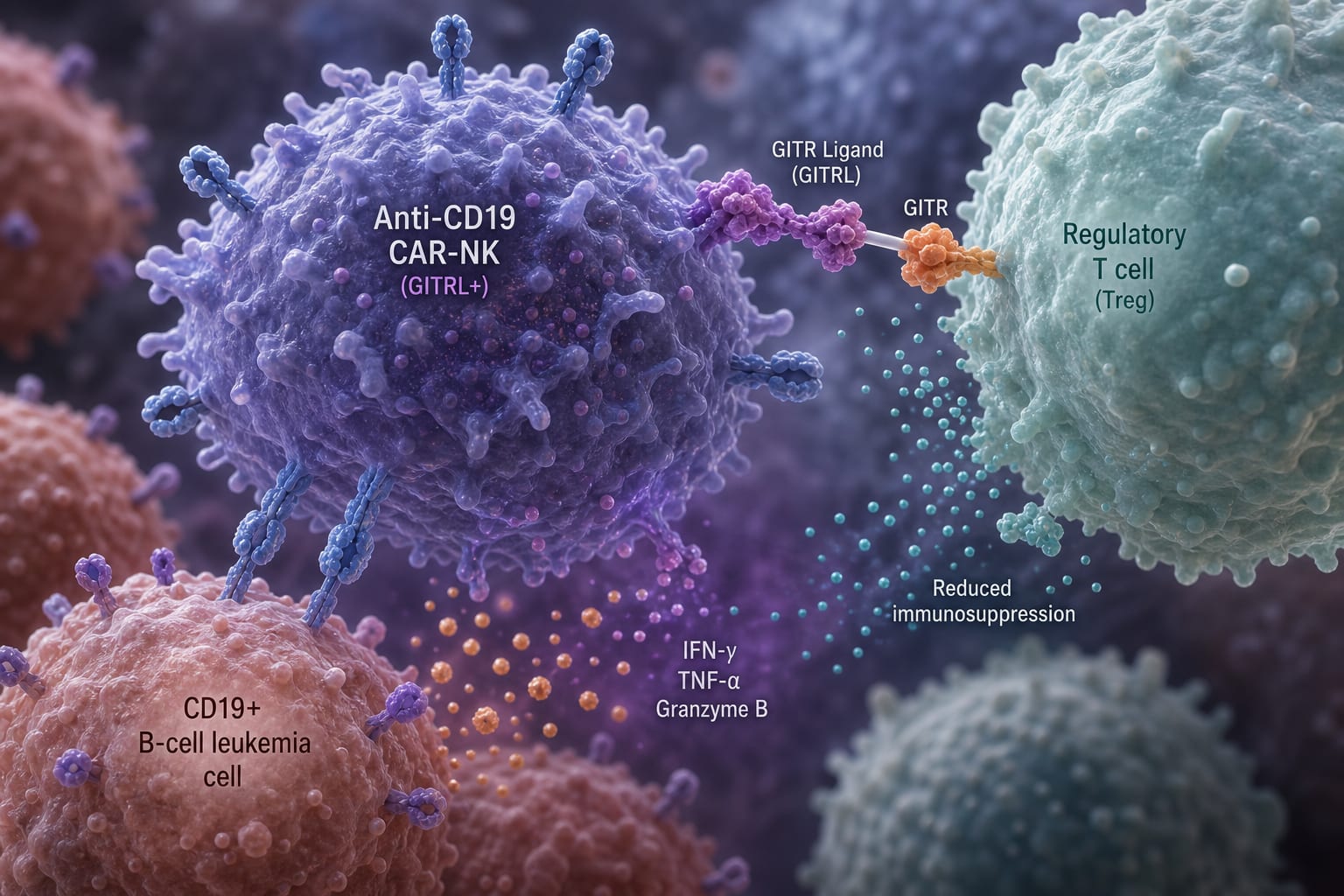
To develop 'armored' anti-CD19 CAR-NK cells coexpressing GITR ligand (GITRL) to target malignant B cells and to counteract Treg-mediated suppression.
Approach:
Cell Generation: Anti-CD19 NK-92 and primary peripheral blood NK cells were generated with or without GITRL coexpression using lentiviral vectors.
Functional Evaluation: The functionality and therapeutic potential of CAR19-GITRL-NK-92 cells were evaluated through expansion, metabolism, cytotoxicity, cytokine secretion, and in vivo antitumor potential.
Gene Expression Analysis: RNA-Seq was performed to analyze gene expression differences between CAR19-GITRL-NK-92 and CAR19-NK-92 cells.
Key Findings:
CAR19-GITRL-NK-92 cells showed superior expansion and enhanced metabolic fitness.
Increased cytotoxicity and cytokine secretion against CD19⁺ targets were observed in vitro.
RNA-Seq revealed significant gene expression changes linked to immune activation and cytotoxicity.
In vivo studies demonstrated improved tumor control and overall survival with CAR19-GITRL-NK-92 cells.
GITRL expression in primary NK cells enhanced cytotoxicity and reduced Treg-mediated inhibition.
Interpretation:
CAR19-GITRL-NK cells represent a novel strategy that combines direct tumor targeting with the ability to mitigate Treg-driven immunosuppression.
Conclusion:
The study supports the potential of GITRL coexpression in enhancing the therapeutic efficacy of CAR-NK cells against B-cell leukemias and lymphomas.
by Dayane Schmidt, Sima Ebrahimabadi, Mariane Cariati Tirapelle, Camilly Melo Ferreira, Matheus Henrique dos Santos, Alison Felipe Biggi, Mara Elisama da Silva Januário, Rodrigo Tocantins Calado, Virginia Picanço-Castro