Risk factors for inferior right hepatic vein occlusion following right lobe living donor liver transplantation: a single-center experience with 240 cases - Summary - MDSpire
Conexiant’s news site is now MDSpire News. Learn more
Advertisement
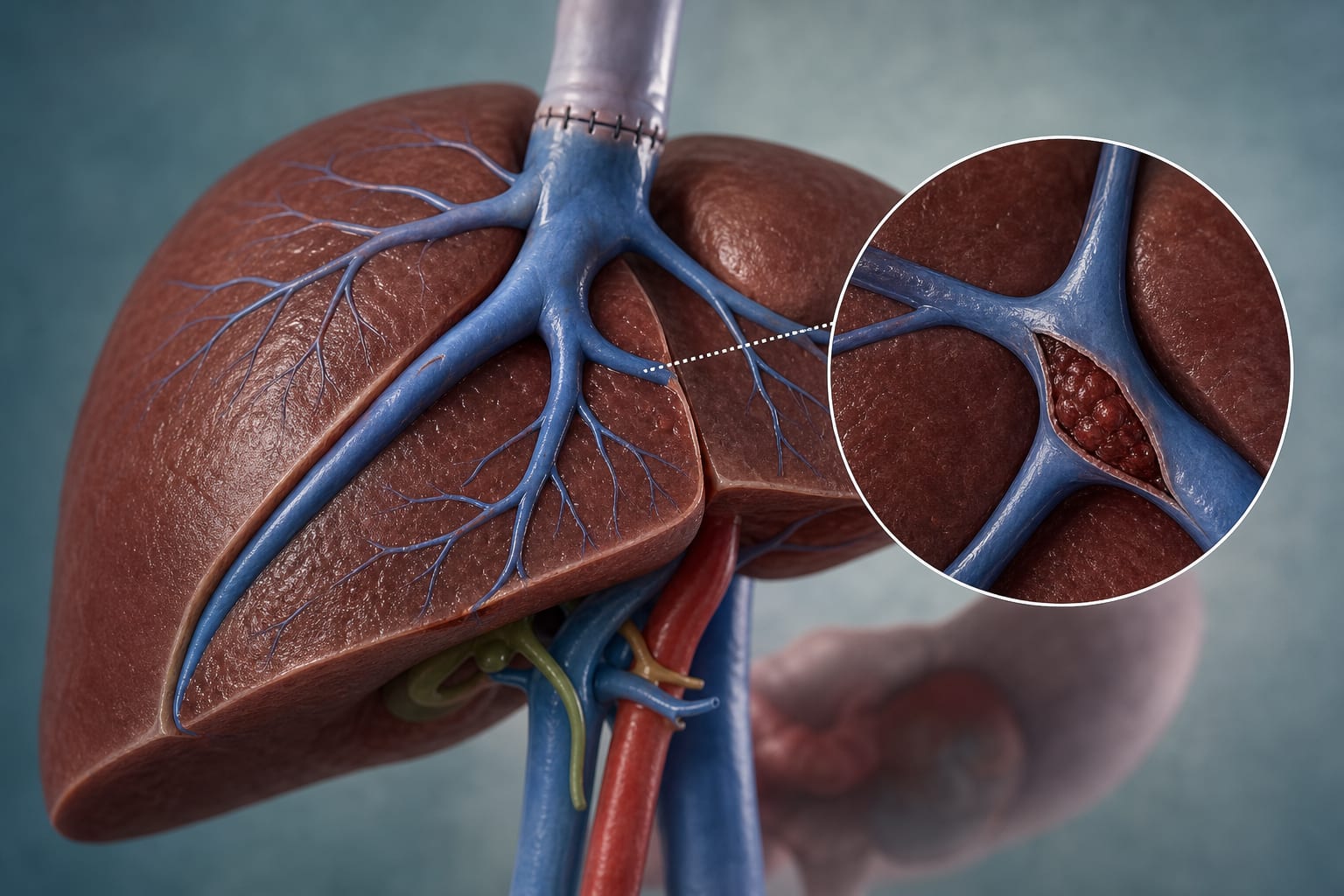
Identifying Risk Factors for Occlusion of the Inferior Right Hepatic Vein After Right Lobe Living Donor Liver Transplantation: Insights from a Single-Center Study of 240 Cases
To analyze early and long-term outcomes of inferior right hepatic vein (IRHV) reconstruction in right lobe living donor liver transplantation (RL-LDLT) and identify associated risk factors.
Approach:
Study Design: Retrospective cohort study of RL-LDLT recipients who underwent IRHV reconstruction from January 2021 to December 2023.
Patient Selection: Included patients who underwent IRHV reconstruction; excluded those with incomplete data, perioperative mortality, or anatomical variations preventing reconstruction.
Data Collection: Data collected from electronic medical records, surgical reports, and imaging studies, categorized into preoperative, intraoperative, and postoperative variables.
Surgical Techniques: Reconstruction classified as direct anastomosis, simple venoplasty, or complex venoplasty based on the surgical approach.
Postoperative Evaluation: IRHV patency assessed via multidetector computed tomography (MDCT) within the first 30 days and during long-term follow-ups.
Statistical Analysis: Used IBM SPSS Statistics for analysis, including ROC curve analysis and logistic regression to identify predictors of IRHV occlusion.
Key Findings:
The study included 240 RL-LDLT cases with different IRHV reconstruction techniques.
IRHV occlusion was linked to specific preoperative anatomical and clinical factors.
The optimal IRHV diameter threshold for occlusion risk was identified through ROC curve analysis.
Interpretation:
Identifying high-risk patients based on anatomical and clinical factors can facilitate personalized surgical planning to improve transplant outcomes.
Limitations:
The retrospective design may introduce selection bias.
Findings from a single-center study may not be generalizable.
Conclusion:
The study provides insights into risk factors for IRHV occlusion.