To discuss the roles of macrophages and innate lymphoid cells (ILCs) in acute lung injury (ALI) and their contributions to tissue repair and inflammation.
Approach:
Key Findings:
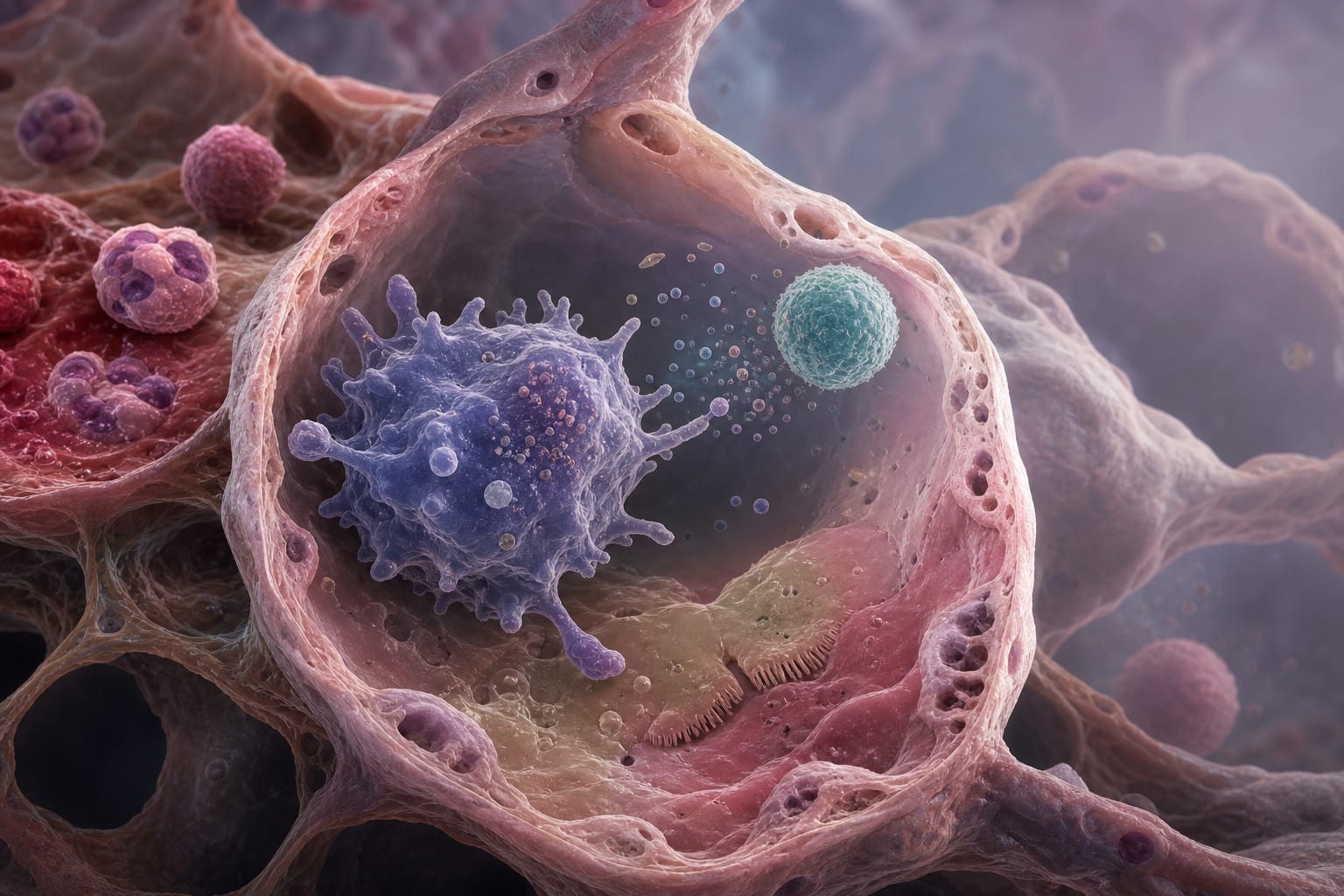
ALI involves a complex interplay of immune responses rather than just hyperinflammation, with macrophages and ILCs playing critical roles.
Macrophage plasticity and ILC-mediated responses are crucial for balancing inflammation and repair, influencing outcomes in ALI.
Disruption of the macrophage-ILC-epithelial communication network leads to failed lung repair, underscoring the importance of these interactions.
Interpretation:
The findings suggest that understanding the dynamics of immune regulation in ALI can inform therapeutic strategies aimed at enhancing tissue repair.
Limitations:
The review does not provide specific clinical data or outcomes related to therapeutic interventions, highlighting a gap in the current understanding.
Further research is needed to fully elucidate the mechanisms of macrophage and ILC interactions in ALI, as the current knowledge is still developing.
Conclusion:
A shift in perspective on ALI as a disorder of immune circuit dysregulation may lead to new insights into the underlying mechanisms of the disease.
The procedure was performed under a HOPE Act research protocol at an NYU Langone Health center the institution said is among the limited number of US transplant centers equipped and approved to perform HOPE lung transplants.