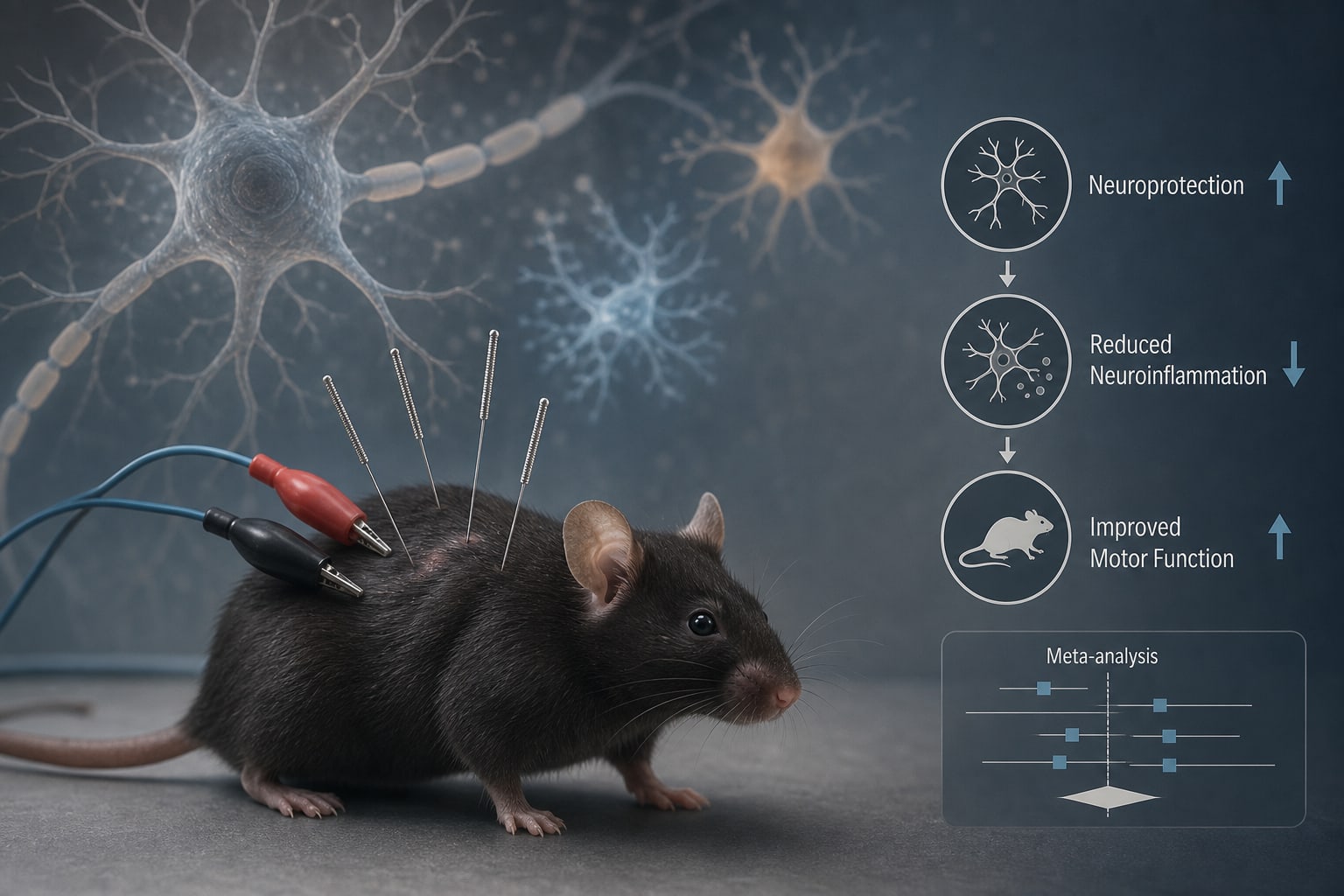
To systematically evaluate the therapeutic efficacy of electroacupuncture (EA) in amyotrophic lateral sclerosis (ALS) and to elucidate the underlying neurobiological mechanisms by synthesizing preclinical evidence.
Approach:
Literature Search: Relevant studies were searched in PubMed, Web of Science, Embase, Cochrane Library, Scopus, and CNKI using MeSH terms.
Quality Assessment: Methodological quality was assessed using SYRCLE’s Risk of Bias tool and the CAMARADES checklist.
Meta-Analysis: Meta-analysis was performed using Stata 15.0 and Rstudio software.
Key Findings:
Seventeen studies involving 372 animals were included.
The average quality score of included studies was 7 (range 5 to 8).
EA significantly improved motor function in ALS mice as indicated by the rotarod test score (SMD = 3.31, 95% CI (2.05, 4.57), p < 0.001).
EA intervention alleviated neuroinflammation, promoted neuronal survival, improved axonal regeneration, and stabilized RNA metabolism.
EA slowed disease progression, improved motor performance, prolonged survival time, and protected motor neurons at the histopathological level.
Interpretation:
EA confers significant neuroprotective benefits in preclinical ALS models through multi-target modulation of key pathological processes.
Limitations:
Potential publication bias detected which may contribute to heterogeneity.
Heterogeneity in other outcome measures may stem from differences in stimulation parameters, acupoint selection, or treatment duration.
Conclusion:
EA warrants further investigation in rigorous clinical trials.