Serum uric acid levels and cardiorenal complication prevalence in hypertensive patients before and after the COVID-19 pandemic: a retrospective cross-sectional study from a tertiary traditional Chinese medicine hospital - Summary - MDSpire
Advertisement
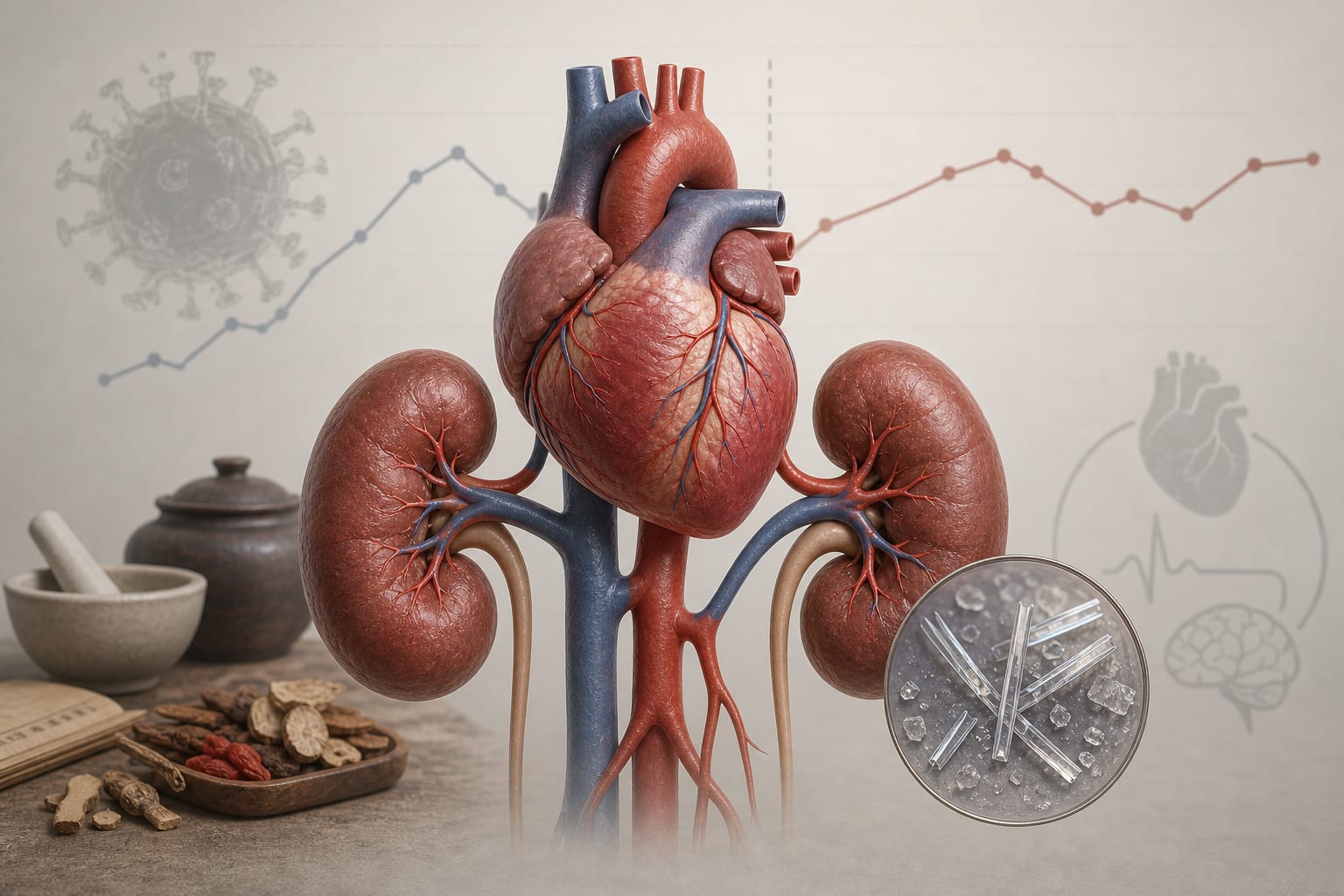
Serum uric acid levels and cardiorenal complication prevalence in hypertensive patients before and after the COVID-19 pandemic: a retrospective cross-sectional study from a tertiary traditional Chinese medicine hospital
To evaluate whether the post-pandemic period modifies the association between hyperuricemia and cardiorenal complication risk in hypertensive patients.
Key Findings:
Post-pandemic patients had significantly higher mean SUA levels (448.70 ± 72.04 vs 422.39 ± 71.92 μmol/L; P < 0.001).
Higher prevalence of hyperuricemia in post-pandemic group (65.9% vs 52.1%; P < 0.001).
Increased prevalence of any cardiorenal complication in post-pandemic group (74.1% vs 49.1%; P < 0.001).
Hyperuricemia was independently associated with cardiorenal complications (OR = 1.82; P < 0.001).
Post-pandemic period also independently associated with cardiorenal complications (OR = 1.94; P < 0.001).
Significant multiplicative interaction between study period and hyperuricemia (interaction OR = 1.79; P = 0.001).
Interpretation:
The post-pandemic period correlates with increased SUA levels and cardiorenal complications, indicating a significant interaction with hyperuricemia.
Limitations:
Retrospective design may limit causality inference.
Additive interaction measures were not statistically conclusive despite directionally consistent findings.
Conclusion:
Routine SUA monitoring and proactive urate management are recommended for hypertensive patients in the post-pandemic context.
In a target-trial emulation of more than 600,000 veterans, GLP-1 RA initiators saw fewer new substance use disorders—and patients with existing SUDs had fewer overdoses, hospitalizations, and deaths.