What Retina Specialists Have Learned From TRUCKEE - Summary - MDSpire
Advertisement
What Retina Specialists Have Learned From TRUCKEE
Carl J. Danzig, MD, reviews 4.5 years of real-world findings showing sustained anatomic improvements, longer treatment intervals, and a favorable safety profile with faricimab in neovascular AMD.
To present the real-world efficacy and safety of faricimab in neovascular age-related macular degeneration (nAMD) based on the TRUCKEE study results over 4.5 years.
Approach:
Study Design: The TRUCKEE study was a real-world study involving over 3,600 eyes and more than 2,900 patients, focusing on the effects of faricimab without industry sponsorship.
Key Findings:
Faricimab demonstrated sustained anatomic improvements in both treatment-naïve and previously treated populations.
Patients switching from aflibercept to faricimab experienced nearly 2-week extension in treatment intervals after 9 injections.
Treatment-naïve patients achieved treatment intervals extending to about 10 weeks with faricimab.
The safety profile of faricimab included a low rate of intraocular inflammation and endophthalmitis.
Interpretation:
Limitations:
The study involved a specific patient population and may not be generalizable to all nAMD patients.
The comfort level of physicians with treatment intervals may influence results.
As his term comes to a close, Geoffrey G. Emerson, MD, PhD, FASRS, discusses scientific advances, physician advocacy, and the collaborative leadership behind ASRS.
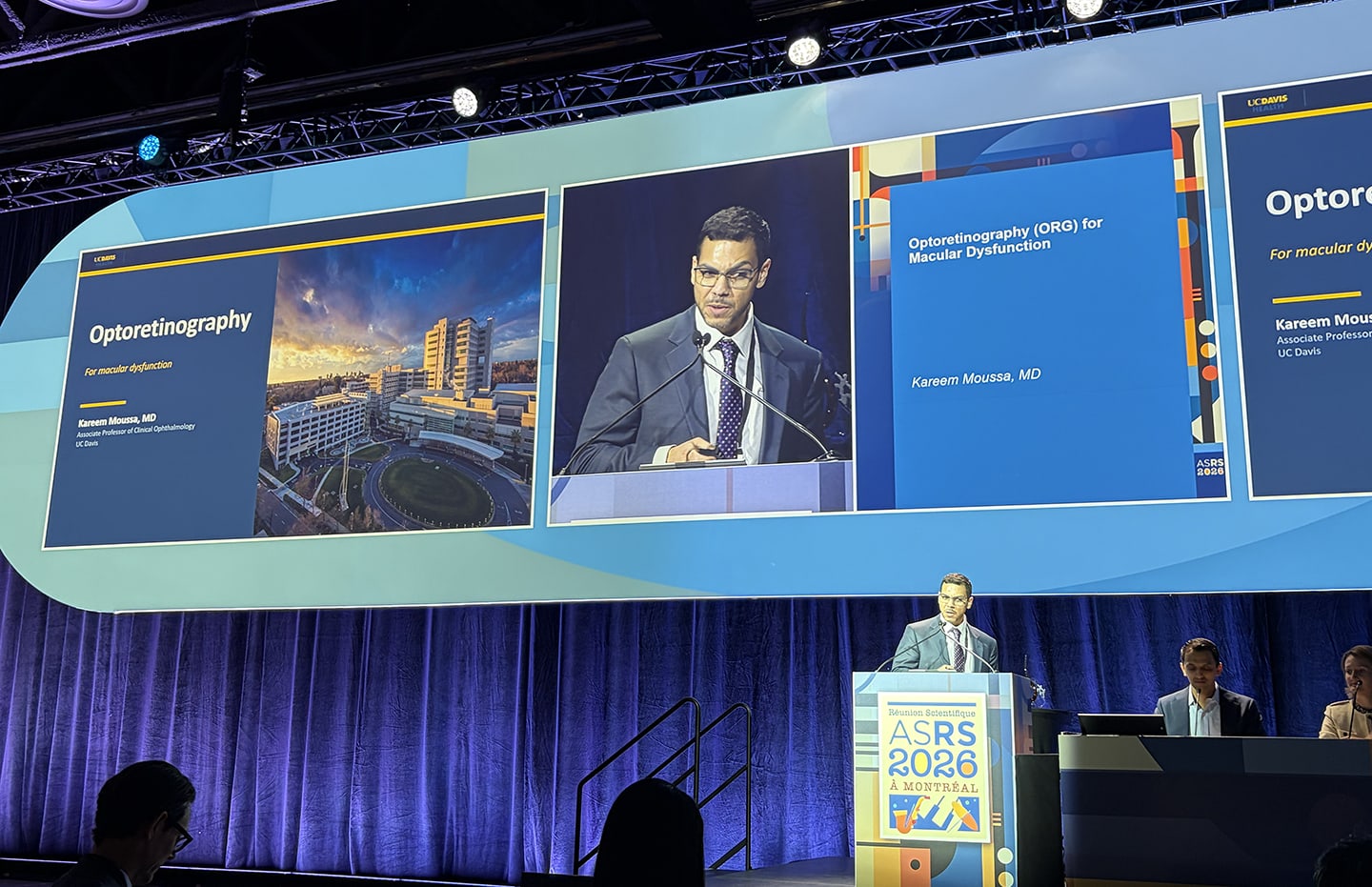
At ASRS 2026, Kareem Moussa, MD, presented early data suggesting optoretinography may identify photoreceptor dysfunction in diabetic eyes before conventional imaging reveals abnormalities.