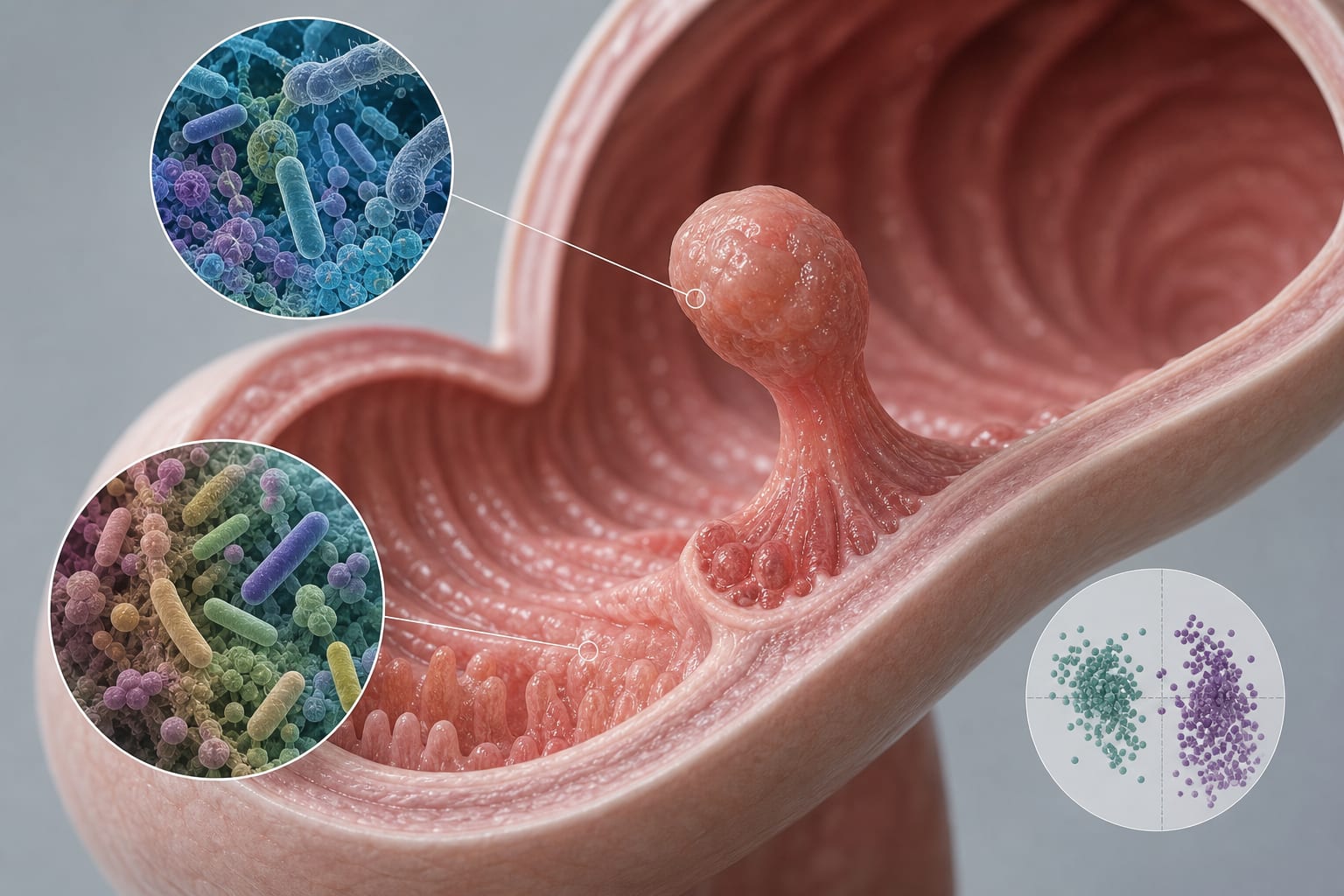
To investigate the mucosal microbial signatures, dysbiosis characteristics, and potential biomarkers in PJS polyps versus paired normal small intestinal mucosa.
Approach:
Key Findings:
Alpha diversity (Observed species, Chao1, Shannon) was markedly reduced in polyps (all P < 0.001), while Simpson index increased (P < 0.001).
Beta diversity differed significantly between groups (ANOSIM, R = 0.0667, P = 0.002).
Polyps were enriched in Pseudomonadota (70.00% vs. 49.51%, P < 0.001) and depleted in Bacillota, Bacteroidota (both P < 0.001).
Microbial dysbiosis index (MDI) was higher in polyps (P < 0.001).
A 9-genera random forest model achieved AUC = 0.897.
Escherichia-Shigella correlated with polyp number (P < 0.05), and Enterococcus correlated with CA72–4 levels (P < 0.05).
Interpretation:
Limitations:
The study was limited to a specific patient population and may not be generalizable.
The reliance on a single method of microbiota profiling may overlook other microbial interactions.