Clinical response in advanced non-small cell lung cancer with high PD-L1 expression and MET exon 14 skipping mutation: a case analysis of overcoming immunotherapy resistance and literature review - Summary - MDSpire
Advertisement
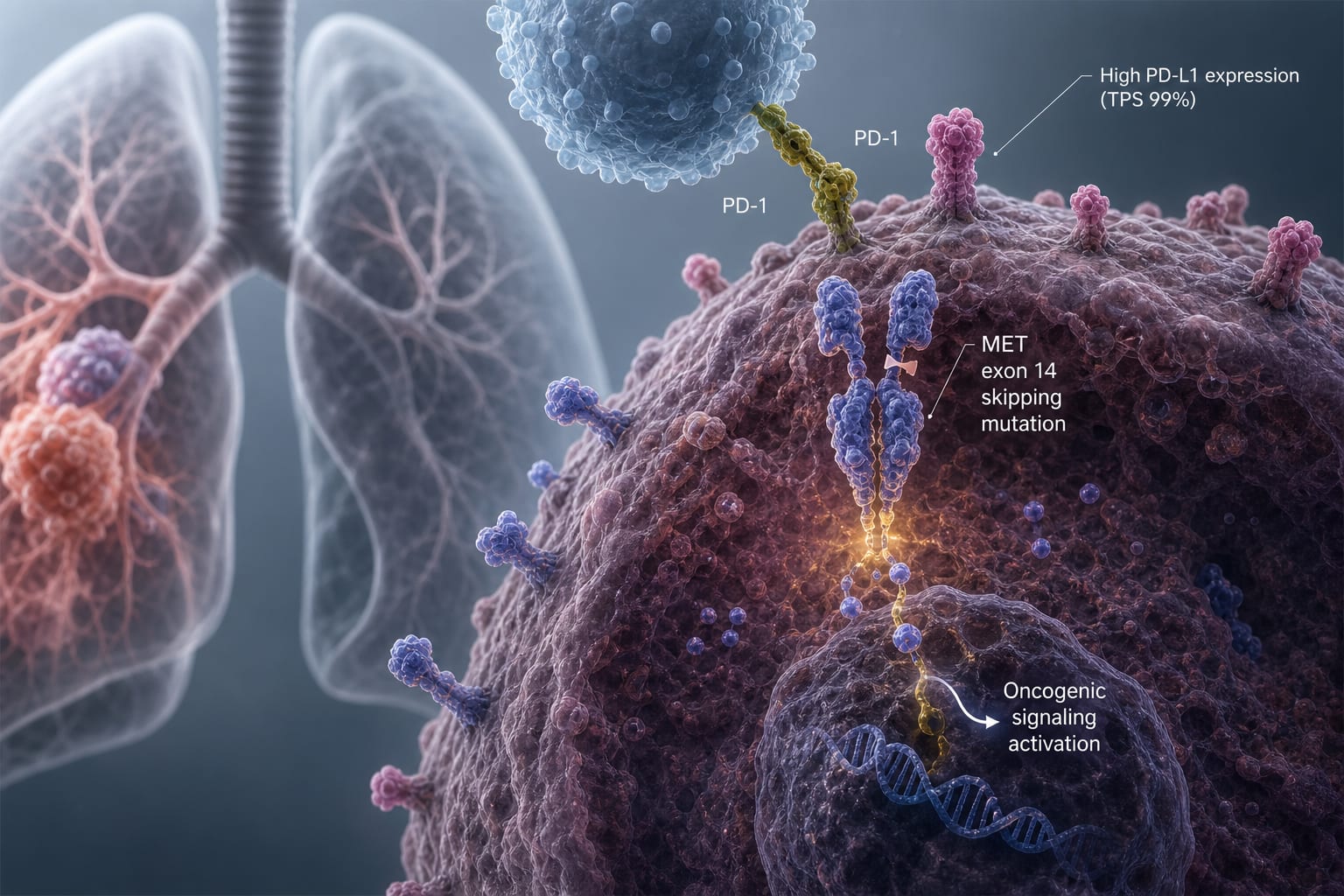
Clinical response in advanced non-small cell lung cancer with high PD-L1 expression and MET exon 14 skipping mutation: a case analysis of overcoming immunotherapy resistance and literature review
To explore therapeutic strategies for advanced NSCLC with high PD-L1 expression and MET exon 14 skipping mutations, particularly focusing on overcoming immunotherapy resistance.
Key Findings:
Initial treatment with Tislelizumab resulted in 7 months of progression-free survival, indicating its initial effectiveness.
Switching to Savolitinib led to significant tumor reduction, demonstrating the potential of targeted therapy.
Reintroducing Tislelizumab after Savolitinib was discontinued due to liver injury successfully controlled the disease, suggesting a possible strategy for overcoming resistance.
Interpretation:
Sequential treatment with MET inhibitors may restore sensitivity to immunotherapy in patients with high PD-L1 and METex14 mutations, suggesting a novel therapeutic strategy that modifies the tumor microenvironment to enhance treatment efficacy.
Limitations:
Single case study limits generalizability of findings.
Lack of established guidelines for managing dual-positive NSCLC cases.
Need for larger studies to validate findings and establish treatment protocols.
Conclusion:
This case highlights the potential for personalized treatment strategies in NSCLC with complex molecular profiles, advocating for further research into combination therapies and the mechanisms of resistance.