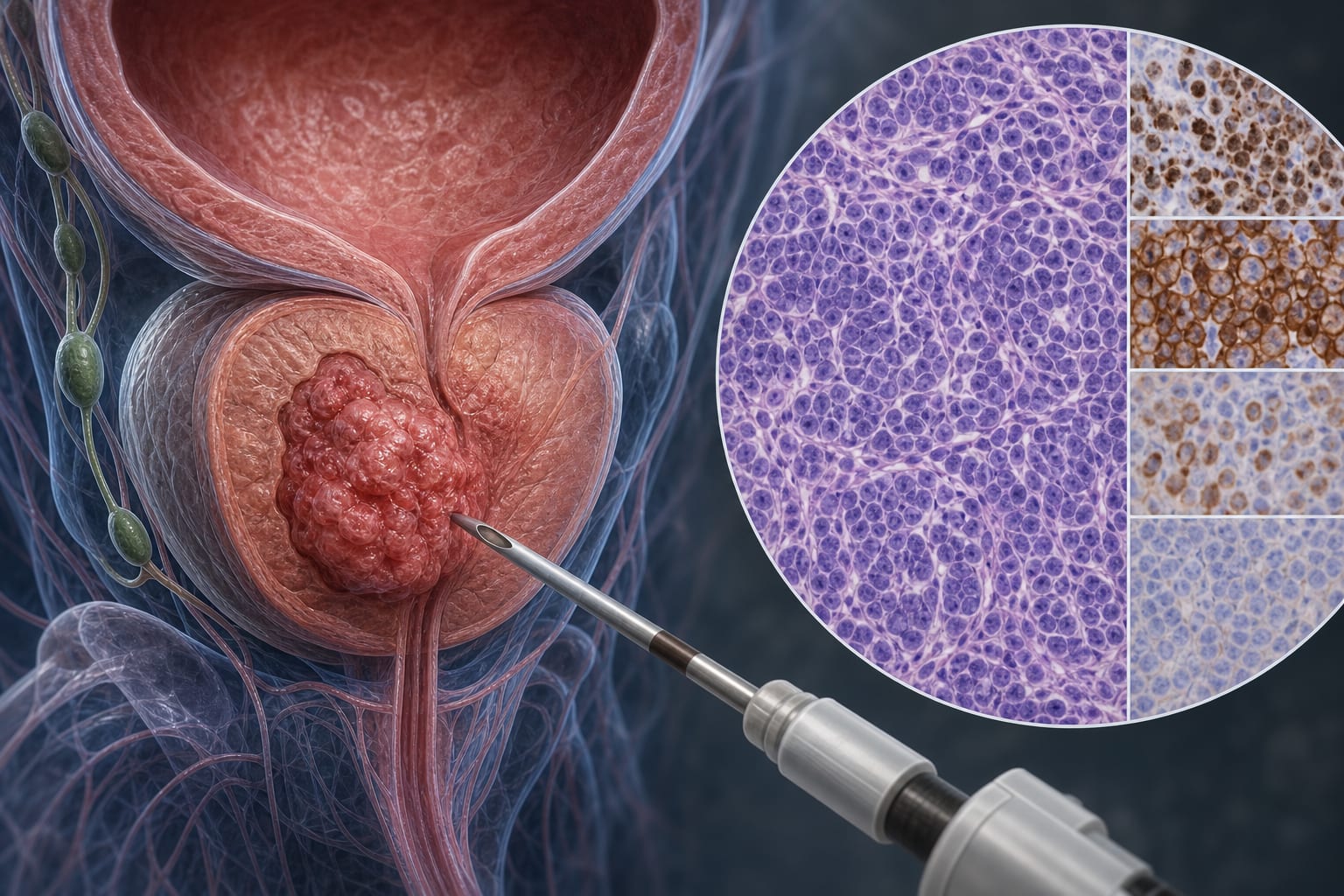
To report a case of small cell carcinoma of the prostate (SCCP), emphasizing its uncommon presentation and the challenges in early diagnosis, and its implications for clinical practice.
Key Findings:
SCCP is rare, accounting for 0.5%-2% of prostate cancers and typically presents with aggressive behavior, complicating early diagnosis.
Normal PSA levels can obscure the diagnosis of SCCP, necessitating vigilance in clinical assessment.
Histological examination confirmed SCCP with specific neuroendocrine markers, reinforcing the need for accurate diagnostic criteria.
Interpretation:
The case emphasizes the need for early biopsy in patients with imaging suggestive of invasive prostate disease, regardless of PSA levels, to improve early detection.
Limitations:
Limited evidence on the diagnosis and treatment of SCCP due to its rarity, which hampers the development of standardized management protocols.
Management primarily based on small case series and experiences from other neuroendocrine carcinomas, highlighting the need for more research.
Conclusion:
Early recognition and intervention are crucial in managing SCCP to improve outcomes, necessitating increased awareness among clinicians.